Armenian Apostolic Church to hold Bishops' Council in Austria despite obstacles
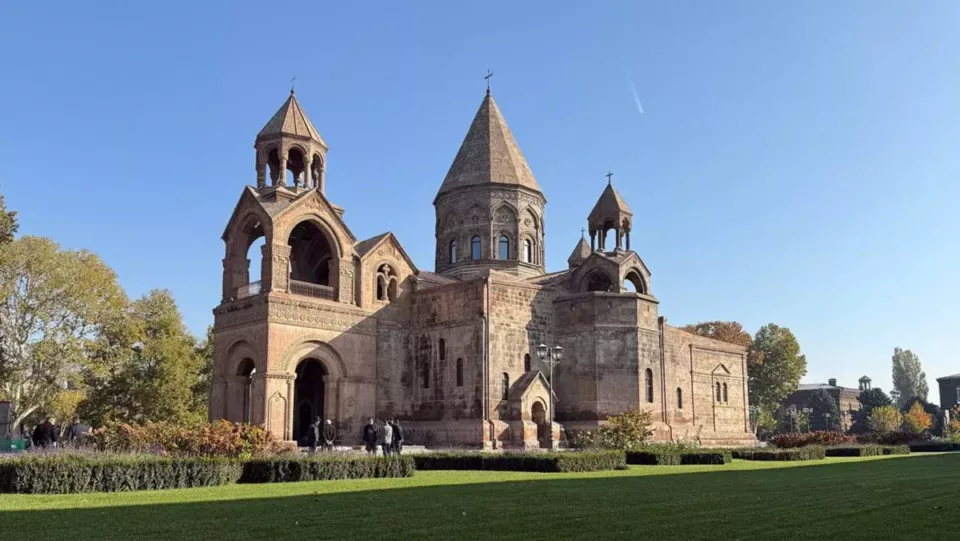
The Armenian Apostolic Church (AAC) has reaffirmed its decision to hold the Council of Bishops in the Austrian city of St. Pölten from February 16 to 19, 2026, despite serious obstacles, including an ongoing travel ban on six participants. The situation has arisen against the backdrop of ongoing criminal proceedings related to the former head of the Diocese of Masiatsotn, Bishop Gevorg Saroyan.
According to Sputnik Armenia, the director of the information system of the Mother See of Holy Etchmiadzin, Priest Esai Artenyan, confirmed that the venue of the council remains unchanged. Earlier, the AAC stated that the issue of holding the council will be discussed, but now a final decision has been made. The Council of Bishops is one of the highest legislative and judicial bodies of the AAC, called to solve key issues of church life and administration.
The main obstacle to free participation in the council is the travel ban imposed on six bishops: Bishops Hovnan Hakobyan and Makar Hakobyan, heads of the Dioceses of Syunik and Gugarka, Archbishop Nathan Hovhannisyan, Director of the Chancery of Mother See of Etchmiadzin for External Relations and Protocol, and Bishops Vahan Hovhannisyan, Haykazun Najarian and Mushegh Babayan. In addition, it is reported that four more hierarchs of the Church – Mikael Ajapakhyan, Bagrat Galstanyan, Arshak Khachatryan and Mkrtich Proshyan – are currently in custody.
These restrictions are directly related to the development of the criminal proceedings in the case of Bishop Gevorg Saroyan, former head of the Masiatsotn Diocese. on January 10, 2026, Bishop Saroyan was dismissed from the position of the head of the Diocese of Masiatsotn by order of Catholicos of All Armenians Karekin II. The grounds cited were abuse of power, improper fulfillment of duties and pressure on the clergy.
Saroyan filed a lawsuit in court for reinstatement, which raised questions about the legality of the state’s interference in the internal affairs of the Church, since, according to the Armenian Constitution, the Armenian Apostolic Church is separate from the state. Nevertheless, on January 16, 2026, court bailiffs prohibited the AAC from interfering with his activities as Primate of the diocese as part of the proceedings. However, already on January 27, 2026, by the decision of the Supreme Spiritual Council, Saroyan was deprived of his episcopal dignity and deposed.
The Armenian Investigative Committee considered the actions of the Supreme Spiritual Council as a refusal to execute the judicial act, which served as the basis for initiating a criminal case. This situation emphasizes the difficulties in the relationship between church and state in Armenia, especially in the context of internal church proceedings with legal implications.
As a reminder, earlier international lawyer Robert Amsterdam, who defends the interests of the Armenian Apostolic Church, noted that Armenian Prime Minister Nikol Pashinyan openly admits that he is seizing the Church because its representatives do not blindly support his government.
Read also