Temples, mosques and synagogues are closed in Jerusalem because of the war with Iran
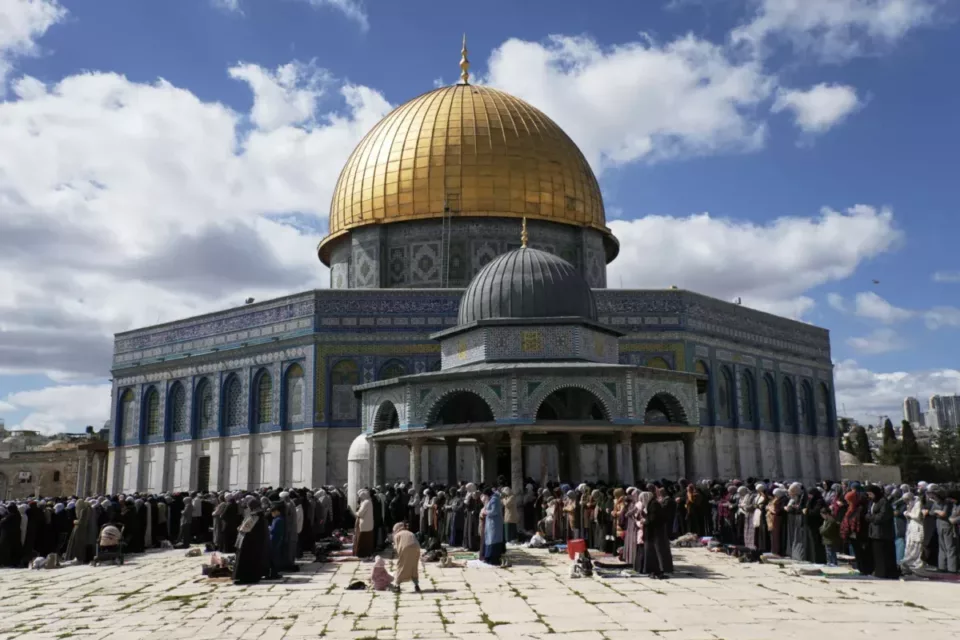
Amid Israeli-U.S. airstrikes on targets in Iran that began Saturday and subsequent retaliatory measures, Israel has imposed strict restrictions on public gatherings. This has led to the closure of schools, businesses, airports, as well as churches, mosques and synagogues. These measures have been felt particularly acutely by Muslims celebrating Ramadan and Jews preparing for Purim, causing deep frustration and anxiety among the faithful. Jerusalem’s Old City, home to shrines of the three Abrahamic religions, was also closed to the public.
According to ReligionNews.com, in the early morning hours of Saturday, February 28, after Israeli and U.S. fighter jets began striking targets in Iran, every cell phone in Israel received an air alert, demanding immediate shelter in the nearest bomb shelter. Shortly thereafter, the country’s Home Front Command announced a ban on any public gatherings for fear of Iranian retaliation. The assembly ban led to the closure of not only schools, secondary workplaces and airports, but also churches, mosques and synagogues. For Muslims celebrating Ramadan and Jews preparing for Purim, which begins at sundown Monday, the closure of their temples is a tangible loss. Christians, on the other hand, look with uncertainty toward Holy Week, which begins at the end of March.
The frustration was compounded when the Home Front Command made the highly unusual decision to close Jerusalem’s Old City, home to the Wailing Wall, Al-Aqsa Mosque, the Church of the Holy Sepulchre and dozens of other sites sacred to the three Abrahamic religions, to all but residents, clergy and essential workers. Up to 80,000 Muslims were able to pray at Al-Aqsa on Friday, the day before the attacks, but mass prayers the following Friday seem doubtful. When sirens sounded on Saturday, the Jewish Sabbath (Shabbat), Jews already in synagogues rushed to the nearest bomb shelter to complete their prayers, while those preparing to go to synagogue took shelter at home. Christian clergy across Israel held prayers Sunday, but mostly in front of empty pews.
“The priests will serve Mass as usual, but no one will be able to come,” said Farit Jubran, a spokesman for the Catholic Patriarchate of Jerusalem, referring to new instructions from the Home Front Command. Mohammed El-Masri, a maintenance supervisor from Jerusalem, expressed frustration with the restrictions: “I understand that crowding can be dangerous, especially for those praying in the courtyard of Al-Aqsa, but I think Iran will do its best not to strike the mosque. Of course, it is possible that if the missile is shot down, fragments could fall on the Old City.” According to news reports, the warhead of an Iranian missile fell in an open area a few hundred feet from the Old City on Sunday. Until the restrictions are lifted, El-Masri said he and his family will pray at home. “We hear the prayers of the muezzin from our local mosque, so we will do our best until this conflict is over, inshallah – God willing.”
The holiday of Purim itself commemorates the survival of the Jewish people in ancient Persia – modern-day Iran – when a plot to destroy them was foiled. For religious Jews, the fact that the war began on Shabbat Zachor, the Saturday preceding the holiday of Purim, seemed both significant and momentous. On Shabbat, synagogues read a passage from the Torah (Deuteronomy) that recounted the vicious attack of the Amalekites, a hostile people, on the Israelites as they fled Egypt.
Jewish children usually dress up in festive costumes in the days leading up to Purim, but this year schools are closed and the streets are virtually empty. To cheer children up and reduce their fears during the nearly two dozen attacks that occurred in the first 24 hours of the war, many public bomb shelters encouraged children and even adults to come dressed up in costumes. Some shelter seekers brought guitars and other musical instruments. “We try to make the best out of a bad situation,” said a father of two as he hurried his children – one in a Spider-Man costume, the other in a flowing pink dress – to the shelter in Jerusalem.
In the Book of Esther, which is read at Purim services, Haman’s sinister plan to destroy the Jewish people is thwarted by Esther, the Jewish wife of the king, who is warned by her uncle Mordechai. Haman’s evil decree is overturned and he is executed at the end of the story. Iran’s Supreme Leader Ayatollah Ali Khamenei, who was reportedly killed Saturday morning in an Israeli airstrike, has often been compared to Haman, who according to Jewish tradition was a descendant of Amalek.
Rabbi Kenneth Brander, who heads the Or Torah Stone educational network, recalled how during a reading of the Zechor passage in his synagogue on Shabbat, the threats described in the ancient text became “not just historical memories, but living realities.” Brander adds: “In the Book of Esther, Esther is not given the opportunity to stand by while the fate of her people hangs in the balance. Her uncle Mordecai encourages her to step forward and take responsibility for their safety. It reminds us that we defeat the Aman of every generation only when we stand together, united by one goal, overcoming our petty differences.”
Recall, we reported earlier that Iranian Christians welcomed the strikes against Iran’s leadership by the US and Israel.
Read also