Geopolitical Aspects of the Struggle for Succession to the See of Constantinople
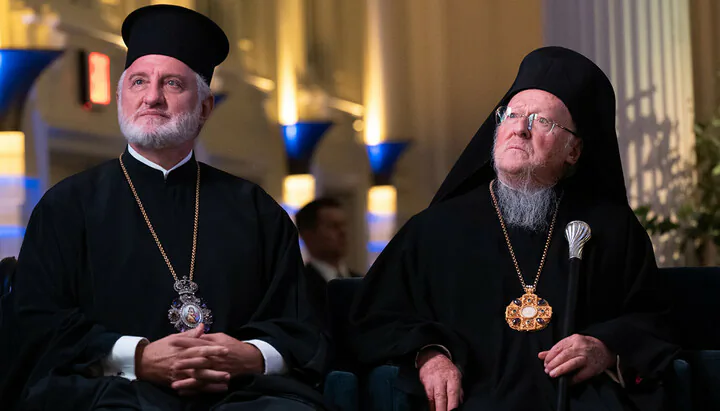
The issue of Ecumenical Patriarch Bartholomew’s succession is no longer an exclusively internal church matter; it has become the subject of broad geopolitical debate. According to the Helleniscope website, Turkish analysts view the upcoming leadership transition at the Ecumenical Patriarchate as a battleground where the interests of Turkey, the United States, and global religious networks clash.
Turkish columnist Ahmet Almaz, whose opinion is cited by the publication, focuses on the figure of Archbishop Elpidophoros of America. His potential nomination for the position of patriarch is linked to his active involvement in Washington and the establishment of contacts with influential political and religious circles in the U.S. According to the author of the article, these connections could become a decisive factor in the future struggle for the patriarchal throne.
The publication emphasizes that the historic districts of Istanbul—Fener and Balat—are today not merely symbolic seats of the Patriarchate, but arenas of transformation reflecting contemporary social and economic shifts. The article suggests that the Turkish authorities seek to maintain control over the Patriarchate by supporting candidates capable of influencing the Greek diaspora and advancing a political agenda that aligns with Ankara’s interests.
Analysts at the Helleniscope portal, for their part, express concern that such processes could lead to increased external influence on the church. The article emphasizes that the issue of succession inevitably touches on matters of diplomatic relations, including the complex issues of Greek-Turkish dialogue, making the election of a new head of the Church of Constantinople a significant event for international politics as a whole.
Read also