The Romanian Orthodox Church Refused to Recognize the OCU Without Guarantees for the Romanian Minority in Ukraine
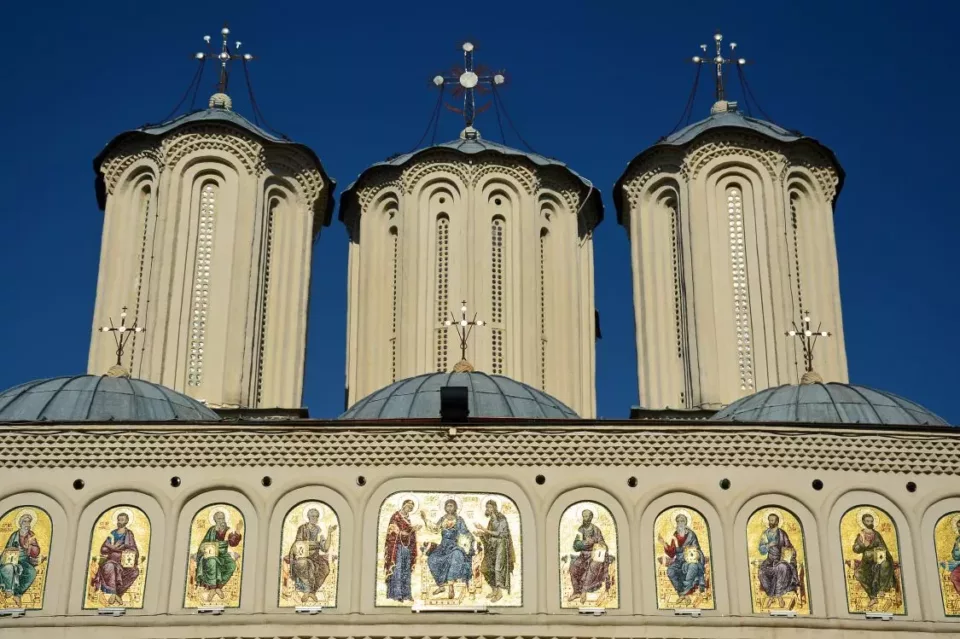
The Patriarchate of the Romanian Orthodox Church (ROC) issued a statement expressing concern over the actions of the Ukrainian authorities regarding the church situation and the status of the Romanian Orthodox minority in Ukraine. The statement was prompted by calls from the Ukrainian ambassador urging the ROC to recognize the Orthodox Church of Ukraine (OCU). This was reported by the Romanian news outlet Știri pe surse.
The statement emphasizes that “for nearly 30 years, the issue of schism in Ukraine has not been resolved, and no appeal was made for pan-Orthodox mediation, as was done in the case of the schism in Bulgaria.” In the context of this prolonged conflict, the Ecumenical Patriarchate granted a tomos of autocephaly to hierarchs and believers who were outside communion with the Russian Orthodox Church. However, as the ROC notes, “this tomos was accepted only by Ukrainian Orthodox who were not in communion with the Moscow Patriarchate.”
The Holy Synod of the ROC reaffirmed its position previously expressed during its sessions on May 24 and October 25, 2018. At that time, it was recommended that the Ecumenical and Moscow Patriarchates find a solution through dialogue, “preserving the unity of faith, respecting the administrative and pastoral freedom of clergy and believers in that country (including the right to autocephaly), and restoring Eucharistic communion.” If bilateral dialogue fails, the ROC proposed convening a synaxis of all Orthodox Church primates.
The ROC stresses that in making a decision regarding the OCU, it will take into account the presence of 127 Romanian Orthodox parishes in Ukraine, mainly in Northern Bukovina, under the jurisdiction of the Ukrainian Orthodox Church. The statement also highlights the need to “obtain written guarantees from church authorities and the Ukrainian state that the ethnic and linguistic identity of Romanians will be respected.”
The Patriarchate insists that Romanian Orthodox in Ukraine must be able to “organize into a Romanian Orthodox Vicariate and maintain spiritual ties with the Romanian Patriarchate,” including receiving liturgical and theological books in the Romanian language. As an example of reciprocity, it is noted that “since 1990, a Ukrainian Orthodox Vicariate has been operating in Romania.”
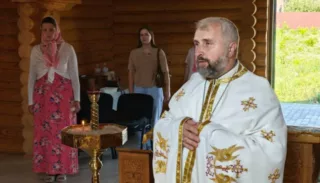
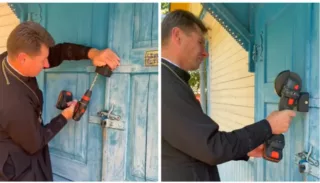
Following consultations with clergy and laity, the ROC in Ukraine rejects the idea of transferring under the jurisdiction of the OCU. The statement emphasizes that “the Ukrainian state does not comply with its own laws, refusing to recognize the Religious Association of the Romanian Orthodox Church in Ukraine.” Furthermore, the ROC points to an incident in Chernivtsi, where “in an illegally seized church,” the first service in Ukrainian was held, even though the church’s façade still bears the Romanian inscription: “One God in Three Persons.”
It is worth noting that the Ukrainian ambassador to Romania, Ihor Prokopchuk, called on the Romanian Orthodox Church to recognize the OCU. He presented the recent incident in Chernivtsi—where on June 17, with the involvement of police and OCU representatives, a forceful attempt was made to seize the UOC cathedral—as the result of “Russian schemes” aimed at undermining trust between Kyiv and Bucharest.
Read also