Phanar and OCU organize an international conference on the role of the ROC in geopolitical processes
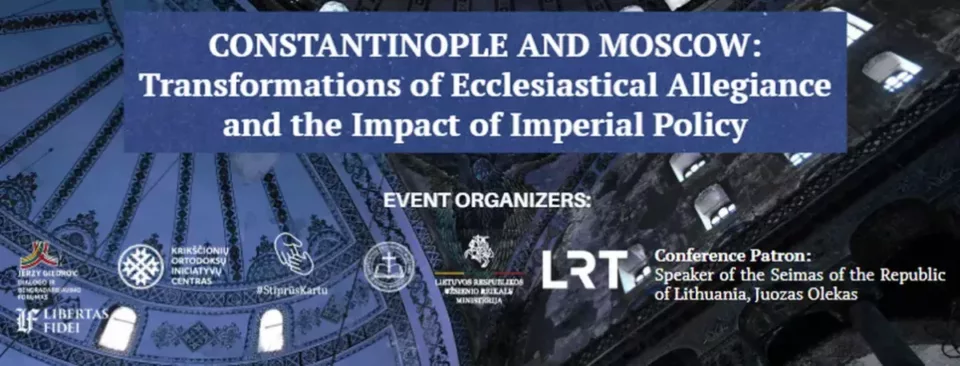
on February 23, 2026, an international conference entitled “Constantinople and Moscow: Transformations of Church Loyalties and the Impact of Imperial Policy”. The event will be devoted to analyzing Russia’s use of both soft and hard power through church structures, especially in the context of its ongoing aggression against Ukraine.
According to fosfanariou.gr, the conference is timed to coincide with the anniversary of Russia’s war against Ukraine and aims to examine the role of religion in geopolitics, the origins of the Russian World ideology and its impact on regional security. The discussions are aimed at an open and timely dialog on these critical issues.
The conference will be attended by high-ranking hierarchs, scholars and international experts. The organizers and partners of the event are the Jerzy Giedroyc Forum for Dialogue and Cooperation, the Orthodox Christian Institute for Education and Research, Stiprūs kartu and KOIC, LRT, the Ministry of Foreign Affairs of Lithuania, and Libertas Fidei. The conference will be held under the patronage of the Speaker of the Seimas of the Republic of Lithuania Juozas Olekas.
It is reported that among the speakers will be, among others, the hierarch of the Patriarchate of Constantinople, Metropolitan Emmanuel of Chalcedon and the head of the press service of the OCU, Yevstratiy Zorya. The working languages of the conference will be Lithuanian, Ukrainian and English, with simultaneous translation for all participants.
Earlier, Archimandrite Gerasimos Frangoulakis of the Patriarchate of Constantinople sharply criticized the Patriarchs of Antioch and Jerusalem for their refusal to participate in the celebration of the 1700th anniversary of the First Ecumenical Council in Nicaea. In his opinion, this absence, especially against the background of the expected presence of the Pope, is not just a formality, but a step that degrades the role of the ancient Patriarchates and their historical contribution.
Read also