The Ministry of Culture has opened the Far Caves of the Kyiv-Pechersk Lavra to visitors on a "trial basis"
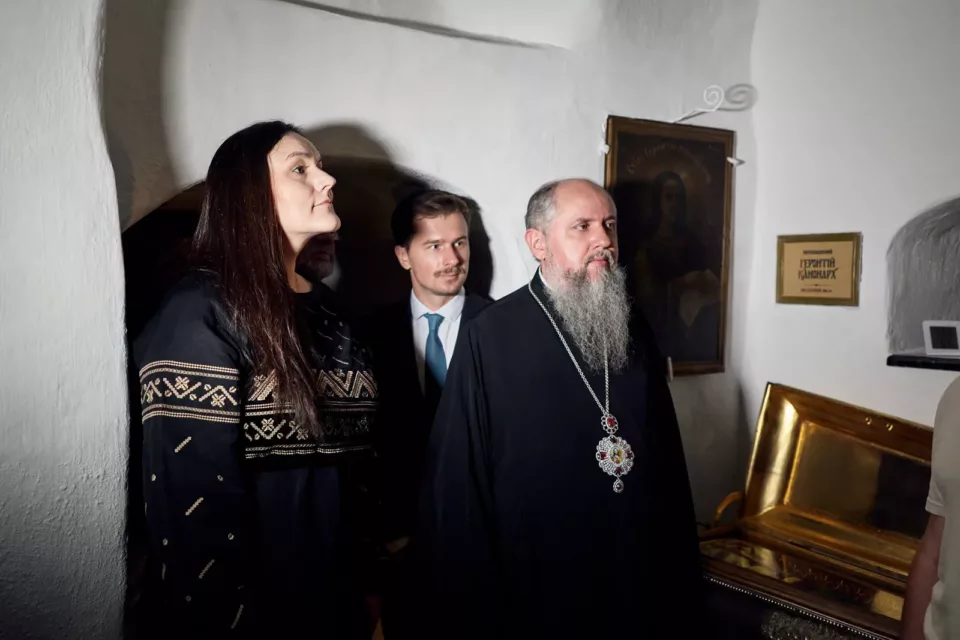
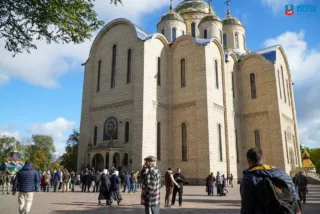
To mark the celebration of the Day of the Baptism of Rus’-Ukraine and the Day of Ukrainian Statehood, the Kyiv-Pechersk Lavra National Reserve announced the reopening of the Far (Theodosius) Caves to worshippers and visitors. The event was attended by representatives of relevant state institutions and the leadership of the Orthodox Church of Ukraine (OCU). This was reported on the official website of the Ministry of Culture of Ukraine.
The grand opening of the complex was accompanied by a “prayer service for Ukraine” led by the head of the OCU, Epiphanius Dumenko. Representatives of the government, the Verkhovna Rada, the OCU, and the public took part in the event. The Deputy Prime Minister for Humanitarian Policy emphasized that systematic efforts to open cave complexes—previously, in February, the Near Caves were “opened”—allows Ukrainians to feel their inseparable connection to the centuries-old state and spiritual tradition.
The Far Caves, whose history spans nearly a thousand years, include the oldest underground churches and the cell of St. Theodosius. Maksym Ostapenko, the reserve’s director general, noted that the opening is timed to coincide with large-scale preparations for the Lavra’s 1,000th anniversary. In addition, during the ceremony on Cathedral Square, a “memorial plaque to Hetman Ivan Mazepa” was consecrated.
For now, the “Far Caves” will operate on a trial basis. Until August 15, visits are possible every Friday and Sunday from 9:00 a.m. to 12:00 p.m. After that date, the schedule will be expanded: pilgrimage groups will be welcomed in the morning, and tour groups in the afternoon. Visits are limited to groups of up to 12 people by prior reservation or on a first-come, first-served basis.
As a reminder, earlier , Maksym Ostapenko, director general of the Kyiv-Pechersk Lavra National Reserve, issued a statement saying that the presence of monks from the Ukrainian Orthodox Church (UOC) on the territory of the Lower Lavra creates obstacles to the development of tourism in the area. According to the reserve’s director, the current access regime to the shrine limits tourists’ ability to freely visit the site.
Read also