“The UOC will not be the subject of negotiations with Russia,” - political scientist Fesenko
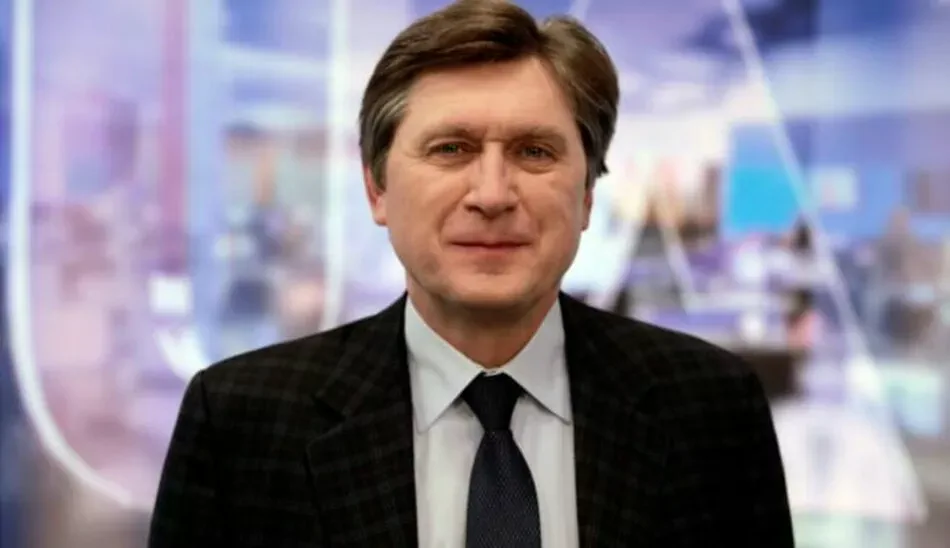
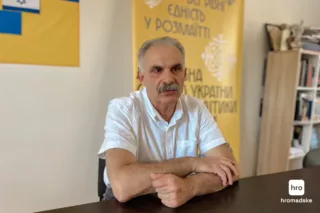
Political analyst and chairman of the board of the Penta Political Consulting Bureau Volodymyr Fesenko has shared his opinion on the future of the Ukrainian Orthodox Church after the adoption of the law No 8371 aimed at banning it. Fesenko believes that the activity of the authorities in the issue of banning the UOC means that the Church will not be a bargaining chip with Russia in case of negotiations. About this he wrote in his Facebook account.
“First, it is obvious that after the adoption of this bill, the UOC-MP will no longer be able to exist in its current form. But this does not mean that this church itself will disappear instantly. Both normatively and procedurally, there will be a certain transitional period. And in fact, the main task is not just to adopt this bill, but to actually and effectively ensure the transformation processes that are prescribed in it. In this context, we must remember our traditional problem – it is not enough to pass a law, but we must also properly ensure its implementation. Unfortunately, the letter of the law does not always correlate with the practice of its implementation,” – Fesenko wrote.
Fesenko added that he assumes a high degree of protest sentiment within society, which will result in numerous lawsuits and other actions to preserve the UOC. He urged the state to be ready for such a development.
“Second, with high probability, there will be large-scale resistance to the implementation of this law – both protest and legal (appealing its individual norms and practice of implementation in the courts, in particular, in the Constitutional Court of Ukraine and the European Court of Human Rights), information and political (conducting information and political campaigns against the ban of the UOC-MP in Ukraine, abroad, in particular, in various international organizations), as well as bureaucratic (inhibition and imitation of its implementation). And it is necessary to prepare for this by planning appropriate countermeasures,” – the political scientist writes.
In addition, in his opinion, due to the increased interest of the authorities in the issue of banning the UOC, the Ukrainian Orthodox Church is unlikely to become an object of agreement between Ukraine and Russia during peace talks.
“Third, the adoption of this law means that the Ukrainian authorities are not going to bargain with Russia on the topic of the status of the UOC-MP in the process of future peace talks. But it is almost certain that Russia will insist that a condition for ending the war must be the restoration of the Moscow church in Ukraine. We should also prepare for this problem,” – Fesenko summarized.
We will remind, earlier we reported that the head of the international human rights company “Amsterdam & Partners LLP” Robert Amsterdam, representing the legal interests of the Ukrainian Orthodox Church, said that the initiators of the ban of the UOC will be punished deservedly. The lawyer added that he would fight for the rights of the Ukrainian Orthodox Church despite threats from the SBU.
Read also