Same-Sex Marriage and Adoption by Gay Couples Ruled Constitutional in Greece

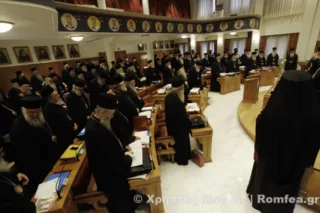
On May 30, 2025, Greece’s Council of State (the country’s highest administrative court) ruled that civil marriages between same-sex couples and their right to adopt children do not violate the Greek Constitution. The court thus upheld Law No. 5089/2024, passed in February 2024, with a majority vote of 21 to 6. The news was reported by Orthodox Christianity.
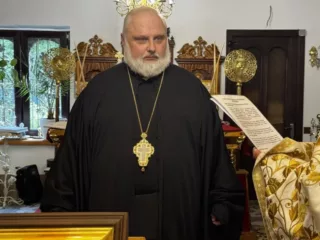
The law, which made Greece the first Orthodox country to legalize same-sex marriage, has faced strong opposition from the Greek Orthodox Church from the start. Notably, Metropolitans Seraphim of Piraeus and Seraphim of Kythira excommunicated MPs who voted in favor of the law within their dioceses.
The court considered a lawsuit brought by three organizations, including a pro-life association. The plaintiffs argued for the annulment of key provisions of the law, claiming that legalizing same-sex unions and adoption undermines the traditional concept of family and harms children’s interests. They also challenged a ministerial decision concerning the registration of marital and parental data in civil records.
However, the court concluded that these provisions do not violate the constitutional protections of marriage, family, motherhood, or equality. The ruling stated that the legal recognition of same-sex marriage and related adoption rights aligns with both national and European legal standards.
The National Commission for Human Rights supported the law during the proceedings, emphasizing that it enhances child protection by legally recognizing the relationship between children and non-biological parents. The state argued that the law does not interfere with religious institutions but instead ensures equality and respect for individual freedom.
It is also worth noting that on June 7–8, 2025, during the celebration of Pentecost, an LGBT festival will be held in Kyiv, and a pride parade is planned for June 14. The stated goals of these events are to “raise funds for the Armed Forces of Ukraine” and to “protect human rights.”
Read also