Even Achievable Demands Have Become Unachievable — Religious Scholar on the DESS Order to the UOC
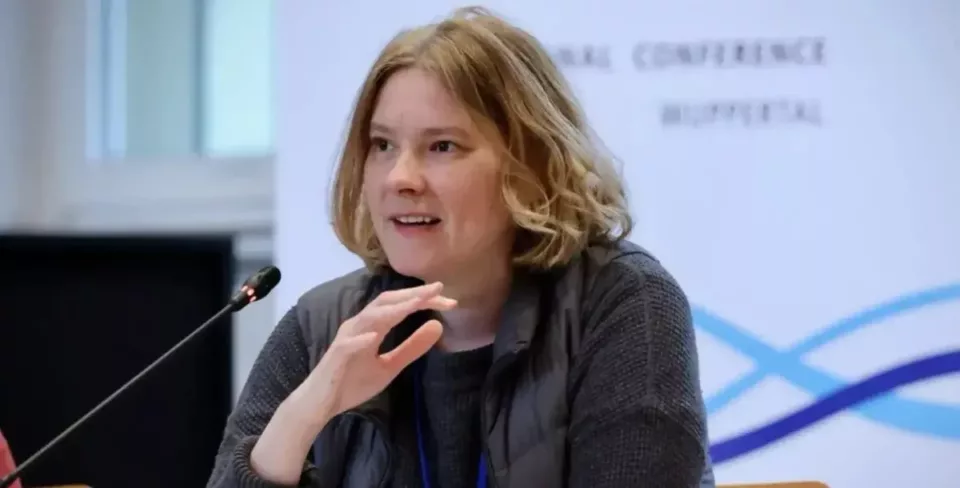
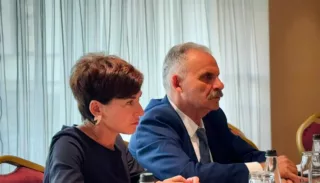
Religious scholar and OSCE expert on freedom of religion Nataliya Vasylyevych stated that the escalation in relations between the Ukrainian state and the Ukrainian Orthodox Church has reached a critical point, where any actions by the authorities are perceived as repressive. Vasylyevych drew attention to the order issued by the State Service for Ethnic Policy and Freedom of Conscience (SSEFC) demanding that the UOC eliminate “affiliation” with Moscow. She shared her thoughts on her Telegram channel.
In her view, such a document format — with the threat of liquidation — provokes resistance in the current environment:
“At this point, the level of escalation between the UOC and the state apparatus has reached such a degree that any document titled ‘order’ and containing a threat of liquidation is automatically perceived as repressive.”
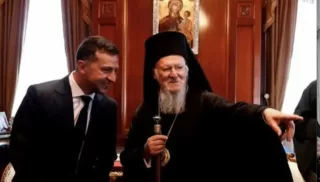
She also pointed out the particular significance of the fact that the order was addressed to the Primate of the UOC, who had recently been stripped of Ukrainian citizenship:
“It is telling that such orders are addressed to the Metropolitan of Kyiv, who just a week earlier was deprived of Ukrainian citizenship for allegedly showing ‘signs of affiliation’ with Russia.”
Vasylyevych described the state’s current policy as a system of administrative pressure and stressed that such an approach leads to a paradoxical outcome:
“Now it hardly matters what the terms are — even if they contain points the UOC leadership has dreamed of fulfilling for years, they become unachievable on principle — ‘principally unachievable’.”
According to the expert, one should not expect de-escalation, but rather a new round of tension. Among the causes, she named the general war fatigue in society, growing dissatisfaction with state authorities, hostile attitudes of the OCU toward the UOC, and the use of violence to resolve church property conflicts.
“Something that is achievable in a context specifically created to pressure compliance becomes unachievable. The main problem lies not in the conditions, but in the need to change the context itself,” Vasylyevych concluded.
It is also worth noting that the Head of the Department for Religious Affairs of SSEFC, Vyacheslav Horshkov, admitted that the so-called study of the UOC’s ties to the Russian Orthodox Church was not conducted by qualified religious scholars, but by regular government employees.
Read also