Some notes on the “Ukrainianness” of the UGCC
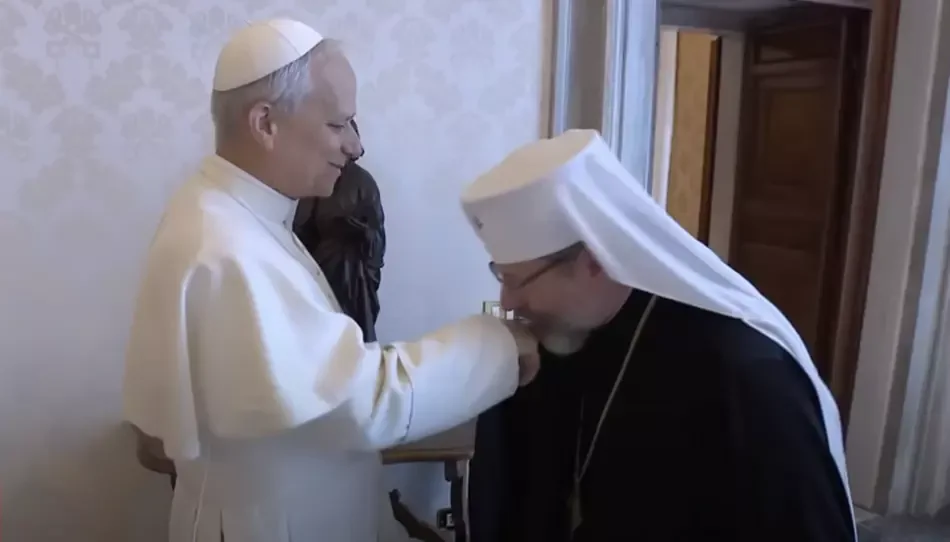
In connection with recent statements by the head of the Ukrainian Uniates, Sviatoslav Shevchuk, it occurred to me that the attempts of the UGCC to portray itself as a “Ukrainian church” look absolutely ridiculous. All their manipulative tactics, such as the “Kyiv throne,” “Vladimir’s baptism,” “patriarchate,” and other ostentatious displays of “Slavic-Ukrainianness,” are designed for one purpose only: to hide the true nature of this organization.
So, here are a few simple things that prove that the UGCC has as much to do with Ukraine and the “Kyiv throne” as the Chinese have to do with French cuisine.
Their saints
The Greek Catholic website RYS, which is part of the Ukrainian Catholic University’s infopool, publishes commemorative days that are apparently celebrated in the UGCC.
July 15 is the day of veneration of Bonaventure (Franciscan Order);
July 31 is Ignatius Loyola (Jesuit Order);
August 1 is Alphonsus Maria de Liguori (Redemptorist Order);
And that’s just from memory. Of course, one could talk at length about what these orders did separately, including on the territory of modern Ukraine. Take, for example, the most famous – the Jesuit Order. It so happened that the activity of the Jesuits on the territory of our country coincided with the period of the emergence of the union. What were they doing? Officially, they were engaged in education. Unofficially, they were fighting against Orthodoxy. Is it worth mentioning that this was happening within the framework of the violent Polonization and Catholicization of the Orthodox population?
A perfect example of that era is the Jesuit polemicist and preacher Peter Skarga, who made considerable efforts to eradicate Orthodoxy from the consciousness of Ukrainians (in fact, Russians or Rusyns, as the Orthodox population of the Polish-Lithuanian Commonwealth called themselves at that time). The following works by Skarga have survived:
1) “On the unity of God’s Church and the departure of the Greeks from unity, with a warning and instruction to the Rus’ peoples”;
2) “On the delusions of the Rus’ and the reasons why Greece separated from the Roman Church.”
Is it necessary to explain what exactly these “works” were about and for whom they were intended? And all this, dear friends, is only the tip of the cold and ugly iceberg called the UGCC, which the Vatican has brought to our once quiet Orthodox harbor.
The everyday life of the “Ukrainian” (?)GCC
Quite routinely, the UGCC’s information department reported several times this year on the organization’s synod meetings. All meetings in 2025 were held NOT in Ukraine. In the US, Canada, twice in Italy.
Perhaps we have overlooked something. However, show us at least one traditional Ukrainian Christian denomination that holds its synods outside Ukraine! The UOC? No. The OCU? No, either. Maybe the UOC-KP? Nope, not that one either.
Now, take at least the small part we’ve given here as an example and tell me—what does Ukraine have to do with it? Also, ask yourself this question—what does the UGCC actually do, and to which “Kyiv” throne does it lead the Ukrainian people?
Read also