Head of the Ukrainian Greek Catholic Church praises Croatia for its “unique experience in healing the wounds of war”
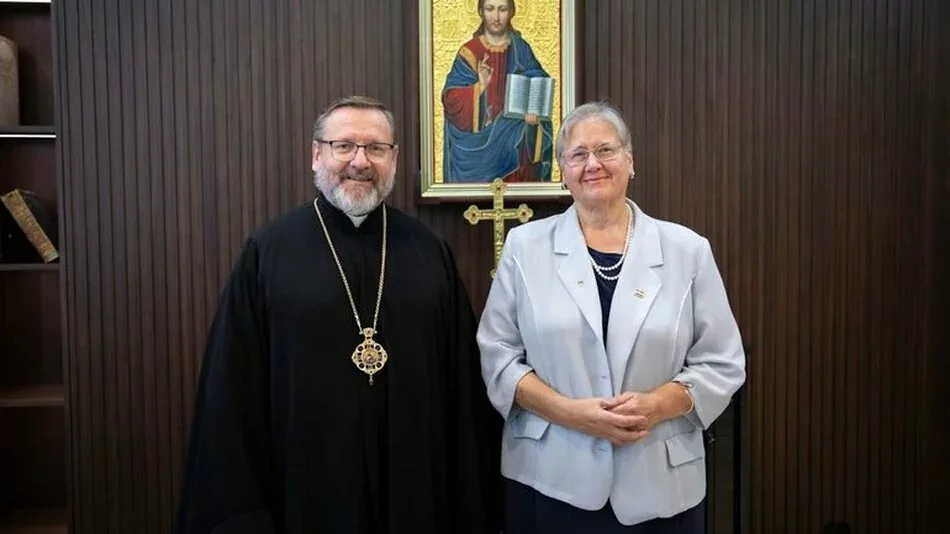
The head of the Ukrainian Greek Catholic Church, Sviatoslav Shevchuk, met with the Croatian ambassador to Ukraine, Anica Džamić. During the meeting, the head of the Ukrainian Greek Catholic Church thanked Ms. Džamić for her support of the Catholic Church in Ukraine and praised Croatia for its “unique experience in healing the wounds of war.” This was reported by the Information Department of the Ukrainian Greek Catholic Church.
“I would like to thank you, Madam Ambassador, for supporting the Catholic Church in Ukraine. You are present at many events, particularly those related to the promotion of family values. We greatly appreciate this. Today, we feel that Croatia and the Catholic Church in Croatia are consistently on the side of our country and our Church. Our Synod has declared the pastoral care of healing the wounds of war to be one of its main priorities. We understand that military trauma affects not only soldiers, but also everyone who has experienced bombing or danger at least once. The future of Ukraine depends on whether we can overcome this trauma. Croatia has unique experience, and we want to learn from you,” – the head of the UGCC said to Ms. Anica.
It is worth noting that during World War II, Croatia was part of the Axis powers, supporting Nazi Germany. As a result of the chosen political course, an ultra-right nationalist movement called the Ustasha was formed in the country, whose members carried out ethnic and religious cleansing in Croatia.
With the support of the local Catholic clergy, the Ustasha organized the genocide of Serbs, Jews, and Gypsies, and numerous concentration camps were created. According to various estimates, between 197,000 and 800,000 Serbs, 30,000 Jews, and 80,000 Roma were killed during the Ustasha genocide. The Ustasha were particularly hostile toward the Orthodox population of Croatia.
The Ustasha were particularly hostile toward the Orthodox population of Croatia. As a result of their actions and subsequent post-war attempts to revive nationalism, the Serbian Orthodox Church, which operated in Croatia, was severely restricted and still faces pressure from local authorities.
Read also