Heads of the Nordic churches and DESS discuss religious situation in Ukraine
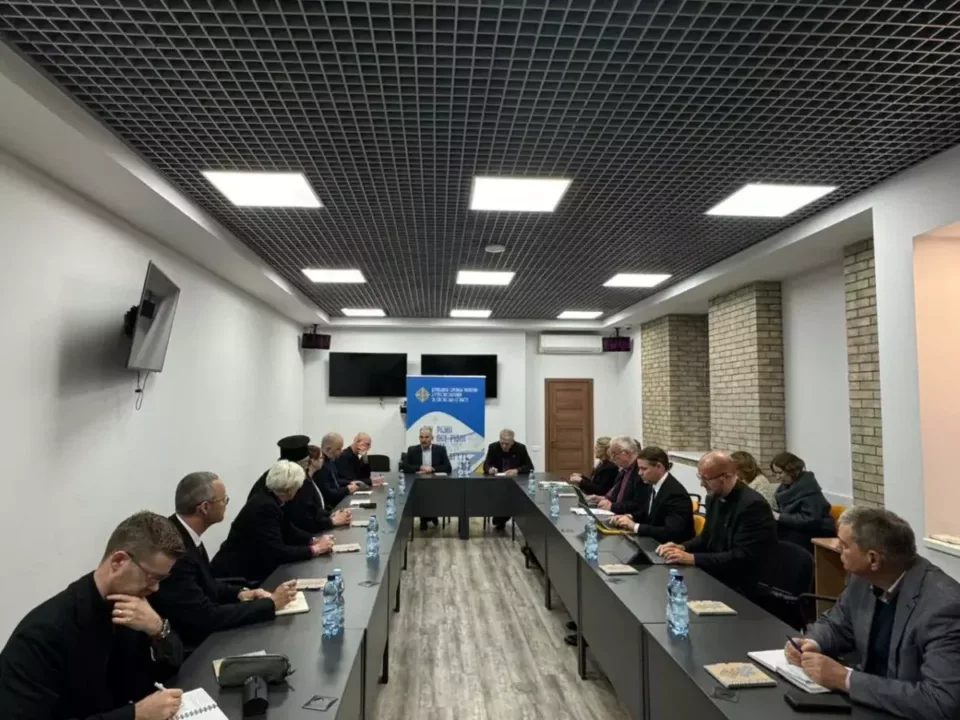
on October 1, heads and representatives of the churches of the Nordic countries met in Kyiv with the leadership of the State Service of Ukraine for Ethnic Policy and Freedom of Conscience (DESS). The head of the State Service complained about the Russian Orthodox Church, without mentioning the ban on the UOC initiated by the agency he heads.
According to the State Service of Ukraine for Ethnic Policy and Freedom of Conscience, the head of the department, Viktor Yelensky, briefed the international delegation in detail «on the current state of church-state relations and Ukraine’s efforts to protect the right to freedom of conscience.» He paid special attention to the situation in the temporarily occupied territories, where, according to him, «there is systematic harassment of believers, destruction of religious buildings, closure of churches and prayer houses, and people are sentenced to years of imprisonment for their religious beliefs.»
Viktor Yelensky sharply criticized the position of the Russian Orthodox Church, which, in his opinion, not only supports but also initiates religious persecution. «The leadership of the Russian Orthodox Church not only openly supports military aggression against Ukraine, blessing weapons of mass destruction and promising eternal life to the fallen Russian military, but also denies the existence of the Ukrainian state and Ukrainians as such,» said the head of the DESS. He also questioned the expediency of the Russian Orthodox Church’s continued membership in the World Council of Churches because of its «anti-gospel position.»
The head of the DESS called on representatives of the churches of Norway, Denmark, Sweden, Finland and Iceland to «strengthen opposition to Russian propaganda in the religious sphere,» emphasizing that «Russia uses religion as an element of its military doctrine to justify war crimes.»
At the same time, the official did not mention the ban on the largest Ukrainian religious organization, which is still the Ukrainian Orthodox Church despite all the pressure.
To recap, the head of the OCU, Epiphany Dumenko, said during a meeting with a religious delegation from the Nordic countries that the bill to ban the Ukrainian Orthodox Church (UOC) had allegedly been approved by the Venice Commission. However, this information is not confirmed by open data and contradicts previous statements by officials and calls by international organizations.