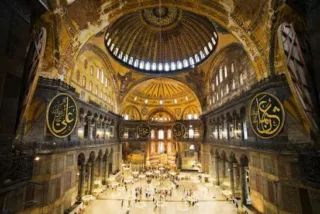
Heavy machinery at Hagia Sophia Cathedral has raised fears for the preservation of the temple's historic landscape
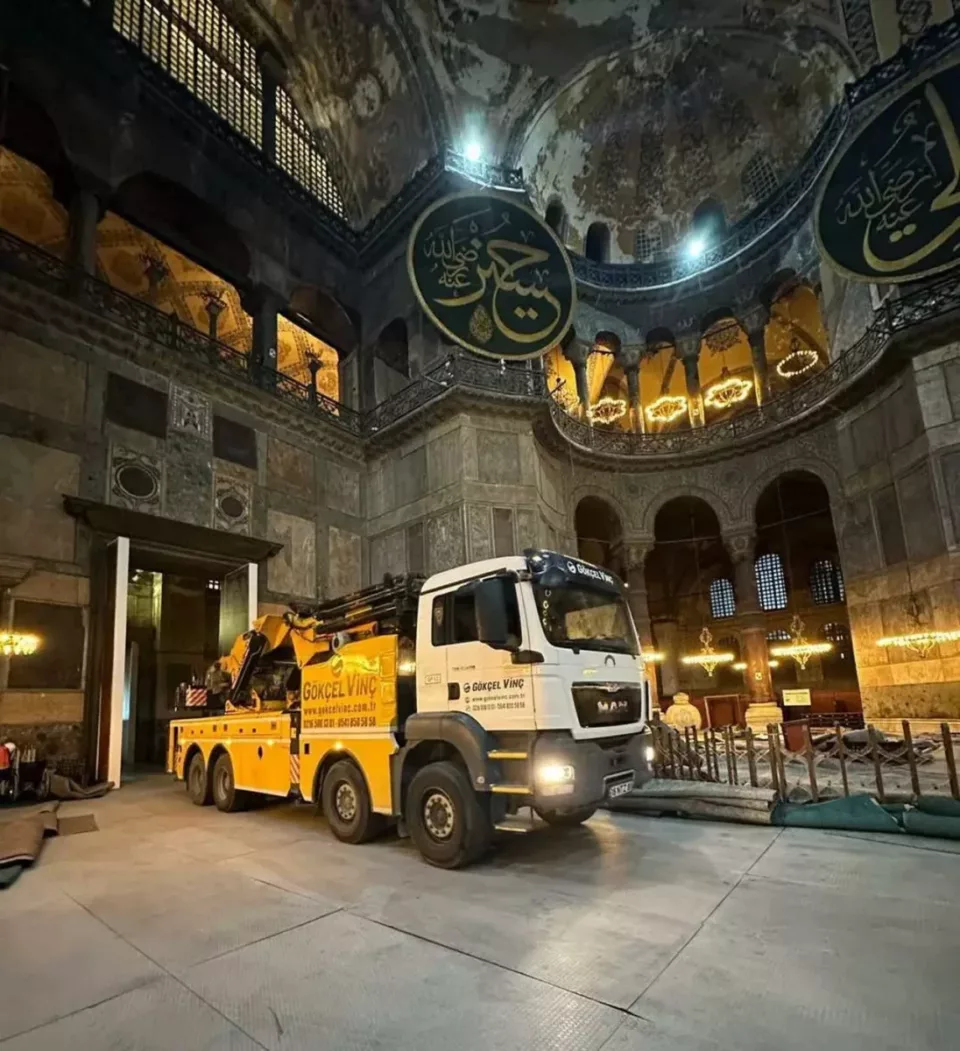
The appearance of a truck crane inside the Hagia Sophia Cathedral in Istanbul has caused widespread public outcry and concern over the preservation of the monument’s unique historical floor. In response to the fears spread on social media, the Turkish Ministry of Culture and Tourism provided an official explanation, assuring that all necessary precautions were taken to protect the 1,486-year-old building during the large-scale restoration work.
According to Orthodox Times, the discussion began after the publication of photos showing heavy machinery placed on the floor of the cathedral on temporary protective slabs. Of particular concern was the fact that one of the machines was located near the Imperial Gate, the main ceremonial entrance to the cathedral.
Specialists, whose opinion is quoted by the publication, expressed doubts about the reliability of the protection used. According to their assessment, simple flat plates cannot guarantee full load distribution. The structure of the floor of St. Sophia is extremely complex: it consists of mosaics, ancient stone slabs, and in some places there are voids under it. Experts emphasized that concentrated pressure and vibrations can cause irreversible damage. Such works, they said, require better systems to disperse the weight over a larger area.
Turkish authorities issued an official statement in response to the criticism. Culture and Tourism Minister Mehmet Nuri Ersoy said the Hagia Sophia Cathedral is undergoing «the most extensive and comprehensive restoration process in its history,» aimed at improving seismic resistance and preserving the monument’s authenticity. The General Directorate of Foundations, responsible for the work, provided technical details of the protective measures.
According to the statement, static load analyses and bearing capacity assessments were carried out before the technicians entered. The studies showed that the floor could withstand up to 25 tons per square meter. For additional safety, a temporary platform was constructed for loads of up to 30 tons per square meter. Thus, the heaviest machine weighing about 45 tons, thanks to a special weight distribution system, exerts a pressure of only 6 tons per square meter on the floor, which is within the permissible limits.
Read also