Orthodoxy strengthens its position in Austria, becoming the second most populous Christian denomination
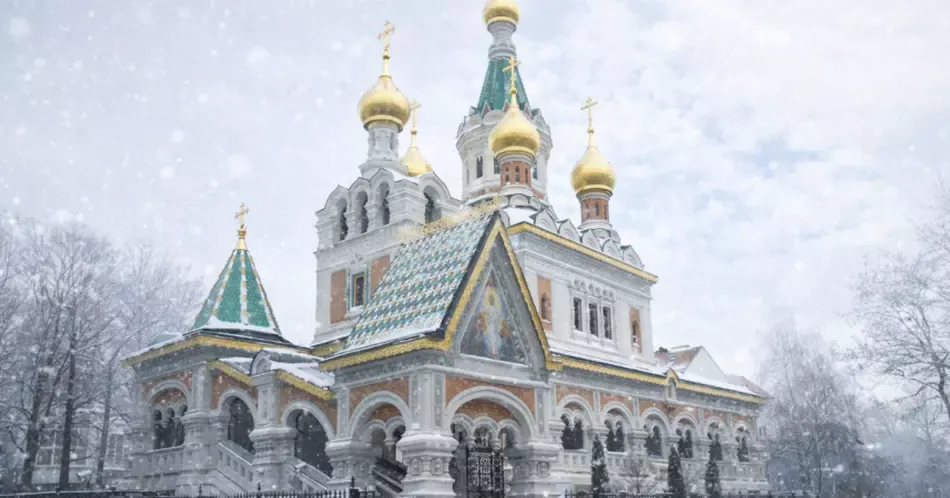
The Orthodox Church in Austria has significantly strengthened its position, becoming the second largest Christian denomination in the country. According to the 2021 census data cited by Statistik Austria, about 436,000 people identify themselves as Orthodox, which is about 4.9% of the total population of Austria, and interest in it continues to grow.
The historical presence of Orthodoxy in Austria has deep roots going back to the 17th century, when the first parishes appeared under the Habsburg monarchy, mainly in Vienna. The current legal position of the Church in the country is regulated by the federal “Law on Orthodox Churches”, adopted in 1967, which attests to the long-standing integration of Orthodox communities into Austrian society.
Currently, seven Orthodox jurisdictions are represented in Austria, united since 2010 in a single Orthodox Bishops’ Conference. Among them are parishes of the Patriarchates of Constantinople, Antioch, Russia, Serbia, Romania, Bulgaria and Georgia. In addition, there are communities of the Russian Orthodox Church Abroad and the Macedonian Orthodox Church.
The growth in the number of Orthodox believers is due not only to migration processes, but also to the conversion of Austrians themselves. A significant influx of believers from Ukraine, many of whom joined existing parishes, as well as the establishment by the Ukrainian Orthodox Church of its own communities abroad, including in Vienna, significantly influenced the dynamics. As a result, Orthodoxy is no longer perceived solely as the religion of migrant communities, becoming an increasingly visible part of Austria’s religious landscape.
Integration has also been facilitated by the development of Orthodox religious education. Since the early 1990s, the Orthodox Law of God has been taught in Austrian schools, and since 2005 it has been coordinated by a special school office. The presence of German-speaking Orthodox parishes also facilitates the participation of young people and converts in church life, making it more accessible.
Orthodox communities are also actively involved in social work through charitable programs, helping the homeless and supporting humanitarian projects both within and outside Austria. In recent years, new Orthodox churches have been built and consecrated throughout the country, a testament to the strengthening of the Church’s infrastructure.
Experts emphasize that the combination of migration processes, active missionary activity and the growing interest of the local population in the Orthodox tradition allows us to predict further steady growth of the influence of the Orthodox Church in Austrian society.
Recall, earlier the European Parliament adopted a resolution on human rights and democracy in the world for 2025, in which Christianity is called the most persecuted religion on the planet. The document points to systematic violations of religious freedom and the lack of a pan-European coordinator to combat Christianophobia, despite the scale of the problem.
Read also