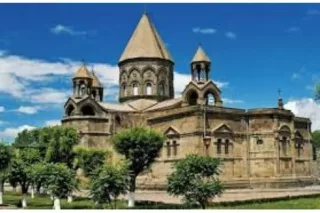
Armenian court extends arrest of Armenian Church hierarch Arshak Khachatryan
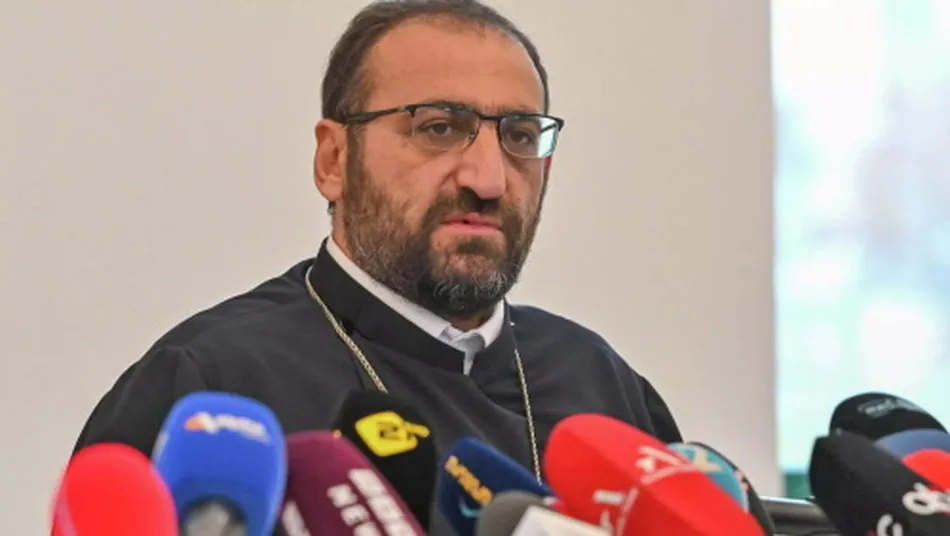
The Yerevan Court of General Jurisdiction has decided to extend for two months the arrest of Archbishop Arshak Khachatryan, head of the Armenian Apostolic Church (AAC) Chancellery. His defense and representatives of the clergy call the charges of «sale of narcotic substances» on which the clergyman was arrested in December 2025 absurd and regard them as part of the political persecution by Prime Minister Nikol Pashinyan directed against the AAC and personally Catholicos Karekin II.
The decision to extend the arrest was made on February 3, TASS reported citing the cleric’s lawyer Arsen Babayan. The lawyer noted that the only «good news» was the granting of his petition to allow visits for the children of the archbishop’s sister, while other visits were restricted.
The investigation incriminates Archbishop Khachatryan with «sale of narcotic substances,» referring to an event seven years ago. The defense and the clergyman himself categorically reject these accusations, considering them far-fetched. Many representatives of the clergy and opposition forces are in solidarity with them, who see Khachatryan’s case as a manifestation of Prime Minister Pashinyan’s targeted campaign against the Armenian Apostolic Church, which aims at the resignation of Catholicos Karekin II.
This situation is part of a broader conflict between the Armenian government and the AAC that has escalated in recent months. Earlier, on December 5, 2025, an Armenian court decided to arrest Archbishop Khachatryan for two months. The tension is confirmed by a number of other developments: in January, the arrest of Bishop Mkrtich Proshyan was extended, and attempts to prevent Catholicos Karekin II from traveling to the Council of Bishops, which, according to preliminary reports, is scheduled to take place in Austria, were reported.
A bill depriving the AAC of the right to obtain land ownership was also passed in December 2025. In January, Nikol Pashinyan signed a roadmap «for the renewal of the Armenian Church,» which was perceived as a direct interference in church affairs. Concern about the situation was expressed by the Russian Orthodox Church (ROC), which in January declared the inadmissibility of the Armenian authorities’ interference in the affairs of the AAC. Against the backdrop of these events, actions in support of the Armenian Church and the Catholicos were held in Moscow and Armenia itself.
Read also