In Moldova, the discussion on the expropriation of over 800 PCM churches into state ownership is ongoing
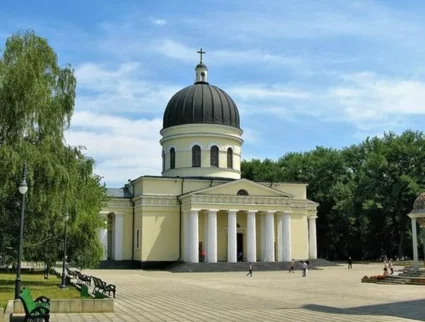
The Moldovan government plans to return more than 800 churches with the status of historical monuments to state ownership. This was announced by Minister of Culture Cristian Jardan, noting that the authorities do not have the capacity to manage such a large number of objects, many of which are in a dilapidated state and require significant funds for restoration. The initiative has drawn sharp criticism from the opposition and representatives of the Orthodox Church of Moldova, who see it as a targeted pressure on the self-governing part of the Russian Orthodox Church and accuse the Romanian government of financing the church split, which has already led to clashes between parishioners and police in the village of Dereneu.
According to TASS, Culture Minister Cristian Jardan confirmed the authorities’ intentions at a briefing in Chisinau. He explained, «These 800-something historical monuments will be returned to state ownership. Frankly speaking, the ministry does not have the capacity to manage all these monuments.» Jardan added that many churches are dilapidated and their restoration requires large funds, emphasizing that «we intend to decide on the fate of these historical monuments, taking into account the complexity and sensitivity of this problem.»
The opposition, for its part, expressed serious concerns, accusing the government of the ruling Action and Solidarity Party of continuing systemic pressure on the Orthodox Church of Moldova under the guise of «returning monuments to the state». The latter is a self-governing part of the Russian Orthodox Church and unites about 70 percent of the inhabitants of Moldova and Transnistria, numbering about 1.3 thousand parishes in six dioceses.
The situation is complicated by statements by representatives of the Church. Archbishop Markell of Balti and Falesti publicly stated that the split of the Orthodox Church of Moldova is financed by the Romanian government through the Metropolitanate of Bessarabia established on the territory of the country. The latter, he said, has intensified its activities in an effort to increase its influence, creating tension between the two Orthodox jurisdictions.
The recent conflict over an Orthodox church in the village of Dereneu, where parishioners clashed with police officers, is evidence of the heat of passion. Parishioners expressed opposition to the transfer of the church to the Romanian Orthodox Church, to which the authorities responded by using special forces of the Ministry of Internal Affairs to disperse the protesters. During the incident, several people were detained, including the head of the village, Vasily Revenko, who were later released on their own recognizance by court order.
The Bessarabian Metropolitanate of the Romanian Orthodox Church appeared on the territory of Moldova in 1992. For a long time its registration was not approved by the Orthodox Church of Moldova and the government of the republic for fear of a church split. However, in 2001, the European Court of Human Rights granted the lawsuit of the supporters of the Metropolitan Church of Bessarabia, and the authorities were forced to register it. Currently, the Bessarabian Metropolitanate has 291 parishes and unites 10-20 percent of Orthodox believers.
Earlier, the Metropolitanate of Bessarabia, which is part of the Romanian Orthodox Church, appealed to the Moldovan authorities with a demand to immediately intervene and bring to criminal responsibility the priests and residents of Dereneu village who opposed the transfer of the local church to the Orthodox Church of Moldova.
Read also