In Zaporizhzhia, OCU hierarch supports liquidation of UOC hospital church

In Zaporizhzhia, the administration of the fifth city hospital initiated the dismantling of the church of the icon of the Mother of God “Healer” belonging to the Ukrainian Orthodox Church (UOC). This decision caused a public outcry and received support from representatives of the Orthodox Church of Ukraine (OCU), who view the demolition as a measure to restore legal order in the use of municipal property.
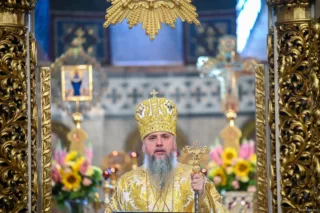
The head of the Zaporizhzhia diocese of the OCU , Photii Davydenko, said in an official address to the townspeople that there is no “persecution of faith” in Ukraine today. In his opinion, the plans to demolish the church are solely “the return of state and municipal premises to legal use.” Davydenko emphasized that he considers it unacceptable for the UOC church to be located near Ukrainian defenders, claiming that prayers can be offered there for those who bless military actions against Ukraine.
On the other hand, representatives of the UOC point to the humanitarian and cultural aspect of the problem. The hospital church has been operating for over 25 years, taking care of patients and staff of the medical institution. The rector of the church expressed concern that the throne, unique frescoes and iconostasis cannot be technically dismantled for transportation, which actually means their inevitable destruction during the work.
Fotiy Davydenko, in turn, insists that no one has the right to hide behind faith to break the law or misappropriate state property. Thus, the situation around the church in the fifth city hospital remains tense, balancing between issues of legitimate ownership and the preservation of the community’s shrines.
As reported, in Zaporizhzhia, the administration of the 5th city hospital deprived the community of the Ukrainian Orthodox Church (UOC) of access to the church in honor of the icon of the Mother of God “Healer”. The incident, which was accompanied by blocking the entrance to the building with hospital equipment and threats of criminal prosecution, drew sharp criticism from the Zaporizhzhia diocese.
Read also