Israel unilaterally announced that it had taken control of one of the key mosques in the Holy Land
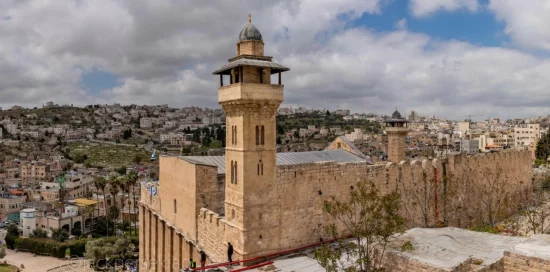
The situation around Hebron in the West Bank has escalated once again following a statement by Israeli Finance Minister Bezalel Smotrich regarding a de facto revision of the mechanisms of the 1997 Hebron Agreement. This involves transferring to Israel some of the administrative powers related to planning and construction in the area of the Ibrahimi Mosque—a holy site for both Muslims and Jews. The Palestinian side viewed this move as a unilateral violation of the agreements and called on the international community to intervene.
According to Vietnam.vn, on June 16, Bezalel Smotrich stated that the decision had been approved by Israel’s Higher Planning Council on the evening of June 15. According to the minister, this signifies a partial repeal of the mechanisms established by the Hebron Agreement, signed in 1997 between then-Israeli Prime Minister Benjamin Netanyahu and Palestinian Liberation Organization Chairman Yasser Arafat.
Under that agreement, Hebron was divided into two administrative zones. Israel retained security control over the H2 zone, which includes Jewish settlements and the Ibrahimi Mosque, while the Palestinian Authority was responsible for civil matters, including planning and construction. Speaking at the opening of the Doran settlement south of Hebron, Smotrich stated: “Yesterday we revoked the Hebron Accords.”
Later, the Israeli Ministry of Foreign Affairs denied the claim that the agreement had been completely revoked. In a statement published on social media, the ministry emphasized that the Hebron Agreement had not been annulled. A spokesperson for the Israeli Foreign Ministry explained that the cabinet decision, adopted several months ago, pertains only to planning and construction rights in Jewish settlements and at sites that Israel considers part of its heritage. The ministry also cited a lack of cooperation on the part of the Hebron municipality and clarified that “apart from these points, there are no other changes.”
The Palestinian Authority under President Mahmoud Abbas condemned Israel’s actions, calling them a unilateral move that violates signed agreements and contravenes international law. The Palestinian side called on the international community, primarily the United States, to intervene immediately to prevent what it described as “the most dangerous step” regarding the status of Hebron.
Hebron Mayor Yusuf al-Jabari stated that the Hebron Agreement serves as the political framework governing the city’s administrative, security, and service-related matters. According to him, any unilateral changes outside existing international mechanisms constitute a serious violation and could have far-reaching consequences for regional stability.
The Ibrahimi Mosque remains one of the most sensitive religious and political sites in the region. Under previous agreements, part of the territory is under the control of Jewish settlers. In 2017, Palestine proposed that UNESCO include the Old City of Hebron and the Ibrahimi Mosque on the World Heritage List, as well as on the List of World Heritage in Danger.
Criticism also came from the Israeli peace organization “Peace Now.” Its representatives called the decision politically motivated and warned that it could lead to increased tensions in the West Bank. The organization stated that such a move is “dangerous and irresponsible” and could harm Israel’s interests and security.
Against this backdrop, many Palestinians view the latest decision as part of a broader series of measures aimed at gradually expanding Israel’s de facto control over the West Bank. The dispute over the Ibrahimi Mosque and the administrative status of Hebron has thus once again become one of the key sources of tension in the Israeli-Palestinian conflict.