In Montenegro, politicians are calling for the demolition of the Church of the Holy Trinity on Mount Rumija
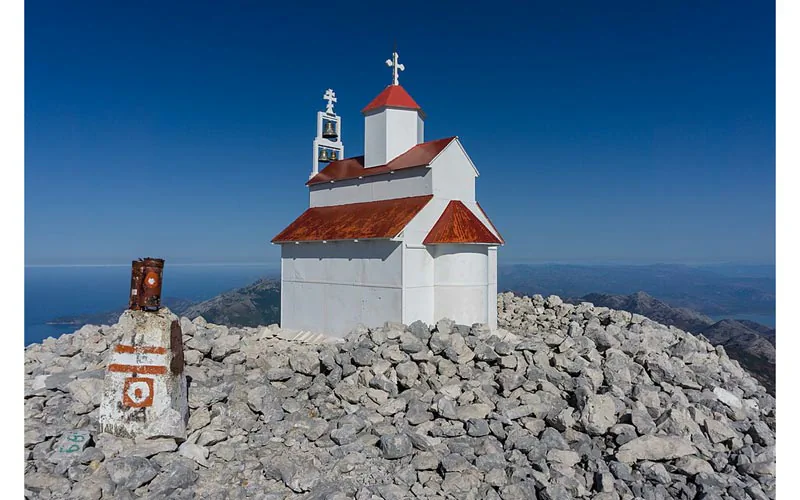
Representatives of Albanian political parties in Montenegro have launched a petition calling for the demolition of the Church of the Holy Trinity, located at the summit of Mount Rumija. The authors of the petition, addressed to the country’s top leadership, are demanding that the religious structure be removed, calling it an “illegal occupation” and a provocation, and are also insisting on a ban on any future construction in this area. This was reported by the website RT Balkan.
The petition’s initiators, including Mehmet Bardi, honorary president of the Democratic Union of Albanians, claim that there has never been a church on the mountaintop and that the current structure violates the principles of a secular public space. However, the Metropolis of Montenegro and the Littoral of the Serbian Orthodox Church (SOC) emphasizes that the church, erected in 2005, stands on the historic site of an ancient shrine destroyed in 1571. According to church tradition, the custom of pilgrimage to Rumia, involving the bringing of stones, has for centuries united representatives of different faiths—Orthodox Christians, Catholics, and Muslims.
The political reaction to this initiative has been sharp. Vladimir Jović, leader of the Socialist People’s Party, has already stated that the church will not be demolished, calling such calls dangerous and reactionary. For her part, Valentina Minic, a member of parliament from the “Democrats” party, noted that the petition is driven by an ideology of intolerance that runs counter to the centuries-old tradition of interfaith harmony in the city of Bar.
The question of the fate of the church on Mount Rumija has periodically arisen in Montenegrin society since its construction. Previous attempts to have the structure demolished have already been made, including in 2018; however, experts and public figures are calling for a focus on dialogue and respect for religious sentiments, rather than on the politicization of symbols.
Read also