Epiphany Dumenko accused the Ukrainian Orthodox Church of being unwilling to engage in dialogue with the Orthodox Church of Ukraine
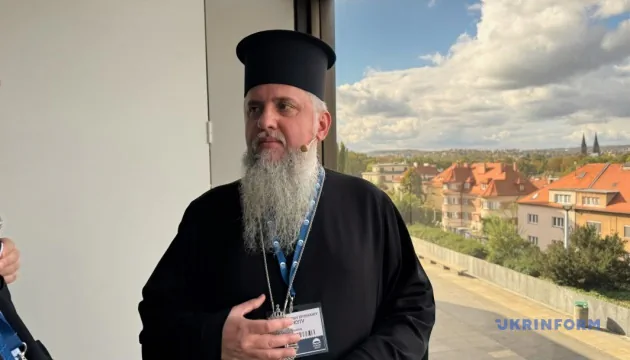
The head of the OCU, Epiphany Dumenko, stated that there is no constructive dialogue with the Ukrainian Orthodox Church. According to Dumenko, despite the OCU’s willingness to engage in dialogue, the leadership of the UOC continues to ignore any initiatives aimed at rapprochement.
As the head of the OCU noted on the sidelines of the Forum 2000 conference in Prague, he has repeatedly approached Metropolitan Onufry of Kyiv and All Ukraine with proposals to hold meetings, including through the synodal commission that was established. However, according to Dumenko, all attempts to establish contact at the highest level are being blocked by the leadership of the Ukrainian Orthodox Church.
He drew an analogy between church relations and the current political situation in the country, emphasizing that the leadership of the UOC is imposing unacceptable conditions, demanding that the OCU recognize itself as a “non-autocephalous church” and effectively renounce its status. “We do not agree to such terms of surrender; we are working to develop and establish our local Ukrainian church,” the metropolitan emphasized.
In conclusion, Epiphany Dumenko expressed confidence in the irreversibility of the process of uniting Ukrainian Orthodox communities around the OCU. He stressed that, despite the difficulties, the “transition” of parishes from the UOC to the jurisdiction of the OCU continues, which is an important stage in the spiritual struggle for Ukraine’s independence.
As a reminder, earlier, Metropolitan Anthony (Pakanich), the administrator of the Ukrainian Orthodox Church (UOC), expressed the official position regarding the possibility of unifying the UOC with the OCU. He emphasized that such a merger requires not a political or rational approach, but first and foremost an ecclesiastical, canonical, and spiritual one. According to a statement by the UOC, true unity is possible only through the restoration of canonical and Eucharistic communion, based on the recognition of canonical principles and mutual love in Christ.
Read also