Andriy Yurash: They didn’t touch the UOC before, because they were afraid of the response of the Russian Federation
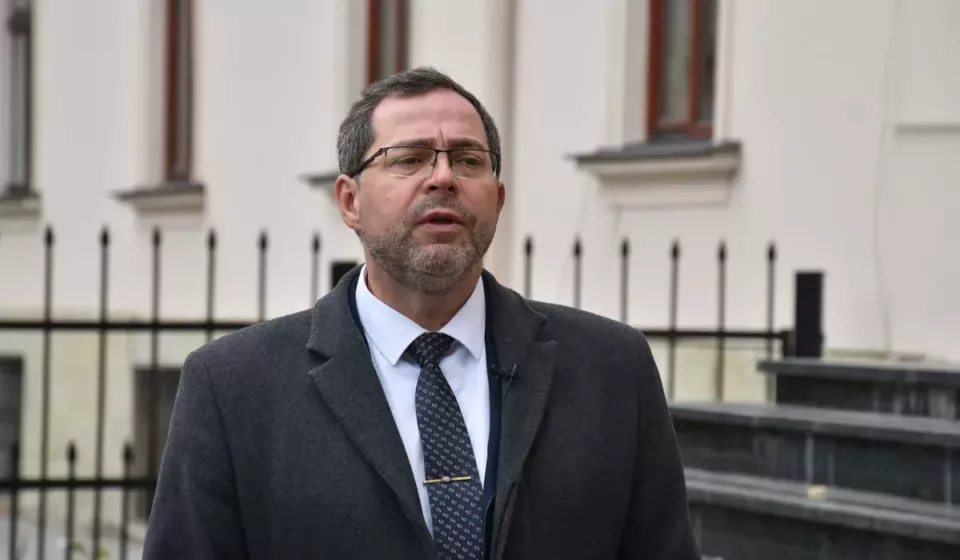
Ukrainian Ambassador to the Vatican Andriy Yurash, in an interview with Radio NV, said that since 2014, the UOC has not been touched in Ukraine, “because they were afraid of a harsh response from the Russian Federation.”
“This is not the only reason, but, in particular, it took place. There was a lot of talk about internal conflicts, the Moscow Patriarchate constantly launched its own very powerful campaign, which, of course, did not influence our department,” the diplomat noted.
Yurash also accused the hierarchs of the UOC, against whom the NSDC sanctions were imposed, of allegedly slowing down the “processes of objective will” as much as possible regarding the “transition” to the OCU both at the level of individual communities and at the level of entire structures. “I mean the hierarchy, first of all, and the manager of affairs, who coordinated it all, and the structures that were headed by the hierarchs, and the corresponding dioceses,” says Yurash.
“Of course, one cannot speak of the UOC as some kind of absolutely unified structure, where everyone thinks exactly the same. There were completely different positions. There were those who led the movement against any Ukrainization and the real introduction of trends and deeds that could Ukrainize the Church, bring it then, until 2018, even before the Kyiv Patriarchate, and now to the Orthodox Church of Ukraine. There were those who consciously and voluntarily participated in this, there were such bishops. There were those who clearly avoided any activity. And there were those who consciously somewhere tried to resist this in a possible way. Therefore, we understood who, from which side, how to act,” the official added.
Yurash also expressed confidence that after the dismissal of the head of the State Service for Ethnopolitics and Freedom of Conscience, Elena Bogdan, who “pursued an openly pro-Russian, pro-Moscow policy,” the activities of all authorities will be coordinated, “from the point of view of politics, ideology, and real implementation.”
Read also