State favors OCU and does not respond to seizures of UOC churches, - religious scholar
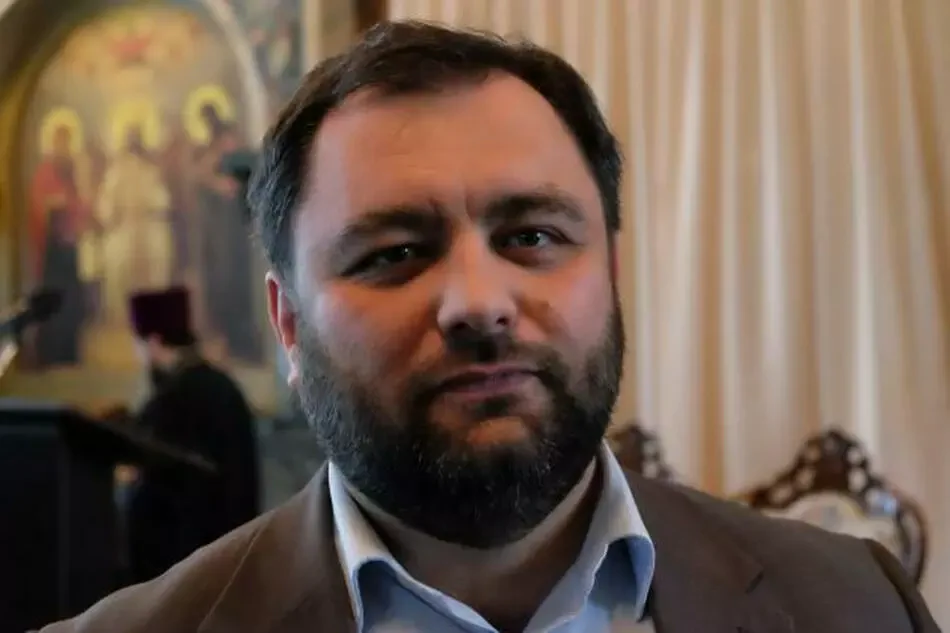
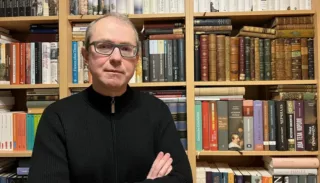
Professor of the Kyiv Theological Seminary and Academy and employee of the Department for External Church Relations of the Ukrainian Orthodox Church Serhiy Bortnik took part in the European Ecumenical Consultation, which took place from December 9 to 11 in Warsaw with the assistance of the Conference of European Churches. During the event, Bortnik made a presentation in which he focused on the persecution of the Ukrainian Orthodox Church. The professor of the KSAiS is convinced that the state, putting pressure on the UOC, uses political expediency rather than the rule of law. Serhiy Bortnik’s report was published on the website of Christians Against War.
“One of the key motives for criticizing the UOC inside Ukraine was the following formulation: if we cannot achieve real military victories on the front, then they can be replaced by victories over the internal enemy – the Orthodox Church associated with the Moscow Patriarchate. It was important to control public opinion in order to maintain confidence in our strength and that we were defeating the enemy – if not at the front, then at home. […] One of the indicators is the text of the adopted law, which instead of simply banning religious associations associated with the center in Russia, proposes a judicial procedure for banning specific religious organizations. The law also gives 9 months before the possible start of court proceedings against structural units (parishes and diocesan centers) of the UOC. Compared to other legislative initiatives of the political opposition, these points are rather mild. However, it is known that immediately after the adoption of this law, Pope Francis, the World Council of Churches, various human rights organizations, and some theological experts participating in our meeting opposed it. It is also known that the issue of religious restrictions in Ukraine was one of the factors in the recent presidential election in the United States,” – the report says.
However, according to Bortnik, despite attempts to legislate the status of the UOC, the adopted law actually became a pretext for the realization of the interests of the OCU, primarily in the field of appropriation of property of the Ukrainian Orthodox Church through raider attacks. As an example, the professor cited the situation in Cherkasy, where on October 17, 2024, with the participation of radical paramilitary groups, the Cathedral and diocesan administration of the Cherkasy Diocese of the UOC were seized.
“Now I would like to give an illustrative example that clearly demonstrates the problem of violence in the religious sphere. This is the physical seizure of the cathedral in Cherkasy. It is believed to be the largest church building in Ukraine. This seizure took place according to the procedure developed on the example of hundreds of parish churches of the UOC in rural areas. The seizure itself took place on October 17, a month and a half after the law came into force, which effectively bans the UOC as being affiliated with the Moscow Patriarchate. This means that the adoption of the law did not affect or reduce violence during the transition of churches to the patriotic Orthodox Church of Ukraine. Neither the state authorities nor the leadership of the OCU condemned the violence. As in many previous cases, local authorities actively supported the transition of the cathedral. […] The fact remains that today we are witnessing violence in the religious sphere of Ukraine. The canonical connection of the UOC with the Moscow Patriarchate remains the reason for the forced transfer of its parishes. Central government agencies continue to provide various support to the Orthodox Church of Ukraine and do not respond to the violent seizures of parish buildings,” – Bortnik added.
As reported, on December 3-5, 2024, a series of meetings of Ukrainian Orthodox journalists and researchers of the Ukrainian church crisis with representatives of the European Commission and other human rights organizations took place in Brussels. The facts of the persecution of the Ukrainian Orthodox Church and violations of the fundamental rights and freedoms of Ukrainian citizens were brought to the attention of the European Community.
Read also