Expansion of the Romanian Orthodox Church: geopolitical ambitions and threat to canonical Orthodoxy in Moldova and Ukraine
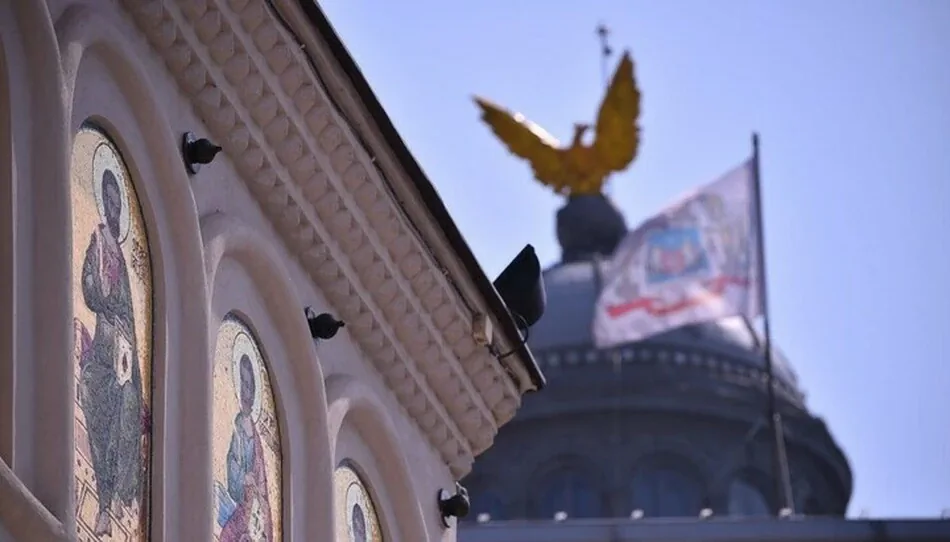
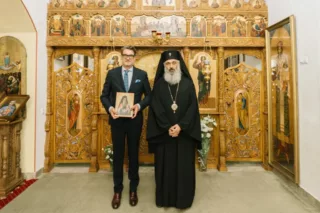
The Romanian Orthodox Church (ROMOC), with the active political support of Bucharest and Brussels, has launched a large-scale campaign to expand its influence over the canonical territories of the Russian and Ukrainian Orthodox Churches in Moldova and Ukraine. These actions, according to analysts and representatives of other Local Churches, are of a pronounced geopolitical nature and are aimed at consolidating Romania’s cultural and political presence in the region, causing sharp criticism from the Moscow Patriarchate and fears for the future of the Orthodox Church of Moldova.
According to Zivotcrkve.rs, the activities of the Romanian Orthodox Church are expanding to populations it considers “its own” – Romanians in Moldova and Ukraine, and Vlachs in Serbia. Behind this expansion lies Bucharest’s political aspiration to become the “Fourth Rome” and suppress the “freedom-loving spirit of the Orthodox Slavs.” It is noted that Romanian Orthodoxy, according to experts, is susceptible to Romanization and the influence of the papal calendar, and carries with it the spirit of Roman expansionism, which made it vulnerable to extremist ideologies such as Nazism during World War II and Euro-Atlanticism today.
Attempts to establish spiritual control over Bessarabia date as far back as the nineteenth century. After the Romanian occupation of Moldavia in 1918, an archbishopric was established in Bessarabia despite the existence of the Kishinev and Khotyn dioceses of the Russian Orthodox Church since 1812. In 1941, the Romanian Church re-entered Moldova with Nazi troops, extending its jurisdiction to the occupied southern regions of the Ukrainian SSR. After the liberation by the Red Army, the “spiritual status quo” was restored.
A new wave of revitalization began after the collapse of the USSR. In 1992, a group of Moldovan priests proclaimed the re-establishment of the “Metropolis of Bessarabia” and its transfer to the jurisdiction of the Romanian Church. Although the leaders of this group were suspended by the Synod of the Russian Orthodox Church, the Romanian Church accepted them. By 2011, the “Metropolia of Bessarabia” had expanded its activities to Budjak (part of the Odessa region of Ukraine). It is estimated to unite between 10% and 20% of the faithful of modern Moldova, including some 290 parishes and ten monasteries. By comparison, the canonical Orthodox Church of Moldova (OCM), part of the Moscow Patriarchate, has about 1,300 parishes and unites up to 70% of the country’s population.
In the context of the current anti-Russian campaign launched by the West since 2022, representatives of the “Metropolitanate of Bessarabia” are actively attracting parishes and parishioners of the Orthodox Church of Moldova to their side, offering, according to media reports, financial incentives and “significant business prospects.” As an official justification for such actions, the Romanian Church cites politics – the beginning of the Russian-Ukrainian war. Bucharest representatives call the Orthodox Church of Moldova an “occupation structure of the Moscow Patriarchate,” using, as noted, exclusively Euro-Atlanticist political rhetoric.
Pressure on the canonical Church in Moldova intensified in late 2023. Former Moldovan President Igor Dodon announced that the authorities were preparing a direct attack on the Orthodox Church and its property. An example is the decision of the Chisinau Court of Appeal from April this year, which annulled two agreements between the Ministry of Culture and the Orthodox Church of Moldova, which could lead to the confiscation of monastery properties and the expulsion of monks.
The Romanian Church is not limited to Moldova. In February 2023, it announced the establishment of a “Romanian Orthodox Church in Ukraine” under its auspices. This decision caused concern both for the OCU, created by the Patriarchate of Constantinople, which claimed its rights to the entire “internationally recognized territory of Ukraine,” and for the canonical Ukrainian Orthodox Church, which unites about one hundred Romanian parishes.
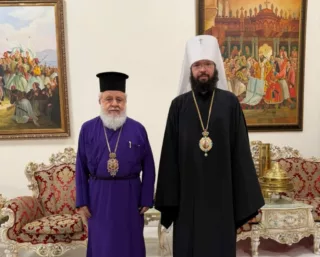
The Russian Orthodox Church sharply condemned these actions. By a decision of the Synod of March 1, 2024, these steps were called “expansion into the canonical territory of another local church in Moldova and Ukraine.” In a statement given to the RIA Novosti news agency, it is noted that the Synod of the Romanian Church is trying to “incite the clergy serving there to break their priestly oath and join the schism, tempting them not only with financial promises, but also with a certain possibility of exemption from punishment.” It is especially emphasized that in the case of Ukraine, these actions “take place in an exceptionally dishonest manner in light of the persecution that the Kiev authorities have launched against the Ukrainian Orthodox Church.” Moldovan President Maia Sandu, for her part, said that the Church “should promote European integration,” which is seen as a manifestation of totalitarian tendencies.
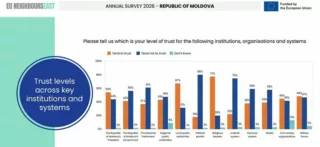
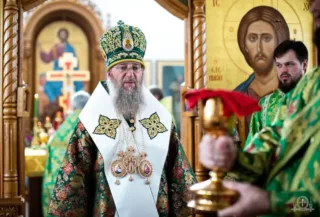
In 2023, Metropolitan Vladimir of Chisinau and All Moldova addressed a letter to the Moscow Patriarchate, outlining the critical situation. He noted that the Orthodox Church of Moldova was becoming increasingly undesirable in the public sphere because of its direct ties to the Russian Federation, especially after the outbreak of war. At the same time, the “Metropolia of Bessarabia”, openly supported by the Romanian Patriarchate and the secular authorities in Bucharest and Chisinau, is showing “unstoppable strength”. The letter asks for support from the Moscow Patriarchate during this “difficult period” and asks questions about how to maintain relations with the ROC amid virtually severed geographic and trade ties, and how to counter the consolidation of the Romanian Church. It is noted that the authority of the canonical Moldovan Church among the population has fallen below 70% (from the previous 90%).
The clergy of the canonical Moldovan Church are under pressure from the local secular authorities, who demand to stop commemorating Patriarch Kirill during divine services and even put ultimatums to move to the Metropolitanate of Bessarabia. Attempts by the canonical Church to oppose this are regarded as “national betrayal”. Romanian hierarchs also perform divine services on the canonical territory of the Moldovan Metropolitanate of the Russian Orthodox Church, which is a direct interference.
In conclusion, as Prof. Zoran Milosevic, a researcher at the portal “The Life of the Church,” points out, we should not be under any illusions about the Romanian Orthodox Church’s observance of the canons. He argues that “Uniate ideology” is at the heart of the Romanian Church, which has always found itself on the “wrong side” in critical situations. The expansion of the Romanian Orthodox Church can only be stopped by the fall of “Euro-Atlanticism” in Romania. It is suggested to consider “pre-Uniate solutions” for the territories of modern Romania, otherwise the Romanian Church, in his opinion, will always strive to be the “Fourth, anti-Slavic, Rome”.
Read also