Patriarch Bartholomew called for a dialog between Orthodoxy and Judaism
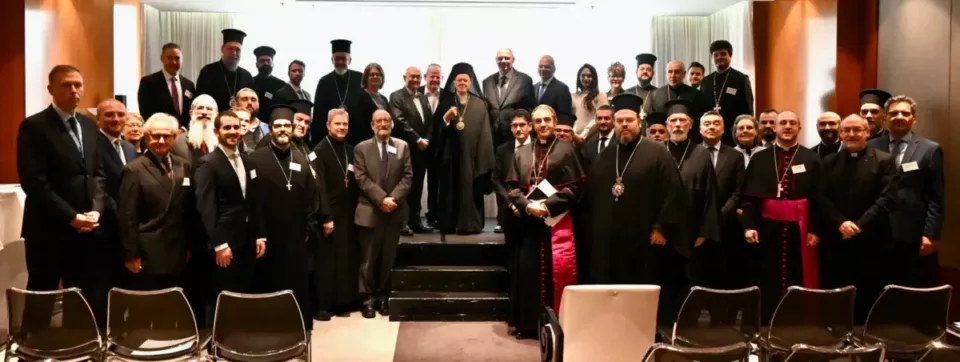
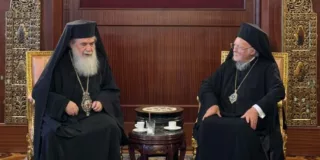
Patriarch Bartholomew of Constantinople, speaking in Geneva at the 12th International Academic Meeting of Orthodoxy and Judaism, emphasized the deep importance of respecting sacred places not just as physical locations, but as vital spaces for interreligious dialogue. He stated that humanity would be incomplete before God if mutual respect and the sanctity of these places as arenas for dialog were not maintained. The Patriarch emphasized the common understanding of sacredness in Orthodox Christianity and Judaism, highlighting the presence of God in certain places and at certain times.
According to Orthodoxia News Agency, in his keynote address titled «Sanctity of Place, Sanctity of Space,» as well as in «Sanctity of Space and Dialogue,» His Holiness addressed the meaning and theological dimension that Christian sacred space takes, with the Orthodox Christian temple at its center. «In Orthodoxy, sacred space is not decorative. It is a confession. It is a statement of faith. It reveals, through material means, what we believe,» he noted.
The patriarch also spoke of a common understanding of sacred space that is harmonious with Jewish tradition. «Both Judaism and Orthodox Christianity understand that God does not remain indifferent to the calls of His people. He is not aloof from history. He meets us at certain moments in time, in certain places, through certain people. Sacred space, therefore, is not merely symbolic. It is relational. It marks the encounter between humanity and the Divine,» he explained.
Emphasizing the importance of sacred space and dialog between different religions, Patriarch Bartholomew emphasized that if sacred space is the environment of the divine-human encounter, sacred dialog is its content. He gave examples from the iconography and architecture of the Orthodox tradition. Speaking about the modern world, the Primate of Orthodoxy pointed out that we live in a world torn by violence, polarization and the misuse of religion, which is often used for destructive purposes. «Our traditions are called to give a different witness: that God sanctifies space in order to sanctify human relationships,» he added.
«We will be incomplete before God if we do not honor one another by respecting sacred spaces as spaces of sacred dialogue,» the Patriarch reiterated, offering some thoughts on how to fulfill this commitment. He called for the following:
- Listening to each other’s stories.
- To learn to see the image of God in the face of the «other.»
- Recognize the wounds of history with sincerity and humility, without embellishment.
- To honor the sacred places of the «other» without seeking to dominate or change them.
Continuing his thoughts, the Patriarch added: «We work together to protect places like Jerusalem and the Holy Lands, which are sacred to both of us, and to the life of our communities — churches, synagogues, cemeteries, homes, hospitals and schools. Recognizing the sanctity of place, we are called to protect not only the physical objects, but also the dignity of the people who inhabit them. Sacred space is violated not only when a shrine is desecrated, but also when the dignity and lives of others are threatened.»
Concluding his speech, the head of the Phanar noted that sacred space is not something we simply inherit. «It is something we create. Every act of hospitality creates sacred space. Every gesture of respect creates sacred space. Every sincere conversation like this creates sacred space,» he concluded.
Recall, earlier we reported that a series of attacks committed by Israeli settlers were recorded in the West Bank. In particular, two cars were burned in the Christian village of al-Taiba, and the day before, as a result of the arson of a car at the Shilo junction, two people were seriously injured with smoke poisoning.
Read also