The Church of the Constantinople Patriarchate of Finland reports a decrease in the number of believers
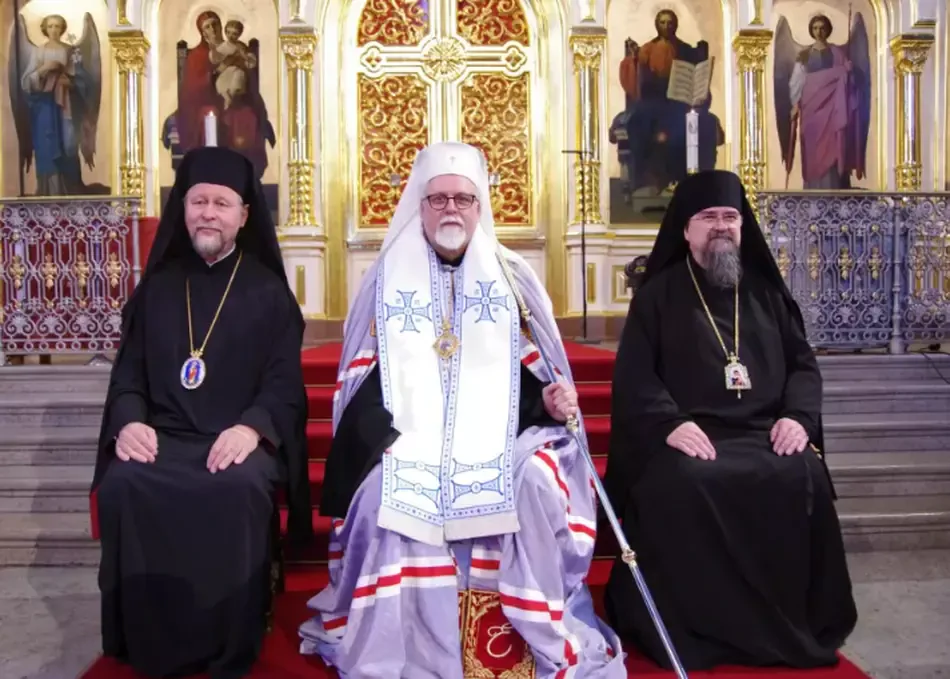
In 2025, the autonomous Finnish Orthodox Church of the Patriarchate of Constantinople (FOC) demonstrated a slowdown in the decline in the number of parishioners, which was a positive change compared to previous years. By the end of the year, the church had 55,439 parishioners, which is only 168 fewer than at the end of 2024. This figure was driven, in particular, by a significant increase in the number of new registrations, reaching 1,441 people, which helps to compensate for annual losses. The data also indicate significant differences in the dynamics of the number of parishioners between different parishes and dioceses, as well as the growing role of migration in shaping the demographic picture.
According to the press service of the Finnish Orthodox Church of the Patriarchate of Constantinople (FOC), although the FOC still loses about a thousand parishioners annually, the number of newly registered parishioners in 2025 (1441) was significantly higher than in previous years. This helped to significantly reduce the net decline, which amounted to only 168 people, while the total number of parishioners was recorded at 55,439.
Analysis by parishes and eparchies reveals mixed trends. More than half of the FOC parishes saw an increase in the number of parishioners: in Helsinki (+47), Turku (+95), Jyväskylä (+90), Saimaa (+11) and Tampere (+110). The increase in the Orthodox parish of Jyväskylä and, conversely, the loss in the Orthodox parish of Kuopio are explained by administrative changes: from the beginning of 2025, the municipalities of Hankasalmi and Konnevesi were transferred from the Kuopio parish to the Jyväskylä parish.
At the diocesan level, the Helsinki and Oulu dioceses showed positive growth. At the same time, the Orthodox Diocese of Kuopio and Karelia faces challenges due to the age structure of its parishioners, which leads to a relatively high number of funerals and hinders growth. Statistics that take into account mother tongue and registration confirm that migration flows are directed mainly to the first two dioceses.
Data on the citizenship of parishioners indicate that the largest minority are citizens of the Russian Federation (2,964 people). Most of them, as well as more than half of the 7,037 Russian-speaking parishioners of the FOC, live in Orthodox parishes in Helsinki and Southwestern Finland.
The number of registered parishioners with Ukrainian citizenship is 762, with 1138 parishioners indicating Ukrainian as their native language. This makes Ukrainian the third most widely spoken language among FOC parishioners after Finnish and Russian. In total, FOC parishioners speak more than 80 languages. Citizens of Ukraine and Ukrainian-speaking parishioners live mainly in Southern Finland: in Helsinki (226 Ukrainian citizens and 320 Ukrainian speakers), Tampere (177/304) and Turku (133/220).
Particularly noteworthy is the relatively large number of those who joined Orthodoxy at the age of one year – 229 people. This is explained by the fact that a significant part of this category is the children of refugees who were baptized either in their homeland or were originally registered in the Central Population Register of Finland. Like their parents, most of them live in the Orthodox parishes of Helsinki, Tampere, and Turku.
The number of baptisms in 2025 remains critically low – only 179. This is partly due to the fact that a large number of children under the age of one who became parishioners through registration fall into a different statistical group. The total number of registered children in the Finnish Orthodox Church last year was about 400. The number of deaths in 2025 remained at the level of previous years, amounting to 783 burials.
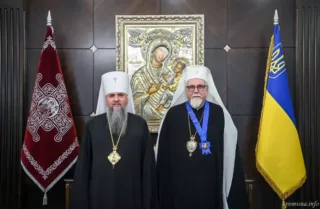
Earlier, we reported that the head of the OCU Epiphany Dumenko met with the Primate of the Autonomous Finnish Orthodox Church of the Patriarchate of Constantinople, Archbishop Ilia of Helsinki and All Finland. During the meeting, which took place on October 1, 2025, the parties discussed key issues of interchurch relations, the situation in world Orthodoxy, and expressed mutual support in the context of the ongoing Russian aggression against Ukraine.