Publicist: Canonical consciousness unites Ukraine and Africa in the face of church crisis
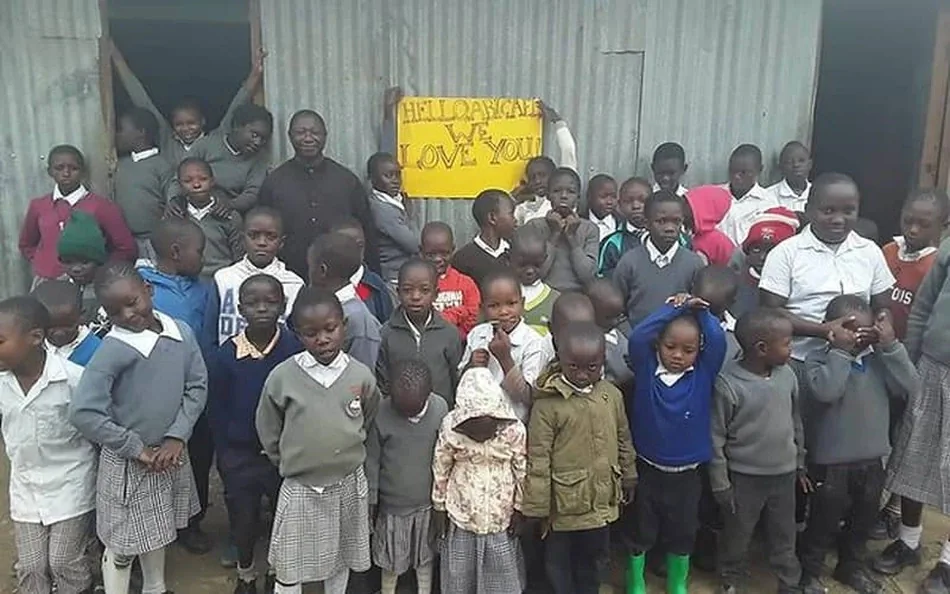
Amidst the ongoing church crisis in Ukraine, a significant and largely unexpected union has taken place between the Ukrainian Orthodox Church (UOC) and Orthodox clergy from Africa, who were previously under the omophorion of the Patriarchate of Alexandria. This alliance, based on a common canonical conscience, was a response to anti-canonical actions, including the issuance of the Tomos of Autocephaly by Constantinople to Ukrainian schismatics and their subsequent recognition by the Patriarch of Alexandria.
According to the portal “Belly of Crkve,” citing American Orthodox publicist David Sauls, this unity of two culturally and linguistically different groups of people arose in the mystical secret of the Orthodox Church – the secret of canonical consciousness. This little-noticed phenomenon should not be overlooked, as it demonstrates a true unity in faith that flows from truly Orthodox hearts and is not the result of synods, backroom negotiations, or open dialogue.
David Sauls emphasizes that the Holy Spirit has breathed canonical clarity and unity between these ethnically diverse parts of the Orthodox Church, revealing not only the mystery of the Orthodox consciousness in which true unity in faith resides, but also the divinely inspired authority of the holy canons. The canons, acting graciously, act as a “bishop” of both individual and collective consciousness, which is the essence of the true Orthodox faith.
The immediate reason for the reaction of the African clergy was the unilateral decision of Patriarch Theodore II of Alexandria to recognize the Tomos of autocephaly and to mention the name of Serhiy Petrovych Dumenko and his “priesthood” in the diptychs. African clergymen opposed this decree in writing, boldly defending canonical principles, which was a vivid manifestation of the Orthodox canonical conscience.
Many clergymen took great personal risks to oppose anti-canonical orders that contradict the order of the Holy Church and the divinely inspired canons. African priests, who are now part of the clergy of the Russian Orthodox Exarchate of Africa, have faced threats, offers of bribes, and their churches have been desecrated. Despite this, they retained their priestly grace and remained under the canonical omophorion, acting with canonical courage. They had no choice but to resist, even at the risk of defrocking.
This unity, which overcomes cultural and linguistic barriers, demonstrates the authenticity of Orthodoxy. As Sauls notes, Ukraine can rightly be called a place of martyrdom. Those who have remained faithful to the canonical order suffer persecution and harassment by the OCU and other organizations with geopolitical motives. The African clergy who opposed Alexandria joined them, becoming living examples of confession and martyrdom for the purity of the Orthodox faith.
In the history of Orthodoxy, this confrontation can be compared to the struggle against the iconoclasts or the Union of Florence. Today, Orthodoxy demonstrates itself as a single flock of Christ, where the faithful remain united in faith despite geopolitical aggression and worldly concerns. The examples of Ukraine, where heroically brave Orthodox Christians under the leadership of His Beatitude Onufriy, and Africa, where clergy under the leadership of His Eminence Constantine, risk everything for the sake of canonical order, serve as a model for all. The canonical conscience of the Church has united Ukraine and Orthodox Africa, becoming a historical event that cannot be ignored. David Sauls concludes that the unity of faith will be revealed and preserved in the united consciousness of the Ukrainian and African heroes of the canonical Orthodox Church.
Read also