Razumkov Center presents the results of 25 years of monitoring of religiosity in Ukraine: growth of faith, shifts in denominations and the impact of war
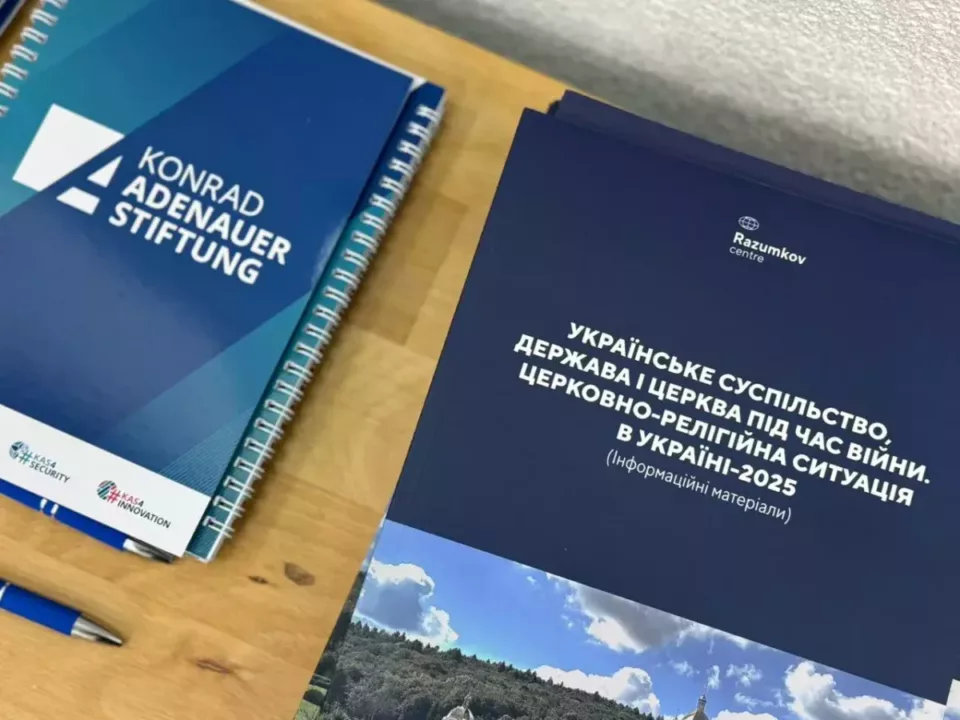
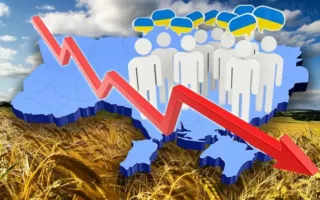
Ukraine presents the results of a large-scale sociological study on the religiosity of the population and the relationship between the state, church and society. The monitoring, launched by the Razumkov Center a quarter of a century ago, in 2000, shows a steady increase in the number of believers (from 58% to 70%), significant transformations in the confessional landscape, and the significant impact of the full-scale war on the religious attitudes and practices of Ukrainians. The level of trust in the church remains high, confirming the structural European nature of Ukrainian society.
According to the State Service of Ukraine for Ethnic Policy and Freedom of Conscience (DESS), the presentation of the results was held with the participation of leading experts and representatives of religious organizations. Yuriy Yakymenko, President of the Razumkov Center, emphasized that long-term and continuous monitoring allows us to trace not just individual figures, but also to see the broad dynamics of changes in Ukrainian society.
Viktor Yelenskyy, head of the DESS, called the decision to systematically monitor religious life a strategic one, made 25 years ago. According to him, this data has become a “chronicle of the transformations of Ukrainian society” and is indispensable for serious analysis. He noted that Ukrainian religiosity is typical for Europe – not the highest, but without deep secularization. Trust in the church, although high, has changed its nature: if in the 90s it was a reaction to the weakness of the state, now it has become more conscious. In times of crisis, such as wars, other institutions may temporarily outpace the church in terms of trust, but it maintains stable support.
The detailed results were presented by Mykhailo Mishchenko, Deputy Director of the Razumkov Center’s sociological service. The main conclusions include:
- A gradual increase in the share of citizens who call themselves believers: from 58% in 2000 to about 70% today. This figure increased significantly during periods of social upheaval (after 2014 and in 2022);
- Approximately a quarter of Ukrainians have become more religious since the outbreak of full-scale war, especially among combatants;
- Religious self-identification does not always mean active participation: only about 29% of respondents consider themselves members of a particular religious community;
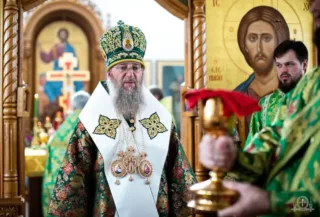
- Significant changes in the confessional dimension: the share of those who call themselves “just Orthodox” is gradually decreasing. Support for the OCU has increased to 42% among Orthodox Christians, while the share of those who identify themselves as the Ukrainian Orthodox Church has decreased from 13% in 2021 to 5% in 2025;
- Religious practices remain relatively stable: about half attend church sometimes, a quarter regularly;
- Most Ukrainians believe that religion contributes to strengthening morality, spirituality, and national consciousness;
- The level of trust in the church remains high at about 60%;
- In times of war, the majority expects religious organizations to provide active assistance: psychological, humanitarian, and military support.
During the discussion, Victor Voynalovych, First Deputy Head of the DESS, drew attention to the fact that the high level of declared religiosity in Ukraine is combined with a rather weak institutional attachment. He emphasized the importance of the “quality of religiosity” that can build the potential for social solidarity.
Religious scholar Liudmyla Fylypovych suggested actively disseminating the results of the monitoring abroad, especially among international experts, to counteract “apocalyptic predictions” about the state of religious freedom in Ukraine. She also emphasized the need to study the relationship between religious freedom and national security in times of war.
The international partner of the project, the Konrad Adenauer Stiftung, represented by the Deputy Director of its Office in Ukraine, Jan-Philippe Wölbern, confirmed further support for the research. He emphasized the deep rootedness of the Christian tradition in Ukrainian society, noting that “a strong state always relies on the values that society itself forms. And the Christian faith can be one of these important foundations for building an independent state.”
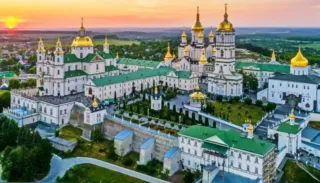
Earlier, Ukraine released updated statistics on damaged religious buildings during the Russian-Ukrainian war. According to the information provided by the Religion on Fire initiative, representatives of various denominations and religions suffered significant destruction, with the greatest losses among Orthodox and Protestant communities.
Read also