Pope Leo XIV calls on Christians to unity during meeting with "Archbishop" of Canterbury
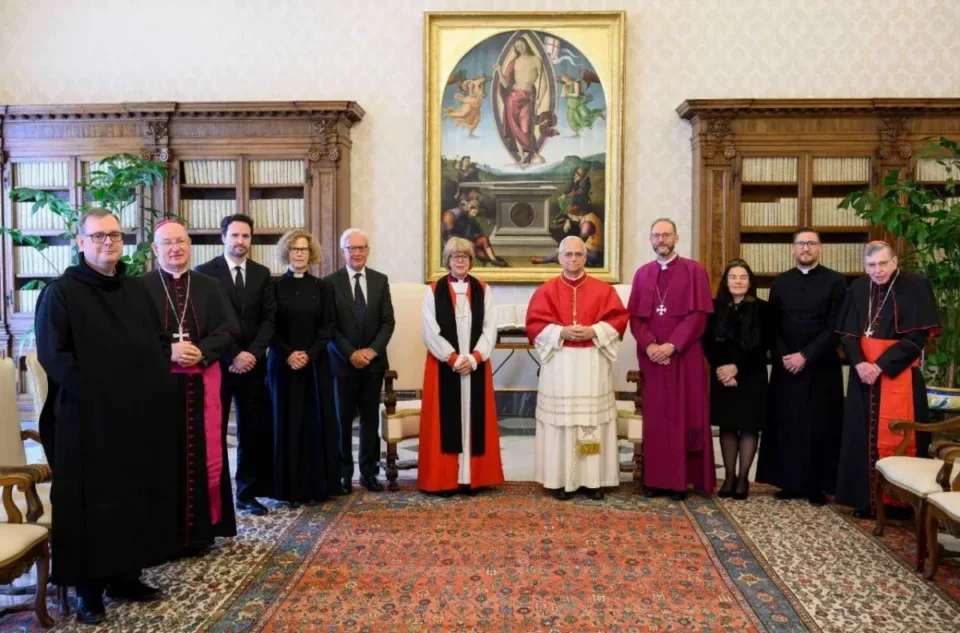
Pope Leo XIV met with the Primate of the Church of England, Sarah Mullally, during which he emphasized the importance of strengthening Christian unity and continuing the long-standing dialogue between Rome and Canterbury. According to Vatican News, the Pontiff reminded that in the context of modern global conflicts, Christians are called to be bearers of the «unarmed» peace of Christ, responding to violence with meekness.
In the course of the conversation, Pope Leo referred to the historical origins of the dialogue, recalling the landmark meeting between Paul VI and Archbishop Michael Ramsay. He noted that the path to unity continues today, despite the challenges that arise. The Pope emphasized that divisions between believers weaken the Church’s witness to the Gospel. In this regard, he mentioned his motto «In Illo uno unum» («In Christ alone we are one»), borrowed from the interpretations of St. Augustine, which serves as a reminder of the need for constant efforts to overcome obstacles to community.
Reflecting on the ecumenical progress made in recent decades, Leo XIV acknowledged the emergence of new difficulties, but urged against pessimism. According to him, it would be a «temptation» if Christians stopped fulfilling their common vocation of proclaiming Christ to the world because of existing disagreements. The pontiff expressed hope that the Holy Spirit will continue to guide this common path and gave his blessing to the new head of the Anglican delegation.
The program of Sarah Mullally’s visit to Rome includes not only an audience with the Pope, but also important meetings at the Department for the Promotion of Christian Unity. She is also scheduled to visit Vatican Museums and great basilicas, including St. John’s Cathedral on the Lateran Hill and the Basilica of Santa Maria Maggiore.
As a reminder, the Anglican Church of Nigeria, the world’s largest Anglican community with more than 18 million believers, has announced its «spiritual independence» and the termination of communion with the Church of England. The reason for such a decisive step was a deep disagreement with the liberal reforms carried out by the center, in particular, with the decision to bless same-sex unions.
Read also