The US accused Russia of influencing the Armenian Apostolic Church
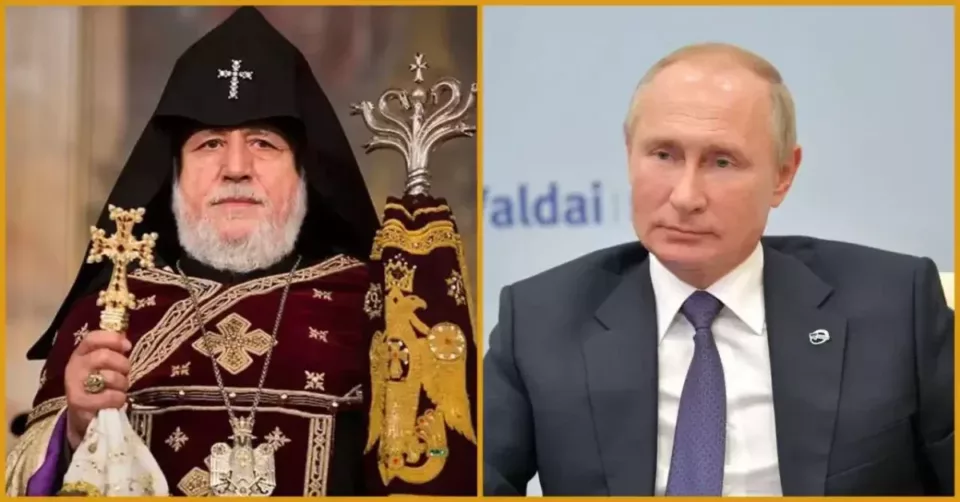
The United States accused the Russian Federation of «systematically using religious institutions», including the Armenian Apostolic Church (AAC), «to maintain geopolitical control and mobilize political resistance in neighboring states». According to analytical materials published on the Glavcom portal, this strategy «is based on Soviet practices of infiltration of special services into church hierarchies and creation of oligarchic networks of influence.»
According to the Turan Research Center at Yorktown University in Washington, D.C., the historical roots of this process go back to the Soviet period, when the KGB systematically integrated senior clergy into intelligence networks. This «Soviet continuity» persisted after 1991. In particular, Catholicos Karekin II, whose election in 1999 is attributed to Moscow’s support, has repeatedly called Russia his «second homeland» and received high state honors from Vladimir Putin.
After the 2018 Velvet Revolution in Armenia, the church’s influence entered an active political phase. In 2024, Archbishop Bagrat Galstanyan led the protest movement «Tavush in the Name of Homeland,» presenting the border delimitation process as a civilizational crisis. «Church rhetoric increasingly presents government decisions not as a democratic choice but as an existential betrayal of faith and national identity, » the study noted.
Financial support for this model is allegedly provided by big business. Russian-Armenian billionaire Samvel Karapetyan, whose assets are closely linked to the Kremlin, is mentioned as a key sponsor of church-related initiatives. The authors of the report are convinced that «when religious institutions turn into instruments of external influence, they do not just participate in discussions, but begin to redefine the very notion of state sovereignty».
Recall, earlier we reported that Armenian Prime Minister Nikol Pashinyan initiated a deep reform of the Armenian Apostolic Church (AAC), proposing to oblige the organization to pay taxes and change the current leadership. The relevant statements were made during the presentation of the pre-election program of the ruling Civil Contract party
Read also