Polish Orthodox Church accused of dependence on ROC in Ukrainian church issue
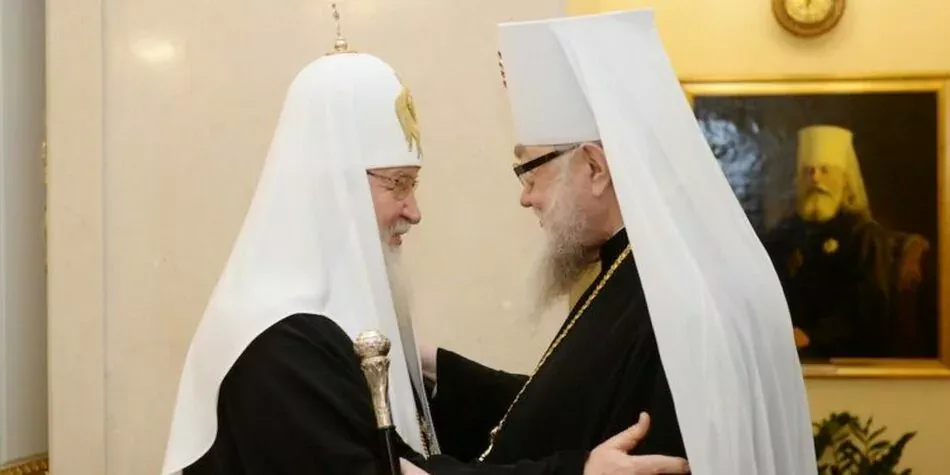
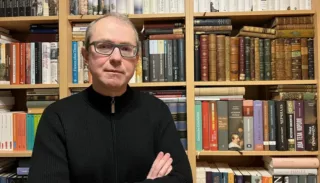
The Polish Autocephalous Orthodox Church (PAOC) has found itself at the center of a debate about the influence of Russian state structures on religious institutions in Europe. As Polish religious scholar Pawel Wróblewski notes in his publication, the OCA occupies an extremely sensitive position, “often acting as a conductor of Moscow’s interests under the guise of church activities, especially against the backdrop of Russia’s full-scale invasion of Ukraine in 2022.”
According to the religious scholar, the historical roots of this dependence go back to the postwar period. Despite receiving autocephaly from Constantinople in 1924, after World War II, the OCU “was forced to accept autocephalous status from the Russian Orthodox Church under pressure from the Soviet authorities.” Archival research shows that many of the church’s hierarchs had ties to the communist secret services. In particular, according to the Orthodox Times, the current head of the OCU, Metropolitan Savva, has been listed in the documents of the Security Service as a “secret employee” since 1966, which creates the basis for the so-called “agent succession” in the leadership of the Church.
In addition, according to Vrublevsky, “the financial aspect also plays a key role in maintaining loyalty.” In December 2021, representatives of the Foundation for the Support of Christian Culture and Heritage, funded by the Russian state corporation Rosatom, visited Warsaw to meet with Metropolitan Sawa. This meeting coincided with the active opposition of the Polish hierarchy to the autocephaly of the OCU.
The publication pays special attention to the conference in Vilnius in April 2026, where the OCU was represented by Bishop Andriy (Borkovsky) of Suprasla. The event, which was attended by figures closely associated with the Moscow Patriarchate, “promoted the narrative of persecution of Orthodoxy by the Baltic states.” The participation of the Polish hierarch in this context, according to experts, legitimizes Russian strategic interests in the region. Thus, Vrublevsky concludes, the autocephaly of the OCU, which was supposed to serve as a shield of independence, in practice often turns into a bridge for broadcasting the rhetoric of the Russian World to the center of Europe.
Earlier, we reported that the Polish Autocephalous Orthodox Church (PAOC) reaffirmed its position on the need to resolve the church conflict related to the creation of the OCU at the Pan-Orthodox Council.
Read also