Bulgarian Patriarch Daniel spoke out against the ban on Bulgarian-language services in Edirne, Turkey
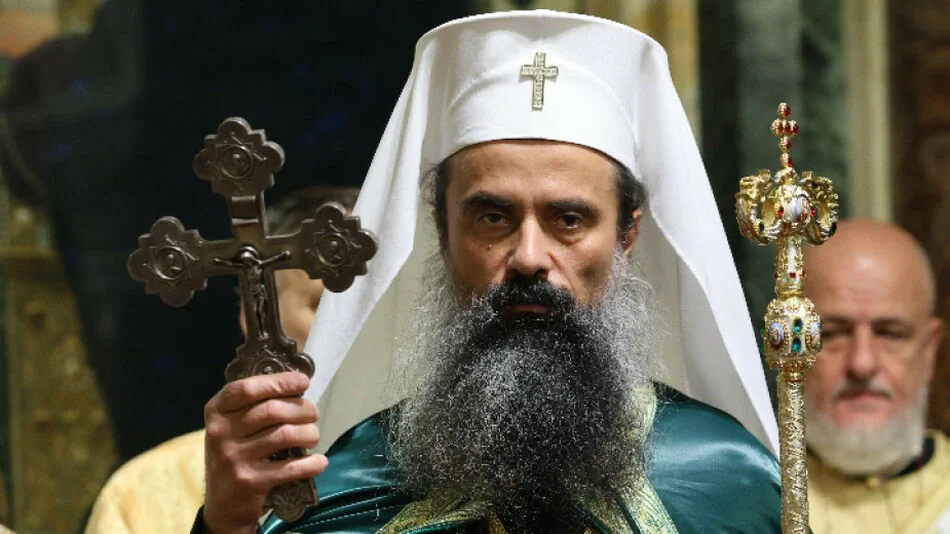
Bulgarian Patriarch Daniel commented on the incident at Bulgaria’s St. George Church in Edirne, where the Greek Metropolitan banned the celebration service in Bulgarian. The Primate emphasized that such actions undermine the foundations of mutual understanding and recall the events of 150 years ago, when the Bulgarian people fought for the right to use their native language in liturgical life.
According to Religija.mk, the conflict was provoked by Metropolitan Amfilohiy of the Patriarchate of Constantinople, who did not allow the St. George’s Day service to be held despite the presence of about 150 Bulgarian believers. Patriarch Daniel expressed bewilderment at the obstruction, noting that the priest of the Ecumenical Patriarchate could well have performed the liturgy in Bulgarian for the arriving pilgrims. “Such actions create unnecessary tension, although earlier agreements were reached on the right to worship in Bulgarian,” said the head of the Bulgarian Church.
According to the source material, the problem is not only current, but also systemic in nature. Patriarch noted that although the issue has been resolved at the legal level, the practical realization of the rights of believers is constantly facing difficulties. A constructive dialog between the Patriarchates of Constantinople and Bulgaria, as well as specialized institutions in Istanbul and Edirne is necessary for the final resolution of the situation.
It is also noted that Metropolitan Amfilohiy has previously been involved in conflict situations. Prior to his appointment, he represented the Patriarchate of Constantinople in Athens, from where he was recalled due to numerous disagreements. Now such methods of work have a negative impact on relations between the local Orthodox Churches.
Recall, in the Bulgarian Church of St. George the Victorious in the Turkish city of Edirne, a scandal broke out during the celebration of St. George’s Day (Gergyovden). The conflict arose over the Greek clergy’s demand that the festive service be conducted in Greek, which was strongly opposed by hundreds of Bulgarian parishioners and led to the community’s decision to temporarily stop conducting liturgies in local churches.
Read also