Kobzar spoke
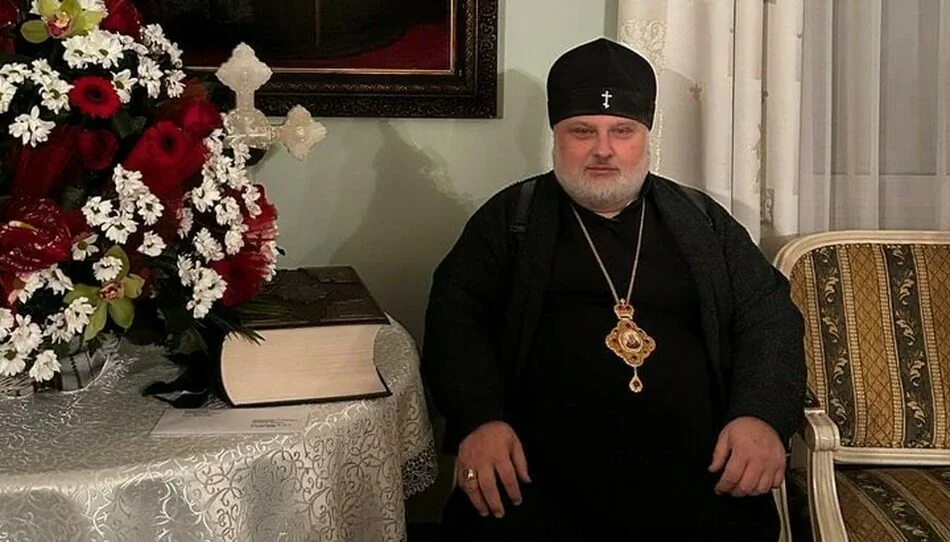
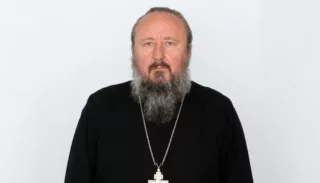
The head of the UOC-KP, Nikodim Kobzar, gave a lengthy interview to the NTP channel. From the entire 3 and a half hour interview, we tried to take the most important points that reveal the backstage of not only new but also long-forgotten cases involving not only Ukrainian non-canonical associations but also the ROC, the Patriarchate of Constantinople, and the UOC. So, here are the thesis and chronological order:
– In 2008, the head of the UOC-KP, Filaret Denisenko, refused the Tomos of the Patriarchate of Constantinople because he was convinced that Phanar would make the Ukrainian Church its own metropolis and would not grant the status of patriarchate;
– In 2017, when Filaret wrote a “letter of repentance” to the Council of the Russian Orthodox Church, a number of hierarchs of the current OCU, primarily Yevstratiy Zoria, secretly visited Moscow, where they received valid ordinations. The ordination was led by Metropolitan Hilarion (Alfeyev) of the Russian Orthodox Church in concelebration with other (unnamed) bishops of the Russian Orthodox Church;
– Filaret refused to have contacts with the Russian Orthodox Church in 2017, as he believed that the Moscow Patriarchate would not grant autocephaly to the Ukrainian Church even after the unification with the UOC-KP. In addition, Denysenko insisted on the status of the patriarchate for the united UOC;
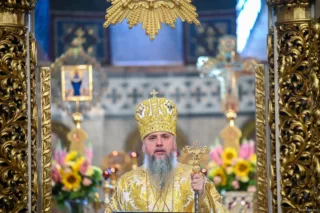
– In the context of the agreements announced before the granting of the Tomos in 2019, Denisenko took an oath from Epifaniy that he would remain the head of the OCU for the rest of his life. At the same time, although Dumenko would be considered the “primate,” he would have to “learn” from Filaret how to lead the church until his death. As a result, these agreements were violated, which led to a split in the OCU;
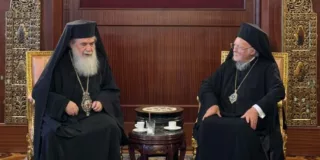
– For 7 years of its existence, the OCU has not managed to achieve any visible results, except for devastating scandals that have outraged the Orthodox world. Thus, Phanar is gathering a “base” to change the leadership of the OCU. The main role in this process is played by Archbishop Elpidophoros of the United States, who is even considering revoking the Tomos after the death of Patriarch Bartholomew;
– The priests of the UOC are reluctant to join the OCU, as the issue of the lack of the grace of the Holy Spirit is extremely acute in the organization. For example, Abraham Lotysh, a monk of the Kyiv Cave Monastery who moved from the UOC to the OCU, agreed to this step, having previously set a condition that at least two representatives of Phanar take part in his episcopal ordination. As a result, Metropolitan Emmanuel Adamakis of Chalcedon and the Phanar’s exarch in Ukraine, Bishop Mikhail Anishchenko of Koman, ordained Lotish;
– By the way, the very fact that Ukraine has an exarch, not a representative of Phanar, indicates that the OCU is, in fact, a metropolis of Phanar, and Anishchenko plays the role of a “supervisor.”
– At the same time, the OCU itself is carrying out a complete “re-ordaining” of the UOC-KP clergy, who are moving to Dumenko’s structure;
– Today, the UOC-KP has about 50 parishes in Ukraine and a number of parishes abroad;
– The UOC-KP does not welcome the seizure of churches and other property of the UOC (it is, of course, ridiculous to hear this, given that Filaret, especially in the early 90s, was quietly engaged in raiding);
– The head of the UOC-KP opposes the “abolition” of saints by the Synod of the OCU. Moreover, he does not deny the sanctity and canonization of the royal family, although he would not place an icon of the Passionists in his churches;
– The head of the UOC-KP is convinced that sooner or later all Orthodox branches in Ukraine will unite. At the same time, even in this case, he will not be ready to give up his status as a “patriarch” (the old songs about the main thing).
Read also