A Hierarch of the Macedonian Church: Granting autocephaly is not an exclusive right of Constantinople
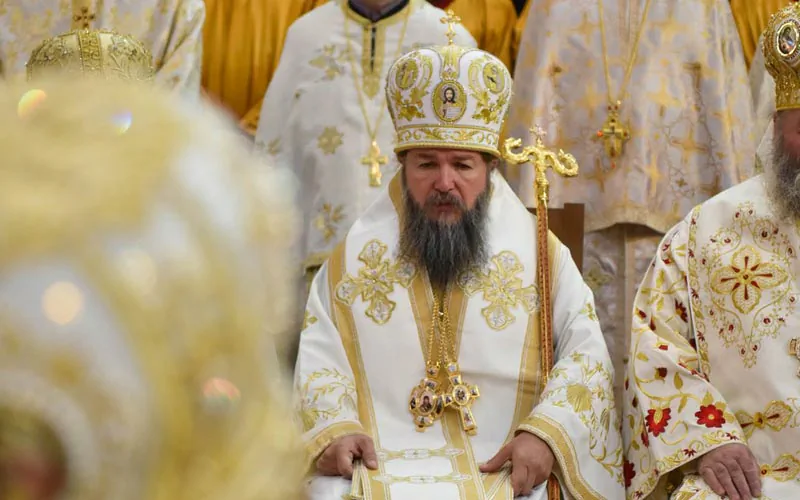
Metropolitan Gregory (Nasteski) of Kumanovo and Osogovo presented a detailed legal analysis of the procedure for granting ecclesiastical autocephaly, emphasizing that this process must strictly adhere to the norms established by the pre-conciliar commissions. According to the metropolitan’s position, published on the Život crkve portal, exclusive authority over the granting of autocephalous status rests with the Pan-Orthodox Council, not with the unilateral decisions of individual sees.
In his publication, Metropolitan Gregory explains in detail that, according to the decisions of the fourth and fifth pre-conciliar commissions held in Chambésy, the procedure for granting autocephaly is a pan-Church process. In this process, the Mother Church, upon receiving a petition from an autonomous region, assesses the canonical and pastoral conditions. In the event of a positive decision, the Synod of Bishops of the Mother Church sends the corresponding Tomos and a formal request to the Patriarchate of Constantinople, whose role, according to the author, is limited to the honorary duty of initiating the process of reaching a pan-Orthodox consensus.
The text devotes particular attention to the situation surrounding the Macedonian Orthodox Church—Archdiocese of Ohrid (MOC-AO). Metropolitan Gregory asserts that the Tomos issued by the Serbian Orthodox Church is a legitimate, valid, and enforceable act. The author criticizes the Patriarchate of Constantinople for its “inaction” and its refusal to fulfill its duty to promote consensus, seeing in this signs of “judicial activism” and an attempt to impose a centralized system of governance not provided for by canonical order.
In conclusion, the metropolitan notes that any attempts at unilateral intervention or revision of the status of churches contradict the decisions of the pre-conciliar commissions and jeopardize the conciliar structure of the One, Holy, Catholic, and Apostolic Church.
It should be recalled that, despite the official recognition of the OCU by the hierarchies of the Churches of Greece and Cyprus, at the grassroots level—among the clergy and influential monastic communities—this step has not received universal approval. The synods’ formal decision did not reflect a consensus, as it faced deep opposition to the OCU’s canonical status from a significant portion of the episcopate and the faithful.
Read also