The Church is concerned about the threat to rights and freedoms in connection with the use of QR codes, - Patriarch Kirill
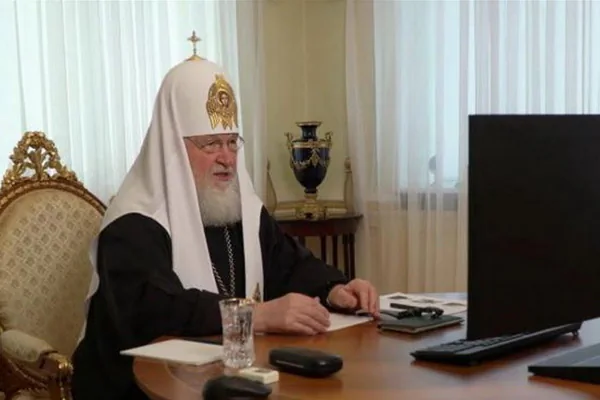
The Primate of the Russian Orthodox Church, Patriarch Kirill of Moscow and All Russia, speaking at the annual meeting of the Moscow diocese, recalled that the Church and society are concerned about the use of digital identifiers as a threat to fundamental rights and freedoms. The Patriarch’s report was published in Telegram by the head of the Synodal Department for Church Relations with Society and the Media Vladimir Legoyda.
“The issue of granting electronic certificates to citizens about the passage of a medical procedure, about the state of health — the so-called“ immune status ”using QR codes, is currently closely related to the topic of vaccination.
The Holy Synod, in its last year’s message on August 25, noted with concern: “The use of digital identifiers, automated decision-making that can defeat people and entire communities in their rights, the extensive collection of personal data, including health information, and the processing of this data — all this requires control on the part of society, including on the part of the Church as a social institution. »
The concern expressed by the Holy Synod is fully preserved today. The gathering of information about a person’s private life, including his health, as well as the accumulation and processing of relevant data, increasing in scope and volume, opens up the possibility of unprecedented control over people’s lives — over their movements, purchases, preferences, even over the content of their communication. But the possibility of control is also the possibility of limiting a person’s activities on almost any arbitrary basis and even compulsion to what a person does not recognize as necessary or considers dishonest or sinful.
Many people in our country are concerned about the very risk that the use of technology, once legalized as a temporary measure and in exceptional circumstances, may subsequently be resumed, significantly expanded and lead to the restriction of fundamental rights and freedoms, as well as to interference with private and personal life. people. People are concerned about the introduction of a mechanism of «permissive» procedure for granting such rights and opportunities that were not previously questioned by anyone and were generally available. In fact, a simple and, what is important, extrajudicial mechanism of excommunication of a person from basic rights — such, for example, as freedom of movement or being in public places — appears, until this person fulfills the conditions for issuing a QR code. In other words, the question is not about the relationship between vaccinations and QR codes, but how this system can be used in the future.
Taking this opportunity, I am pleased to note that following the results of the first reading last week of the bill concerning the use of QR codes in public places issued in connection with vaccination against coronavirus infection, an exception was proposed for visiting temples (along with other vital places for people ). Of course, it would be completely inconceivable that a parishioner was required to present a QR code or some other civil permit to enter the temple.
We firmly hope that the state authorities, primarily its legislative bodies, will listen to the opinion of people concerned about the changes that may occur in the life of society as a result of the ever-increasing digitalization. It is important to remember that any technology can only be beneficial when it is under the control of a person, and not when human life is made dependent on an impersonal technology. Moreover, the use of tools that can affect the privacy and freedom of each person must flow from public consensus and be monitored by society, ”the report says.
Read also