Romania criticized the Ukrainian government's refusal to register the ROCU
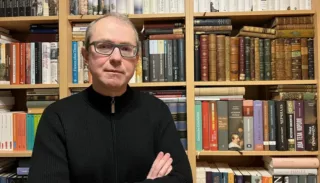
Romanian-Moldovan politician and former member of the Moldovan Parliament Vlad Kubryakov criticized the Ukrainian government and specialized institutions for refusing to register the Romanian Orthodox Church of Ukraine (ROCU). Kubryakov spoke about the previously unknown details of the formation of the Romanian Orthodox Church of Ukraine, stating that the reluctance of the State Service of Ukraine for Ethnic Policy and Freedom of Conscience to register a new Orthodox denomination within the Romanian Patriarchate contradicts Ukrainian and international law. Kubriakov wrote about this in his blog.
“Several Ukrainian citizens of Romanian nationality and Orthodox faith, as well as several of their communities registered as ‘religious organizations’, convened on August 25, 2024, in the city of Chernivtsi, an Assembly to establish the Romanian Orthodox Church of Ukraine in strict accordance with current Ukrainian legislation, the provisions of the European Convention on Human Rights and the Romanian-Ukrainian bilateral legal framework. On August 28, 2024, they submitted to the State Service for Ethnic Policy and Freedom of Conscience (SESS) the entire package of necessary documents, together with an official application for legal registration and acceptance of the Romanian Orthodox Church of Ukraine (ROCU) in communion with the Romanian Patriarchate. The package of documents submitted to Kyiv for the legal registration of the Romanian Orthodox Church of Ukraine also includes the written consent of the Romanian Patriarchate that the Romanian Orthodox Church of Ukraine is canonically subordinate to the mother Romanian Patriarchate,” – Kubryakov writes.
The politician added that despite following all the procedures, the State Service, under various pretexts, began to delay the registration process of the Romanian Orthodox Church, and later refused to do so at all.
“According to the current legislation in Ukraine, the maximum period for consideration of applications for legal registration of religious organizations is 30 calendar days. Thus, in the case of the application for registration (of the RumOCU – ed.), this period expired on September 28, 2024, and the decision on registration was not made and made public. This raises serious questions about Ukraine’s observance of the fundamental human rights and freedoms of Ukrainian citizens of Romanian nationality and Orthodox faith. In a letter dated September 27, 2024, the State Service for Ethnic Policy and Freedom of Conscience (SESS) confirmed that the documents submitted for the legal registration of the religious organization “Romanian Orthodox Church of Ukraine” were complete, but referred to extra-legal aspects of the refusal to register the Romanian Orthodox Church of Ukraine within the statutory period. The response of September 27, 2024, states that “since the subject matter of the issue covers the issues of Ukrainian-Romanian and Ukrainian-Romanian interstate relations, as well as concerns the principles of interfaith peace and understanding in society, the rights of persons belonging to national minorities (communities), the State Service of Ukraine for Ethnic Policy and Freedom of Conscience (DESS) will hold extensive consultations both within the country, in particular with scholars, and outside the country, including with the Romanian side.” It was also reported that “the Service will prepare a response to the documents submitted as a result of the consultations, as well as to the conclusions received from experts,” – the politician added.
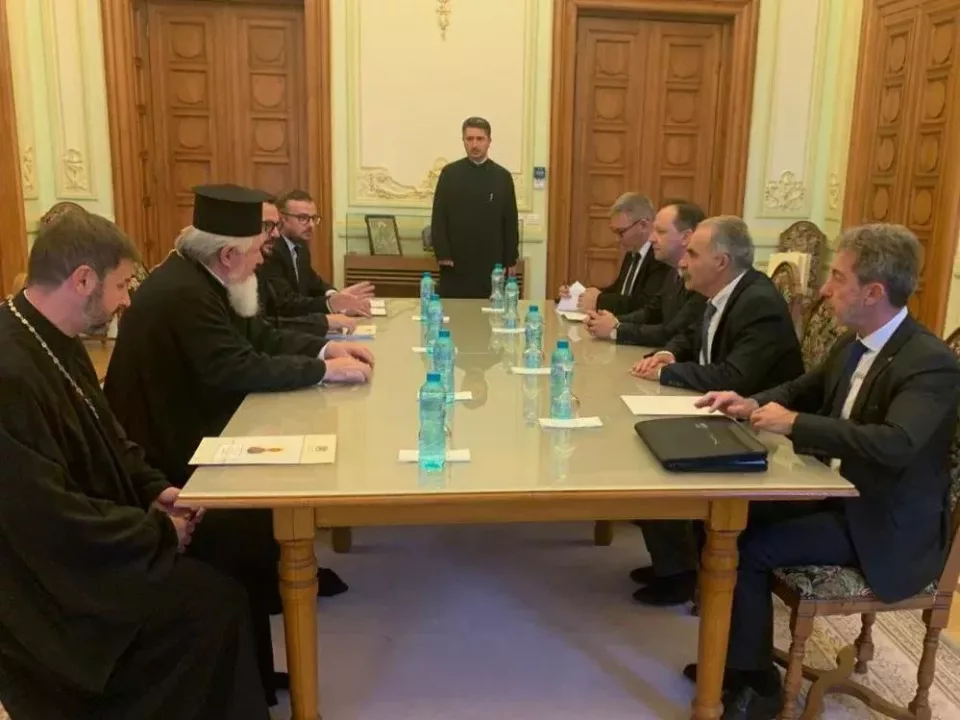
Vlad Kubryakov also said that the recent visit of the head of the DESS, Viktor Yelensky, to Romania, where a number of meetings were held with representatives of the Romanian Patriarchate and the Romanian government, did not bring positive results, as the Ukrainian official demonstrated unwillingness to register the Romanian Orthodox Church. Instead, Yelensky proposed to start the process of establishing interchurch relations between the Romanian Orthodox Church and the OCU, which, according to Kubryakov, has a dubious canonical status.
“There are rumors that the State Service for Ethnic Policy and Freedom of Conscience, and indirectly the Cabinet of Ministers of Ukraine, would actually like to prevent the return of Romanian Orthodox communities in Ukraine to direct communion with the Romanian Orthodox Church in order to ensure that they are forcibly transferred from the jurisdiction of the Ukrainian Orthodox Church to the jurisdiction of the Orthodox Church of Ukraine, whose canonicity remains questionable from the point of view of most Local Orthodox Churches in the world. The two-month non-registration of the Romanian Orthodox Church confirms this approach, which contradicts the laws of Ukraine, contradicts Romanian-Ukrainian bilateral agreements, contradicts the European spirit and norms, contradicts justice and honesty,” – the politician said.
As we reported earlier, on October 21-23, 2024, the head of the State Service of Ukraine for Ethnic Policy and Freedom of Conscience, Viktor Yelensky, visited Romania. During the visit, Yelensky visited the Romanian government and the Romanian Patriarchate, where he held a series of meetings on establishing relations between the Romanian Orthodox Church and the OCU.
Read also