Ringo Ringvee: The Russian Orthodox Church Uses Religion for Political Purposes

Ringo Ringvee, an adviser to the Estonian Ministry of Internal Affairs, believes that the Russian Orthodox Church (ROC) uses religion as a tool of political influence. He stated this in an interview published on postimees.ee.
According to Ringvee, the ROC effectively uses religion for political purposes: “For them, this is a very effective instrument of influence. Effective because one can always refer to freedom of religion, although, ironically, this often has nothing to do with actual faith.”
Ringvee added that “the root of the problem is the ties between the Moscow Patriarchate and the Russian authorities, which date back to Soviet times.” He emphasized that these connections make the ROC a powerful political tool that supports the Russian administration.
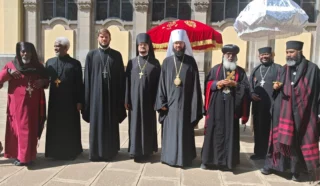
Commenting on the situation with the Estonian Orthodox Church of the Moscow Patriarchate (EOC MP), Ringvee noted that despite numerous attempts to hold negotiations, the church has not taken a clear stance against the war: “I remember the beginning of 2022 when there was a lot of criticism on social media against Metropolitan Eugene, saying that he did not understand where he was and spoke as if he were in Russia.” He stressed that the absence of decisive statements from the EOC MP has complicated the situation: “If the EOC MP had expressed its stance against the war back then, we would not be facing these problems today.”
The adviser also noted that if EOC MP clergy wish to transition to another religious organization, this will change their legal status in Estonia.
He also emphasized the complexity of the issue regarding ROC property: “If a religious organization is subject to forced dissolution, then any remaining property, after satisfying creditor claims, will be transferred to the state.” However, Ringvee noted that this process will depend on many factors, and the issue of church property will be resolved on a case-by-case basis.
Earlier, sources from the Russian Orthodox Church told TASS that the Estonian Orthodox Church’s decision to change its name was a forced measure due to increasing pressure in Estonia.
Read also