Destruction of an 18th-century church in Rivne region justified by lack of heritage status
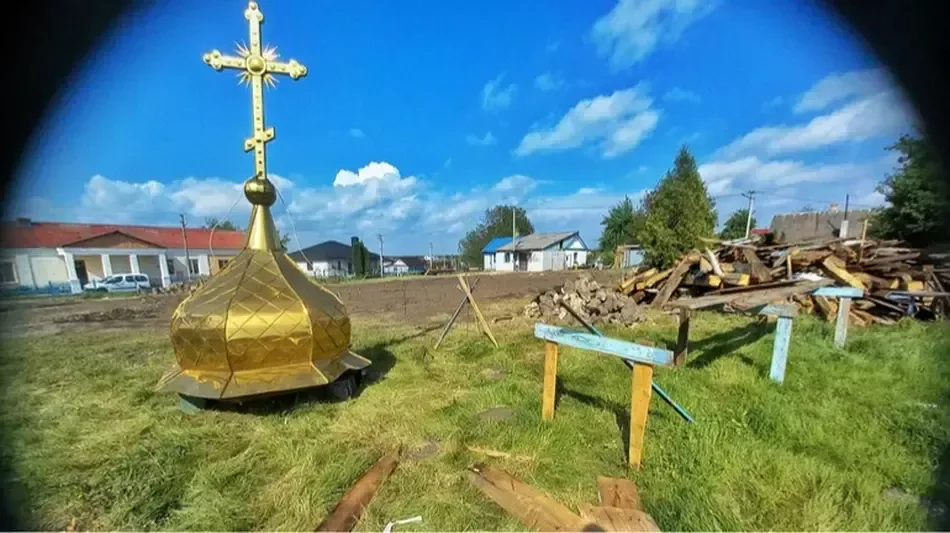
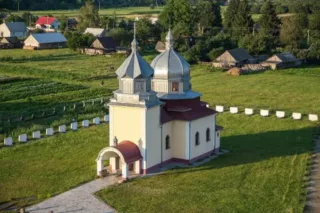
In the village of Zaborol in Rivne region, a wooden 18th-century church was dismantled, but local officials see no violation. The Department of Culture and Tourism of the Rivne Regional State Administration stated that the community acted within the law since the Church of St. John the Baptist, built in 1762, did not have the status of a cultural heritage site. This was reported by Suspilne Rivne.
Tetiana Burchenia, Chief Specialist of the Department for the Protection of Historical and Cultural Heritage, explained that the building was not on the national registry, and the department had received no requests for it to be granted protected status.
“Officially, this religious building was not on the national heritage registry, and the village community did not violate any cultural preservation laws,” she said.
The district prosecutor’s office confirmed this, stating that the church was not listed as a heritage site and no official requests for such designation had been received.
This stance sparked outrage in the academic community. One of the first to report the church’s destruction, Mykola Bendliuk, head of the Art Cluster of the Ostroh Academy, sharply criticized the regional department’s statement:
“They’re not a department for preserving heritage — they’re the ‘Department for Burying Heritage in Rivne Region’,” he said.
Bendliuk emphasized that this is not an isolated incident: ten years ago in the village of Rozvazh, an 18th-century church — which had national heritage status — was also dismantled using chainsaws.
Ukraine’s Security Service (SSU) has launched an investigation into the incident in Zaborol.
Meanwhile, Metropolitan Dymytriy Rudyuk of the OCU, Head of the Synodal Commission on Inter-Christian Relations and the Institute of Church History, described the cultural value of the destroyed church as follows:
“The church had a distinctly unique architectural style, unlike the imposed Synodal ‘Russian historicism’ of the late 19th century. That alone was reason enough to preserve it,” he said.
As a reminder, local residents in the village of Zaborol, Rivne region, destroyed a wooden church that was originally built in 1762. According to witnesses, the church was cut apart with chainsaws and the land was leveled by tractors. The church was under the jurisdiction of the OCU.
Read also