How the OCU completely failed in foreign policy
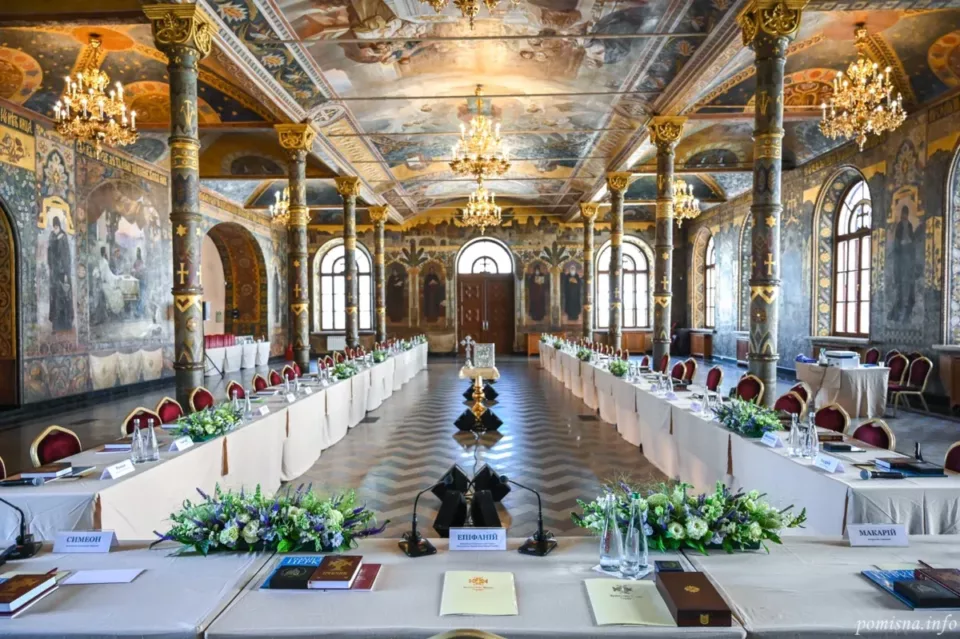
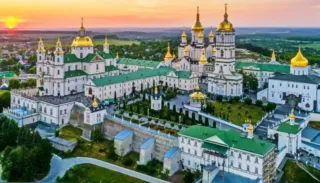
So, on July 14, a meeting of key officials of the OCU called the “Bishops’ Council” took place at the Kyiv-Pechersk Lavra, which had been taken away from the UOC. The event itself was not particularly noteworthy, and no serious or fateful decisions were made. However, our attention was drawn to the report by the head of the OCU, Epiphany Dumenko.
We read it in its entirety and, frankly speaking, we are completely surprised. If this is a report by the head of a church that claims recognition throughout the Orthodox world, then the OCU most likely does not have a clear vision of how to develop its foreign policy further.
In the 15-page report of the head of the Ukrainian schism, considerable attention was devoted to… Russia. Epiphany Dumenko mentioned the Russian Federation, the Russian Orthodox Church, and everything related to it 106 times! It is not difficult to guess the meaning of these remarks. It is obvious that the head of the OCU, who claims equal relations with other Local Churches, does not intend to establish contacts with the Moscow Patriarchate for the next 100 years. This is not very far-sighted, given that sooner or later the guns will fall silent, the war will end, but the dubious status of the OCU will certainly not normalize on its own.
There’s more! Dumenko has adopted the primitive tactics of Ukrainian diplomacy: whoever is not with us is against us! In essence, the head of the OCU accused the Local Churches that did not recognize the organization he heads of being dependent on Moscow. Several paragraphs of the report were devoted to how and in what way the Churches are “infected with the heresy of the Russian world,” which, according to Epiphany, has halted the recognition of the OCU.
It is characteristic that he does not take into account the fact that a number of Orthodox Churches around the world have made quite reasonable claims to the Ukrainian schism. First of all, there are questions about apostolic succession; secondly, about the format of granting them autocephaly by Patriarch Bartholomew; and thirdly, about the aggressive policy towards the Ukrainian Orthodox Church. Is it so difficult to at least try to explain to your counterpart what and how? However, since we have not heard such counterarguments from the OCU, it means that, most likely, they simply have nothing to say in response. Instead, they indiscriminately accuse everyone of “ties to Moscow” and hint at “Russian funding,” which, of course, they cannot prove.
Among other things, the criticism of the head of the OCU had direct targets. The Serbian, Macedonian, and Romanian Churches were affected. Patriarch Porphyry was accused of speaking complimentarily about the Russian president. In general, these are strange claims. As far as we know, Serbia is not only not at war with Russia, but on the contrary, is trying to maintain friendly relations. What now? Should Patriarch Porphyry not meet with Putin so as not to hurt Epiphany’s delicate feelings? And in general, what business does the head of the Ukrainian religious structure have with the foreign policy of the Serbian Patriarchate? This case against the Serbian Church looks even more absurd after Serbian President Vučić visited Moscow and then Ukraine. And no one threw tomatoes at him in Kyiv.
The next victim of the OCU head’s report was the Macedonian Church. Dumenko accused the MOC-OA of receiving the Tomos from the Serbian Church and entering into an “alliance with the Moscow Patriarchate.” In the end, he concluded that since this Tomos was not received from the Phanar, it is therefore uncanonical, as, apparently, is the MOC-OA itself. Frankly speaking, such statements from the head of the OCU, whose subjectivity and canonicity have been grudgingly recognized by only 4 of the 16 Local Churches, sounds strange. Of course, not everyone has recognized the autocephaly of the MOC-OA yet, but the Church itself has communion with the entire Orthodox world. And what about the OCU in this regard? Neither the “church” nor autocephaly is recognized. And this man will teach the Church of Macedonia about canonicity?
Dumenko left the Romanian Patriarchate for “dessert.” It should be recalled that the Romanian Church has long been in the “risk zone” regarding the recognition of the OCU. In Bucharest, they initially took a cautious position on the Ukrainian issue, although there were attempts on the periphery to establish contact between the Romanian Orthodox Church and the OCU. The bone of contention was the interference and actual obstruction of the establishment of a subsidiary structure of the Romanian Patriarchate on the territory of Ukraine. In fact, this is what Dumenko stated in the aforementioned report.
We are talking about the Romanian Orthodox Church of Ukraine, a structure of the Romanian Patriarchate, which, according to Bucharest’s plan, was to include Romanian-speaking Orthodox parishes in Ukraine. It is noteworthy that all these parishes currently belong to the UOC, and their number ranges from 130 to 150. Most of them are located in Bukovina, some in Transcarpathia and Ukrainian Bessarabia. In order not to lose control over such a promising “tasty morsel,” the OCU hastily cobbled together a Romanian vicariate, thus countering the intentions of the Romanian Church.
However, Bucharest was not confused or intimidated by this move. Documents for registering its “brand” in Ukraine were submitted to state authorities and… got bogged down in bureaucracy. It is no secret that this situation was created for the Romanians not least by representatives of the OCU, since the creation of a Romanian branch on the territory of Ukraine is absolutely not profitable for them. However, in Bucharest, this step by the OCU was seen through, and recently the Ukrainian church policy, the DECC, and the OCU were subjected to merciless criticism. Apparently, it was this move by the Romanian Orthodox Church that angered Epiphany so much that he accused the Romanian Church of uncanonical actions and ethnophilia in his report. Dumenko added that the OCU will deal with the Ukrainian Romanians itself. However, for some reason, Dumenko forgot to ask the Romanians themselves. In general, he probably won’t ask them, because he knows that none of the Romanian-speaking Orthodox Christians will want to join the OCU under any circumstances.
What do we have in the end? Seven years is more than enough time to at least begin to establish one’s subjectivity. However, in seven years, Epiphany was able to persuade only those whom Patriarch Bartholomew had previously “convinced” to support the OCU. By and large, we cannot even say that the Churches of Alexandria, Greece, and Cyprus have fully recognized the OCU, since there are bishops, priests, and laypeople in these Churches who do not communicate with representatives of the OCU, while openly criticizing the Ukrainian schism.
Of course, Dumenko noted in the aforementioned report that since some representatives of the Local Churches did concelebrate with members of the OCU, and the latter with those who do not recognize the OCU, it means that they have somehow entered into communion with the OCU. However, to be frank, this argument does not stand up to any criticism. It turns out that Dumenko compared the structure he heads to a virus, which, in his opinion, spread throughout the Orthodox world through infected people. However, following this analogy, it must be said that there are people who have a strong immunity to viruses. Similarly, in this case, even if hierarchs who do not recognize the OCU enter into communion with those who have recognized the OCU, this does not mean that they have automatically adopted the position of their primates and brothers.
Equally unsuccessful is the strategy whereby the OCU blames the ROC for everything. It must be acknowledged that not everyone in the Orthodox world agrees with this view, and certainly many are not enthusiastic about the fact that the head of the Phanar has made them hostages to the Ukrainian church crisis. However, water wears away stone, and the seven years that the OCU spent fighting its direct competitor, the UOC, instead of working on forming a positive image, played into the hands of the ROC. And if anyone could have previously doubted that the OCU was a battering ram against the ROC, now everyone can see it. Given the aggressive policy of the Ukrainian schismatics, no one in the Orthodox world wants to have anything to do with the OCU, and its representatives are shunned like lepers. On the other hand, judging by Dumenko’s report, one gets the impression that they don’t really need it. They don’t recognize us? Fine. We will accuse them all of having ties to Moscow.
Read also