Are there any prospects for the UOC from the peace talks between Russia and Ukraine?
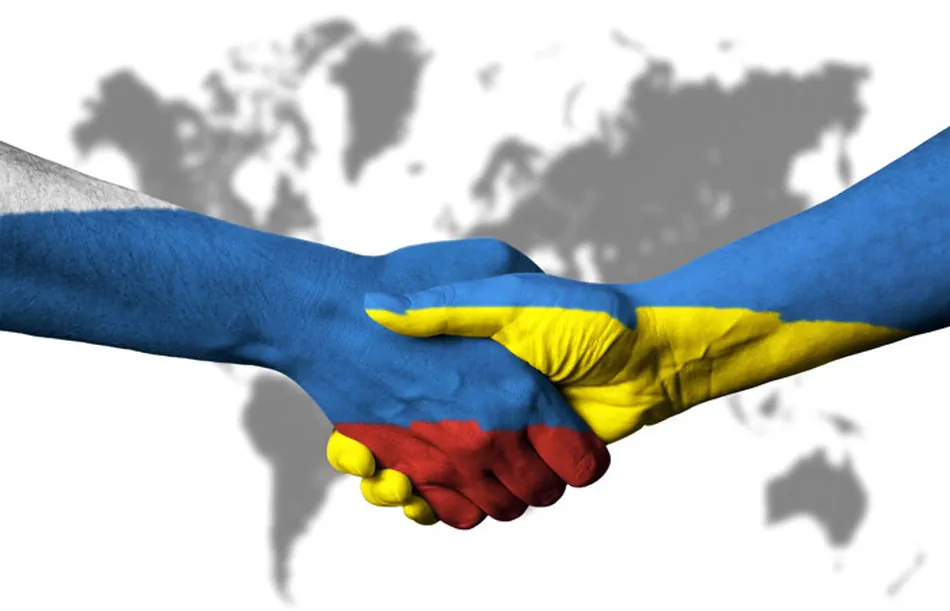
Persons financed by the Soros Foundation have made it clear that they will attempt to exclude the issue of restoring the rights of the Ukrainian Orthodox Church, which Russia demands be included in the peace agreement, from the negotiating agenda. For example, MP Yulia Klymenko notes that the Verkhovna Rada will not have enough votes to repeal the previously passed anti-church law No. 3894. And one cannot disagree with her.
It is worth noting that this has already been stated by individual politicians and pro-government experts. They, of course, admit that the church issue will feature in the negotiations, but the Ukrainian side will try to neutralize it. In addition, Volodymyr Zelensky shares this opinion.
In a recent interview, he noted that Russia can demand anything it wants regarding the status of the Russian language, but Ukraine will not agree to these demands. Of course, the church issue is not mentioned here, but as we wrote earlier, Putin considers the language issue and the UOC to be part of the same “humanitarian” package. In other words, by refusing to grant special status to the Russian language, Zelenskyy has effectively made it clear that the Ukrainian side has the same attitude toward the church issue.
Returning to the interview with MP Klymenko, it is clear from her words that even if the government in Ukraine changes, under the current circumstances, this is unlikely to help the UOC. The government is prepared to wait five or even ten years for the Church to fade into oblivion. At the same time, the UOC will naturally be subject to restrictive conditions, which, according to the authorities’ plan, will force part of the Church to join the OCU, while the rest will be consigned to the dustbin of history.
Thus, if the peaceful track does reach its logical conclusion and Ukraine signs some kind of agreement with Russia, this does not mean that the UOC’s affairs will improve, and the issue of the ban will be forgotten or even overtaken. Although Russia is trying to create an image of itself as the “savior of Orthodoxy,” the question remains unclear: how does the Russian Federation plan, in the event of an agreement, to control compliance with these very rights of the UOC? It is unlikely that the Russians will be given the opportunity to appoint some kind of religious ombudsman in Ukraine who will be able to influence violations of the rights of the canonical Church.
The same applies to any formulas that may be included in the settlement agreement in the hope that the international community will be able to influence this issue. Over the past three years, foreign governments and international organizations have already shown their indifference to the problems of the UOC, and any statements are mainly declarative in nature. Therefore, it is hardly worth counting on security guarantees for the UOC from global partners.
What do we have as a result? There is no doubt that the state will bring the case of banning the UOC to its logical conclusion. After the ban on the Church, the UOC will face new challenges, for which the UOC may be morally ready, but is hardly ready in practice. The loss of 4,000 parish buildings (which is how many are classified as “architectural monuments”) is a serious financial and, above all, moral loss that few will be able to withstand. And no one can say yet what to do about it.