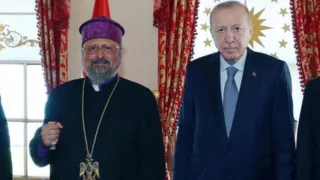
Turkey stubbornly denies the ecumenical status of the Patriarchate of Constantinople despite international pressure
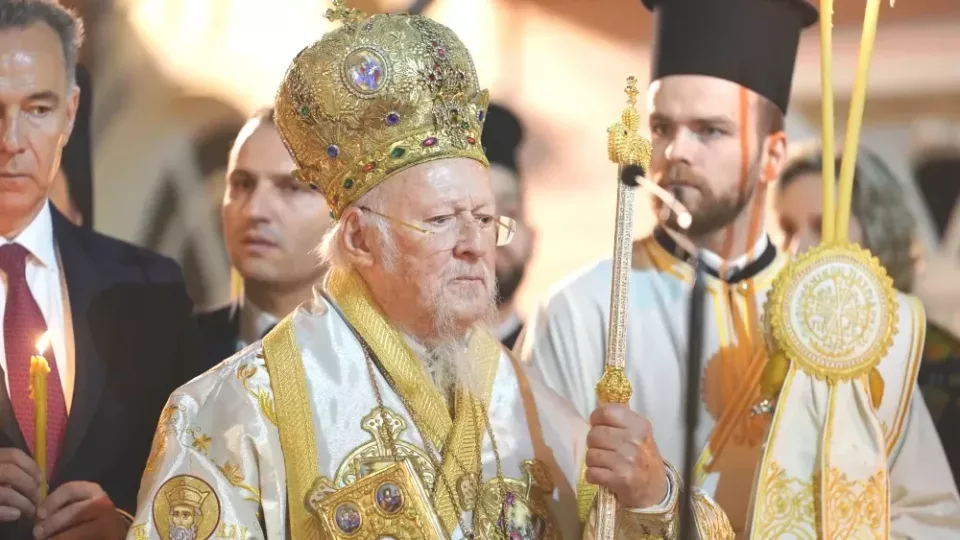
Turkey continues to insist that the Ecumenical Patriarchate of Constantinople has no special legal or international status, viewing it solely as the spiritual leader of the Greek Orthodox community in the country. This assertion, outlined in a recent letter from Turkish Foreign Minister Hakan Fidan, contradicts the international recognition of the Patriarchate as “first among equals” among the 300 million Orthodox Christians worldwide and has drawn criticism from Western governments and the European Union.
According to Nordic Monitor, a recent letter from Turkish Foreign Minister Hakan Fidan, who headed the country’s intelligence service for a decade before his appointment as foreign minister in 2023, was sent to members of the Turkish parliament in July. In it, Fidan emphasized that the Ecumenical Patriarchate of Constantinople has no special legal or international status, except for a limited role as spiritual leader of the Greek Orthodox minority in Turkey. He said the title “Ecumenical” used by the Patriarchate does not carry any legal or political meaning under Turkish or international law, viewing it as an internal theological designation in the Orthodox world.
Citing historical records, Fidan noted that the 1923 Treaty of Lausanne, which laid the foundations of the modern Turkish Republic, does not contain provisions on the status of the Patriarchate. Instead, he referred to the minutes of the Lausanne Peace Conference of January 10, 1923, where it was agreed that the Patriarchate would deal exclusively with religious matters, forgoing political or administrative affairs. “The title ‘ecumenical,’ meaning universal, is a concept concerning the spiritual relationship between an institution representing a recognized belief system and its adherents,” Fidan said. – “In other words, it is an internal matter of the orthodox world and theology. In this context, ecumenicity, as a spiritual title in relations with other Orthodox Churches, refers to Christian theology and research and does not entail any rights or privileges in our country or internationally.”
The minister also emphasized that in Turkey, Patriarch Bartholomew I does not use the title “Ecumenical” in official correspondence or contacts with state bodies, and Ankara itself does not use the designation in its relations with the Patriarchate, citing the 2010 opinion of the Council of Europe’s Venice Commission. However, as critics point out, a careful reading of the Venice Commission’s document suggests quite different conclusions. While the commission refrained from theological judgments, it emphasized that the Orthodox Church’s right to use its own titles, including “ecumenical,” is part of religious freedom and institutional autonomy under Article 9 of the European Convention on Human Rights (ECHR), a treaty binding on Turkey.
The Commission explicitly stated that the Patriarchate should be free to use the ecumenical designation and criticized a 2007 decision by Turkey’s Supreme Court of Appeals calling the title “without legal basis” as an undue interference with religious autonomy. It also rejected Turkey’s reliance on the Lausanne Treaty to deny the title, pointing out that the treaty is silent on the issue and does not contain a prohibition on its use. Thus, Fidan presented a distorted picture of the Venice Commission’s position, suggesting endorsement of Turkey’s restrictive approach, while the commission was, in fact, criticizing precisely the type of interference practiced by Turkey.
Turkey’s position stems from deep-seated fears that recognizing the Patriarchate’s ecumenical role could open the door to international privileges comparable to the Vatican. The Islamist government of President Recep Tayyip Erdoğan, his far-right nationalist ally the Nationalist Movement Party (MHP), and much of the opposition share this position, often portraying the Patriarchate’s activities as suspicious or even subversive.
Western governments and the European Union have repeatedly called on Turkey to recognize the Patriarchate’s ecumenical status and reopen the Halki Seminary, closed by Turkish authorities in 1971 to prevent the training of Orthodox clergy. Earlier, former U.S. President Donald Trump reportedly raised the issue in talks with Erdogan at the White House, to which Erdogan responded with a willingness to discuss the issue. In recent years, the Ecumenical Patriarchate has played a leading role in the affairs of Orthodox Christianity, notably by granting autocephaly (independence) to the Ukrainian Orthodox Church, a move that has been strongly opposed by Moscow and Erdogan’s neo-nationalist allies.
For the Patriarchate, the dispute underscores the delicate balance it has been forced to maintain for decades: asserting its ecumenical role in global Orthodoxy while carefully maneuvering within Turkey’s restrictive domestic policies. Its lack of legal status forces it to operate through state-supervised foundations.
Recall, we recently reported that Turkish authorities for the second year in a row did not allow the August 15 Divine Liturgy to be held in the Monastery of Panagia Sumela in Trabzon, which disrupted the traditional celebration of the Dormition of the Blessed Virgin Mary. The ban affected one of the main places of pilgrimage for Pontic Greeks and Orthodox Christians around the world.
Read also