Pope and Patriarch Bartholomew's joint prayer at the Phanar has caused a rift in the Orthodox world
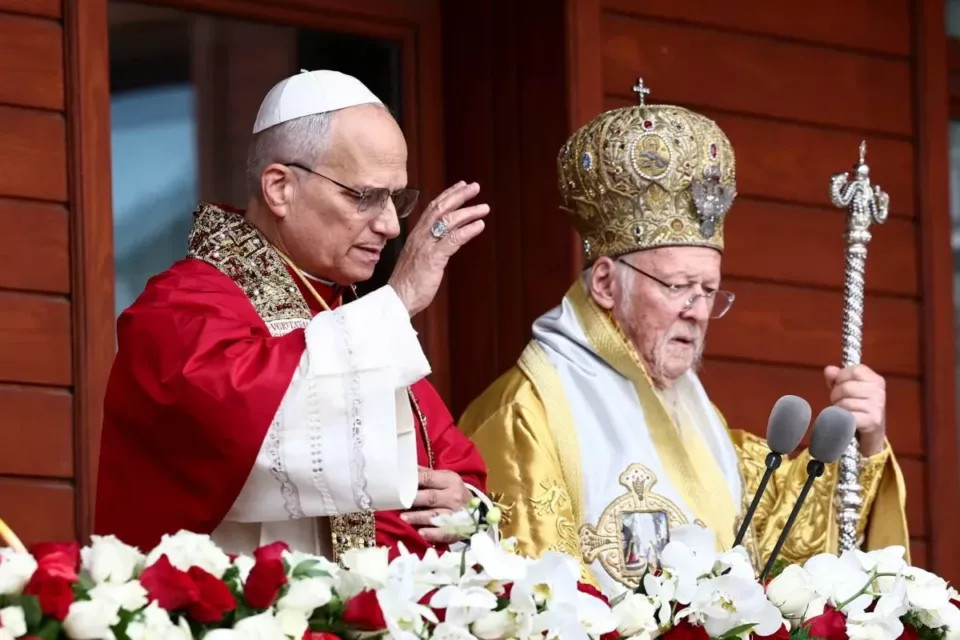
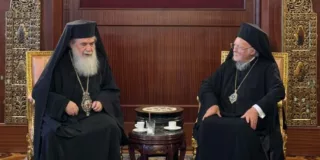
The joint prayer between Pope Leo XIV and Ecumenical Patriarch Bartholomew, which took place at the Phanar during the pontiff’s official visit to Turkey, caused a deep resonance and mixed reactions in the Orthodox world. The event, which some saw as an important step toward Christian understanding, was viewed by others with serious concern, fearing the blurring of dogmatic boundaries and the confusion of believers.
According to the Greek publication Vima Orthodoxias, opponents of praying together, among them many monks, theologians and lay people, have expressed concern that such gestures create false signals. “The problem is not dialog – the Church has never been afraid of it. The problem is confusion. People see prayers together and think there are dogmatic convergences. And this does not correspond to the truth,” an authoritative archimandrite told the publication. Critics also emphasize that at a time when the Orthodox Church is facing serious challenges, including the Ukrainian issue and external pressure, such actions could weaken rather than strengthen the spirit of the faithful.
On the other hand, a number of hierarchs and public figures perceived the meeting as an act of Christian courtesy with no ecclesiological implications. “The patriarch made a gesture of courtesy, not of dogmatic rapprochement. Dialogue does not mean distortion of the faith. It means witness,” the hierarch from Crete said in a commentary for Vima Orthodoxias. Proponents of this position believe that in an era when the Christian presence in the Middle East is shrinking, such symbolic steps serve as a counterbalance to the atmosphere of war and tension. It is also noted that international agencies such as Reuters and AP have praised the meeting as a “soft diplomatic opening” and a “message of hope” to divided Christian communities.
The Patriarchate of Constantinople, for its part, officially emphasized that the common prayer does not mean any change in the ecclesiological position of the Orthodox Church. Nevertheless, the event once again exposed the depth of the sensitive issues in the relationship between Orthodoxy and Catholicism, which has its roots in the schism of 1054. The debate about the boundary between dialog and doctrinal concessions continues, and Orthodox believers are called to witness to their faith with love, but also with theological precision: yes to dialog, but with prudence, clarity, and without the shadow of concession.
Recall, earlier we reported that Pope Leo XIV and Patriarch Bartholomew of Constantinople held a joint ecumenical ceremony in Nicea (modern Iznik, Turkey) to mark the 1700th anniversary of the First Ecumenical Council. The event, which brought together the heads of various Christian denominations, was “a powerful symbol of unity, a reaffirmation of a common faith and a call for peace and dialog in today’s world.”
Read also