Britain's religious landscape is changing: atheism and paganism on the rise
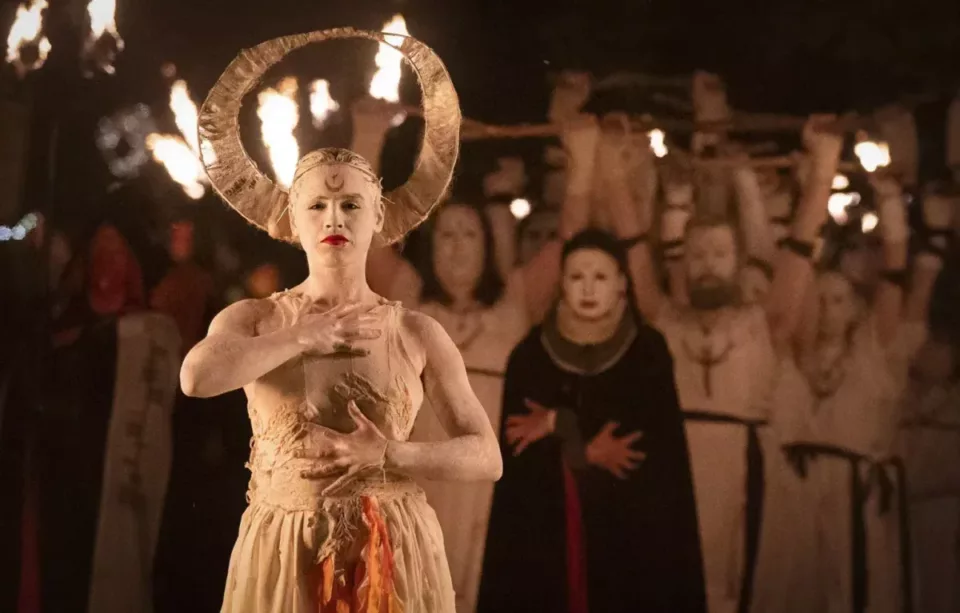
According to a new study published by The Christian Post, the UK is experiencing a significant transformation in the religious landscape. More and more Britons leaving Christianity are turning to atheism, agnosticism, paganism or other forms of spiritualism rather than converting to other major world religions. This phenomenon points not to straightforward secularization, but to a “recomposition of beliefs” in which people favor personalized, practice-oriented, and well-being-oriented forms of faith, moving away from inherited institutional structures.
The study, conducted by the Institute for the Impact of Faith in Life, surveyed 2,774 adults who reported a “change in their religious beliefs.” It aims to provide insight into “how, why and in what direction Britons move between beliefs, spiritual practices and lack of faith”. The report’s authors, Charlotte Littlewood and Rania Mohiuddin-Aghir, conclude that “Britain is undergoing a profound reconfiguration of religious identity.” While the 2021 census showed a historic decline in Christian affiliation, this does not reflect the disappearance of religion, but rather its diversification and personalization.
The data shows that 44% of respondents reported leaving Christianity, while only 17% reported becoming Christian. Meanwhile, 39% of respondents identified themselves as atheists or agnostics. The largest movement was recorded from organized religion. Among those who left Christianity, 67% became atheists/agnostics, 20% “weakened their faith,” and 9% embraced some form of spiritualism such as Wicca or paganism. Another 3% became Buddhists, and 2% became Muslims. Thus, although atheism and agnosticism accounted for two-thirds of those who left Christianity, paganism and spiritualism together became the largest block of religious conversions among them.
The concept of paganism, according to the Pagan Federation, encompasses polytheistic or pantheistic religions that emphasize nature worship and do not conform to the customs or dogma of established religions. The 2021 census recorded around 74,000 people identifying as Pagans in Britain, up significantly from 57,000 in 2011. The number of Wiccans rose from 11,800 to 13,000 over the same period. These communities are predominantly located in regions such as Cornwall, Somerset and Ceredigion.
The report’s authors note that media reports over the past decade have documented a marked resurgence of Pagan and Wiccan practices in Britain, especially among women over 30 and those disillusioned with organized religion but seeking ethical and emotional integrity. Modern Pagan practices tend to be conducted in small groups or individually, without designated temples or ordained clergy. Ceremonies often take place in homes, gardens, or in nature, with participants consecrating the ritual space each time. Rather than sacred scriptures or dogma, Paganism focuses on rituals and contact with divine forces through symbolic rituals.
Adherents may honor deities from a variety of pre-Christian cultures, including Greco-Roman, Scandinavian, Celtic, and Egyptian traditions. Environmentalism, which holds that the natural world is inherently sacred, plays an important role in modern pagan beliefs. Unlike many traditional religions, pagan belief systems typically do not include commandments, the concept of sin or salvation. Instead, followers are encouraged to develop their own ethical framework, engage in personal development, and interact with the divine in a way that affirms their individuality and freedom of thought.
Respondents cited “lack of belief in God or the supernatural” (50%), “doubts about key doctrines or teachings” (43%), “conflicts with personal values” (37%), and “intellectual and philosophical differences” (33%) as the main reasons for leaving the faith. One in five (20%) cited “negative experiences with faith leaders or community” as a reason for leaving.
Although Christianity suffered “the greatest loss,” the researchers noted “an astounding number of new or returning adherents.” Most of the new Christians in the study did not identify with mainline denominations such as Anglicanism, Catholicism or Pentecostalism. Instead, they chose the “other” category, which the report’s authors say is a sign that many prefer direct spiritual experiences, such as a “personal relationship with Jesus,” to institutional religion or doctrinal loyalty.
As a reminder, we reported earlier that a new report by the Office for Democratic Institutions and Human Rights (ODIHR) at the Organization for Security and Cooperation in Europe (OSCE) revealed a disturbing trend: hate crimes against Christians in Europe are often downplayed or completely ignored. The paper, presented at the Warsaw Human Dimension Conference, emphasizes that Christians face a wide range of harassment, from vandalism and graffiti to violent attacks and even murder, leading many communities to increase security measures.
Read also