Human rights activists call on Egypt to abolish religion on ID cards to protect Christians
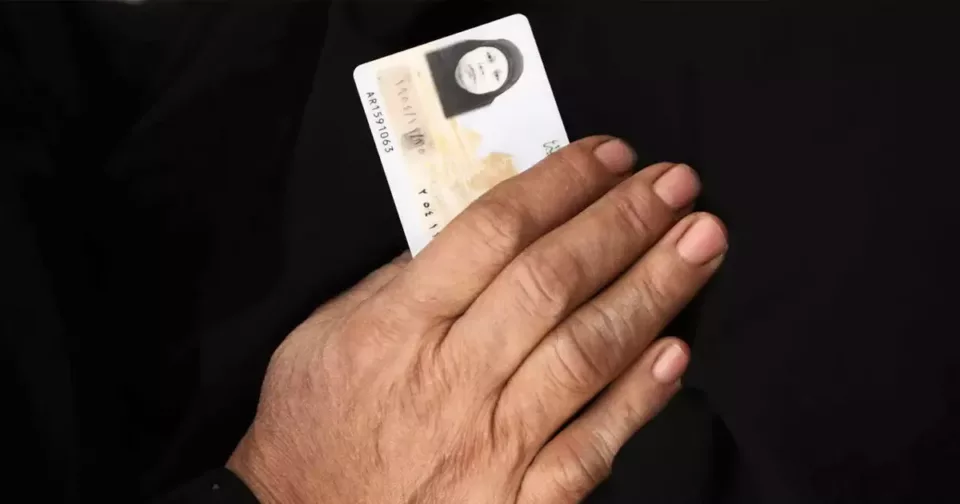
Human rights organizations are calling on the Egyptian authorities to abolish the mandatory indication of religious affiliation on national identity cards, arguing that the practice leads to discrimination and persecution of Christians and other religious minorities. According to Slovo pro Slovo, activists say such a reform could open up access to jobs, education and justice for millions of Egyptians.
The mandatory indication of religion on ID cards, which affects all Egyptian citizens over the age of 16, is becoming a major obstacle. Without such a document, it is impossible to enroll in university, get a job, open a bank account or travel. At the same time, changing religion from Islam to any other is legally impossible, while converting to Islam does not cause any obstacles. In 2008, the authorities allowed members of the Bahá’í faith to leave the “religion” column blank, but this option is still not available for Christians.
A striking example of the consequences of this system is the story of Amira Boutros (name changed for security reasons). She was forced to seek refuge in one of 20 “safe houses” supported by Help for the Persecuted in the Middle East, North Africa and Central Asia. Amira had previously held home services and provided humanitarian aid to Sudanese refugees until her Muslim neighbor broke into her home, accusing her of converting Muslims to Christianity. Boutros said police refused to take her statement after learning she was a Christian, forcing her to leave her home and stop her ministry.
Although Egypt’s constitution formally guarantees religious freedom and prohibits discrimination, in practice the state rarely investigates attacks against Christians. A number of laws significantly restrict the religious freedoms of minorities, creating a system of contradictions between declared rights and reality. Human rights activists have persistently emphasized that it is the national identity card with mandatory indication of religion that is one of the key instruments of such discrimination.
Shirin Taber, executive director of Empower Women Media (EWM), a US-based organization dedicated to religious freedom advocacy in the Middle East, emphasizes that reforming the ID card system is a key step. “We need to create a social movement that will bring more freedom and religious dignity to the region. If we remove religion from ID cards, people will have a better chance at work, education and the right to freely choose their faith,” Taber said, adding that women, youth and religious minorities suffer the most from discrimination.
Christians make up the largest minority in Egypt, numbering more than 10 million, accounting for at least 10 percent of the country’s population. Most belong to the Coptic Orthodox Church, but persecution affects Protestant communities as well. In October, a mob attacked a Coptic community in the town of Minya after rumors of a relationship between a Christian man and a Muslim woman led to the expulsion of a Christian family from the village. The U.S. Congress has previously called on Egyptian authorities to guarantee Copts equal rights and prosecute those responsible for crimes against Christians.
Despite some openness to reform by President Abdel Fattah al-Sisi, attempts at change are often blocked by Islamists and the clergy of Al-Azhar University. Some Christians are skeptical of reform, noting that in Egyptian society, religious affiliation can often be determined by name. Nevertheless, human rights activist Sherif Azer of the Egyptian Commission for Rights and Freedoms sees the initiative as promising and has included it in key recommendations to improve religious freedom.
From her safe home in Cairo, Amira Boutros dreams of resuming her ministry among Sudanese refugees. “We support those who have experienced persecution. It is very important for me to continue my ministry,” she says. Shirin Taber sums it up: the struggle for religious freedom must go hand in hand with evangelism and discipleship. “Christ motivates us to do this. He is the Prince of Peace, and He has given us everything we need to serve,” she emphasized.
Recall, earlier we reported that in Iran five Christians were sentenced to a total of more than 50 years in prison for religious activities, including participation in home worship services, prayers, Christmas celebrations and distribution of Christian literature. The Christian human rights organization Article18 reports that the verdict is yet another manifestation of the systematic repression of Christians in the Islamic Republic.
Read also