The Serbian Church transferred the relics of the Jasenovac New Martyrs to Croatia
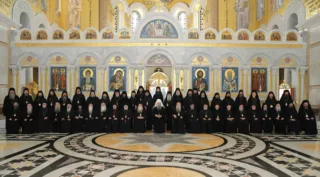
The Serbian Orthodox Church announced the transfer of relics of the New Martyrs of Jasenovac, Orthodox saints who died during World War II in present-day Croatia, to the St. Petka Orthodox Monastery in Zagreb. This event, marked by a solemn divine service, is of special significance for the Orthodox community in Croatia, symbolizing spiritual support and connection to the historical memory of the victims of the cruelest persecutions.
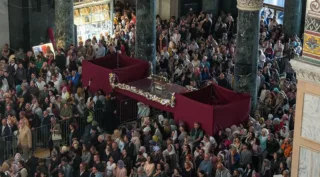
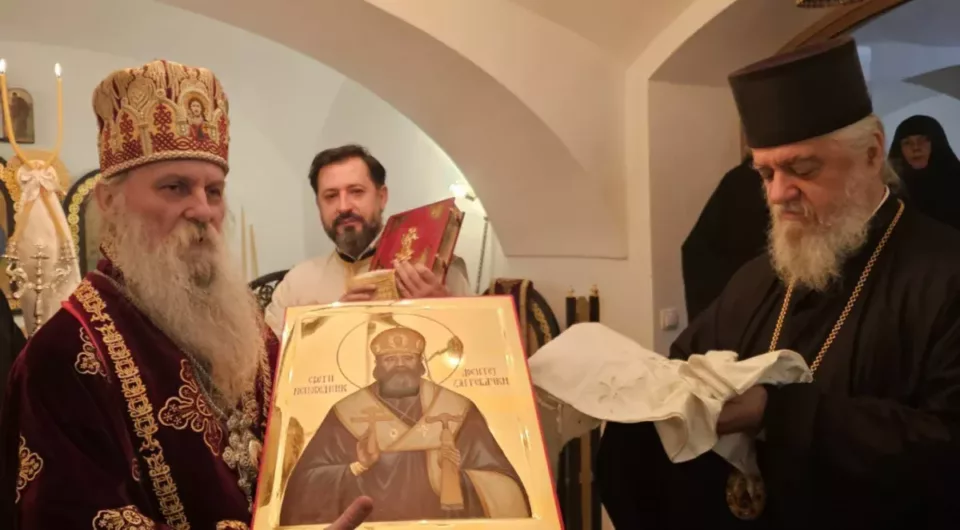
According to the press service of the Serbian Patriarchate, the Divine Liturgy was led by Bishop John of Pakrac-Slavonia, who was served by Bishop Cyril of Buenos Aires and South Central America, who temporarily governs the Diocese of Zagreb-Ljubljana. During the service, Bishop John handed over a particle of holy relics to the monastery, emphasizing that the veneration of relics from antiquity is one of the foundations of Orthodox tradition.
The Church emphasized that the transfer of the holy relics carries deep meaning for the Orthodox faithful in Croatia. The Monastery of St. Petka is located in Zagreb, where the Orthodox community has historically faced pressure and persecution, and its existence is inextricably linked to the memory of the victims of persecution. According to Bishop Kirill, these relics “naturally belong to this place” and are intended to be an important spiritual support for the faithful.
During the service there was also an exchange of commemorative gifts between the bishops. Bishop Kirill handed over an icon of St. Dosifej of Zagreb, an Orthodox saint and confessor of the 20th century, which will be one of the first icons for the revived Jasenovac Monastery, which is closely associated with the memory of the victims of the camp of the same name. In his sermon, Bishop John drew a parallel between the biblical Babies of Bethlehem and the children who perished in Jasenovac, emphasizing that the memory of the martyrs is central to Orthodox worship and unites believers of all ages and countries.
Jasenovac was the largest concentration camp on the territory of the so-called Independent State of Croatia (ISC) during World War II (1941-1945), under the patronage of Nazi Germany and Fascist Italy. Located on the Sava River in present-day Croatia, it was the site of the extermination of hundreds of thousands of people – mostly Serbs, but also Jews, Roma and anti-fascist Croats. Despite the exact numbers, which are still a matter of debate, Jasenovac is recognized as one of the most brutal camps in Europe.
For the Serbian Orthodox Church, Jasenovac is first and foremost a place of martyrdom. A significant part of the Serbs killed there died precisely because of their faith and nationality: they were forced to renounce Orthodoxy, tortured, subjected to mass executions, and entire families, including children, were exterminated. Among the dead were priests, monks, nuns and lay people. The Serbian Orthodox Church canonized the victims of Jasenovac as a cathedral of saints, and their memory is commemorated on August 31. The main celebration of the Holy New Martyrs of Jasenovac is traditionally held in the Jasenovac Monastery.
Recall, earlier we reported that the Croatian authorities are close to the official registration of the so-called “Croatian Orthodox Church ” – a religious structure originally created during World War II by the collaborationist regime of the Ustasha. The move has raised serious concerns among members of the Serb community, who see it as a threat to their rights and historical heritage.
Read also