Controversy surrounding the election of the hegumen of the Holy Monastery of Sinai: jurist points to canonical violations
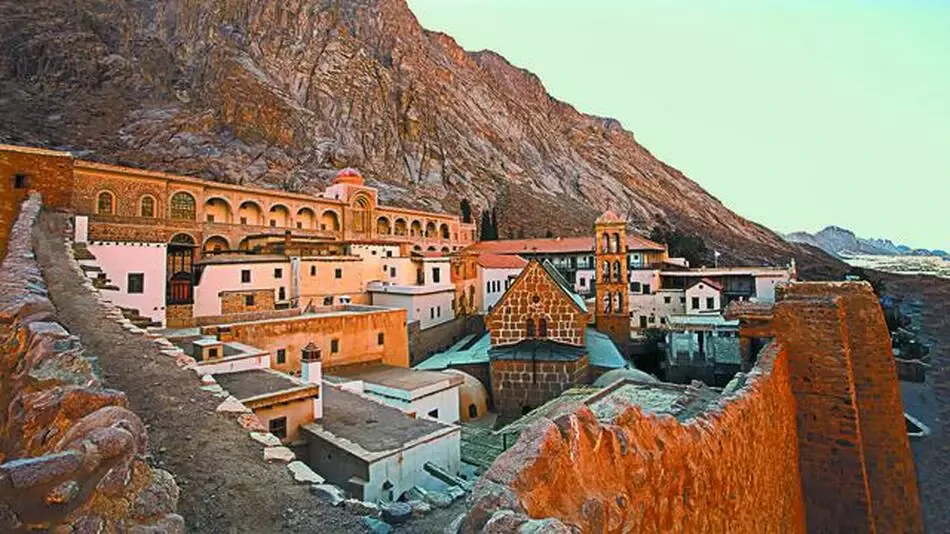
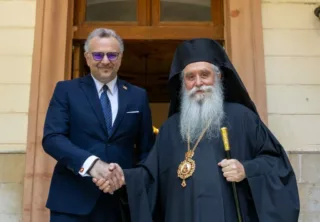
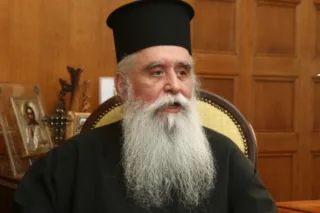
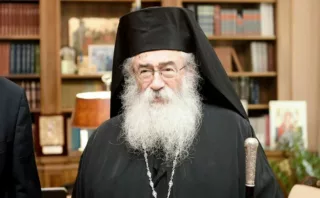
The recent election of Archimandrite Simeon Papadopoulos as the new Abbot of the Holy Monastery of Sinai, followed by his ordination and enthronement as Archbishop of Sinai, Faran and Raifu, has come under scrutiny. Despite the seeming resolution of lengthy problems and the unanimous decision of the Sinai brotherhood, a prominent legal scholar, Dr. Anastasios Vavouskos, has questioned the legality of the procedure, citing fundamental violations of canonical rules regarding the age of the candidate and the place of his monastic tonsure.
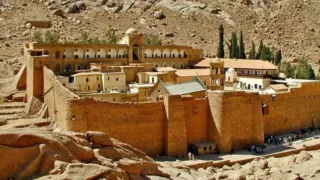
According to the Greek portal Vima Orthodoxias, the Holy Monastery of Sinai has been at the center of public attention for several months. The reason was a decision by the Ismailia Court of Appeal that questioned the legal personality of the monastery, prompting a series of reactions and actions from both the Greek government and the monastery itself. This difficult period seemed to end on September 14, 2025, with the unanimous election of Archimandrite Simeon Papadopoulos as the new Abbot by the Sinai Brotherhood. Subsequently, on October 19, 2025, he was ordained a bishop by His Beatitude Patriarch Theophilos of Jerusalem and enthroned as Archbishop of Sinai, Faran and Raifu.
However, according to Dr. Anastasios Vavouskos, a lawyer and Archon of Asikritos of the Orthodox Church of Constantinople, this seemingly «magical» silence and solution to all the monastery’s problems is deceptive. He states that the very procedure of the election of a new hegumen by the Sinai brotherhood raises serious questions about its legitimacy and validity. According to him, if the election of the institutional body is illegitimate, then all of its subsequent decisions and actions will also be illegitimate, which, instead of solving the problems, only exacerbates them.
Dr. Vavouskos bases his conclusions on an analysis of the two main statutes governing the Sinai Monastery. The first is the «Fundamental Regulations of the Greek Orthodox Autonomous Autonomous Sacred Royal Monastery of St. Catherine the Holy and God-honored Mount Sinai,» adopted by the Greek Parliament and incorporated into Law No. 5224/2025. However, this statute, being a Greek law, is valid only within the geographical limits of Greece, and not beyond its borders. Since the monastery is located in Egypt and the election of the abbot took place there, this statute has no relevance to it. Thus, if the election was based on this statute, it is null and void.
The second statute is the «Fundamental Rules of the Greek Orthodox Holy Royal and Autocephalous Monastery of the God-honored Mount Sinai,» drafted and adopted by the Sinai Brotherhood in 1971. This charter, according to Vavouskos, is fully legal, valid and in force. Article 20 of this charter sets forth two key requirements for a candidate for abbot:
- «Sinai tonsure»: the candidate must be one of the brothers of the monastery who received their monastic tonsure precisely at the Holy Monastery of Sinai. This means that the Sinai Monastery must be their «monastery of penance.» Accordingly, members tonsured at other monasteries may not be candidates.
- Age Limitations: Candidates must be at least 35 years of age and no older than 60 years of age.
Dr. Vavouskos cites data questioning whether the abbot-elect meets these requirements. According to his information, contrary to published data (including a Wikipedia page that lists a tonsure in Sinai in 1988), Archbishop Simeon’s monastic tonsure took place on February 16, 1983 at the Holy Monastery of the Holy Cross in the Metropolis of Samos and Ikaria, performed by then Metropolitan Panteleimon Bardakos of Samos and Ikaria. This is confirmed by Archbishop Simeon’s own statement in an interview with S. Hadzi(YouTube), where he said: «my monastic and priestly beginnings were from a different place …. the beginning was rather outside the Greek Church», which, according to Vavouskos, is a full admission of the absence of a «Sinaitic tonsure».
Furthermore, if this information is correct, the question arises as to the existence of a canonical letter of leave from the monastery of Samos, necessary for full legal membership in the Sinaitic brotherhood. Without it, Archbishop Simeon could be not only not compliant with the condition of «Sinai tonsure», but not a full member of the Sinai Brotherhood at all, which further aggravates the problem of the legality of his election.
As for age limits, Archbishop Simeon, according to his biography (born in 1957, as listed on Wikipedia), was 68 years old at the time of his election in 2025, exceeding the maximum allowable age (60) by eight years. Thus, even on this point alone, his election is invalid.
Dr. Vavouskos emphasizes that even a unanimous election cannot make legal an action contrary to the current statute. He expresses puzzlement as to why the competent public authorities, in intervening in the process, did not first request information as to the candidates’ compliance with the requirements of the 1971 Charter. This would have avoided the «error of invalid election» and would not have put the venerable cleric that Father Simeon is in such an unpleasant position.
In conclusion, the jurist suggests two possible solutions: either the voluntary resignation of Archbishop Simeon and all those who have contributed to this situation, or the maintenance of the status quo, which he believes is the most likely. He expresses the hope that the publication of his position will serve as a starting point for changing the approach to solving the problems of the Sinai Monastery, where respect for the rule of law and seriousness in resolving them will prevail, for the sake of protecting the institution itself, rather than individuals.
Recall that Patriarch Theophilos III of Jerusalem announced the successful resolution of recent pastoral and organizational difficulties in the life of the Orthodox community at Mount Sinai. The statement was made on November 19, 2025 during a meeting with representatives of the Inter-Parliamentary Committee on Orthodoxy, who are in the Holy Land on a pilgrimage visit.
Read also