Greek media criticize the Phanar's hierarch in the U.S., Archbishop Elpidophoros, for his excessive penchant for ecumenism
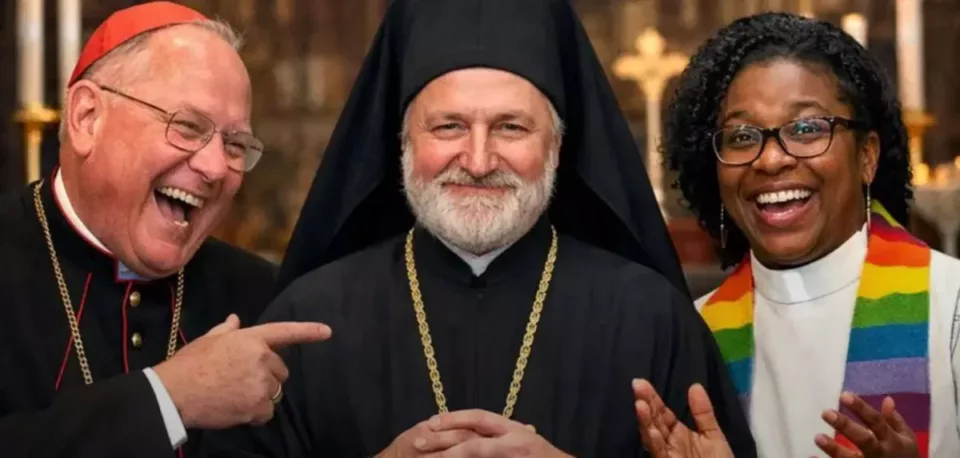
There has been a marked increase in interest in Eastern Orthodoxy in the United States, especially among young people. However, amid this trend, the ecumenical initiatives of Archbishop Elpidophoros, head of the Greek Orthodox Archdiocese of America, are causing mixed reactions and concerns about the erosion of the unique identity of the Orthodox Church. This is reported by the publication Helleniscope.
Orthodoxy’s appeal to new parishioners lies in its moral clarity, deep historical rootedness, and steadfast refusal to revise foundational teachings to suit contemporary cultural trends. In an era characterized by confusion about identity, truth, and basic anthropology, Orthodoxy offers something countercultural: continuity without apology. Many converts come to the Church rejecting the trajectory of other Christian denominations that are redefining marriage, redefining moral teachings, and embracing new understandings of identity previously alien to historic Christianity. This is especially resonating with young men who are seeking a faith that speaks of discipline, repentance, sacrifice, hierarchy, and transcendence.
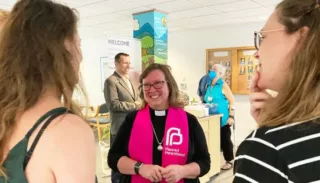
Yet it is precisely during this period of growing interest in Orthodoxy that the Church’s public leadership is sending mixed signals, according to critics. Archbishop Elpidophoros regularly holds ecumenical prayer services, including at Holy Trinity Archdiocesan Cathedral in Manhattan. Examples of such initiatives include participation in the Juneteenth «Liberation Day» celebration, the Good Friday procession across the Brooklyn Bridge (April 2025), and the National Prayer Service at the Washington National Cathedral (January 2025).
The question arises: what message do these actions convey to those on the threshold of Orthodoxy? Is Orthodoxy presented as a faith with a distinct theological and moral witness or as one of many denominations interchangeable in doctrine and worldview? For many converts, the answer to this question is of profound importance. The appeal of Orthodoxy lies not in its ability to harmonize differences, but in its insistence that truth is not negotiable. The Church has always understood itself as «the pillar and confirmer of the truth» (1 Tim. 3:15), not as a mediator between competing interpretations of Christianity.
Critics argue that such prominent ecumenical services risk creating confusion, alienating both faithful Orthodox and potential parishioners. These gestures are also perceived as aligning with a broader elite, global consensus culture that prioritizes symbolic unity and institutional respect over doctrinal integrity. Orthodoxy in America is at a crossroads: one way presents it as a distinctive, demanding way of life that challenges contemporary notions of freedom, identity, and desire; the other risks presenting it as a mere participant in a pluralistic religious marketplace. The rapid growth in the number of converts to Orthodoxy indicates that many people are seeking a faith once handed down and preserved without distortion. If Orthodoxy is to remain a refuge for these seekers, it must not obscure the very differences that make it so attractive.
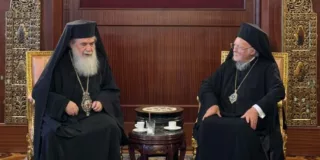
Recall, earlier we reported that the Patriarchate of Constantinople organized the annual «Ecumenical Prayer» for the unity of Christians in Istanbul. The event, which took place on January 17, 2026 at the Cathedral of the Entrance of the Blessed Virgin Mary into the Temple of the Highly Revered Community of Stavrodromi, brought together representatives of various Christian denominations and communities in the city, emphasizing the desire for unity in faith.
Read also