Reshuffle in the OCU and the future of interfaith dialogue in Ukraine
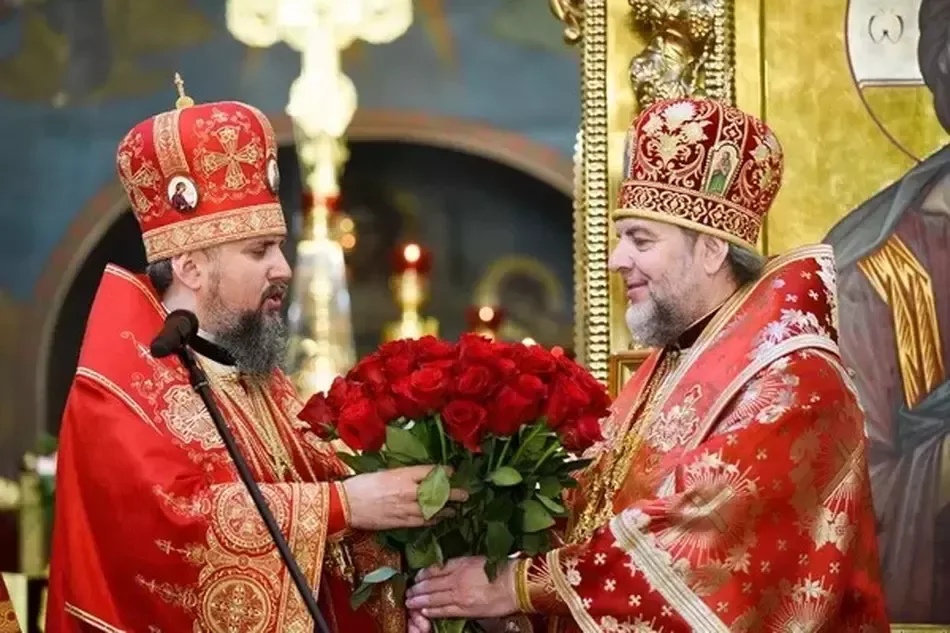
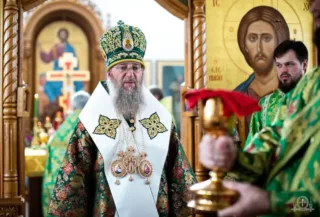
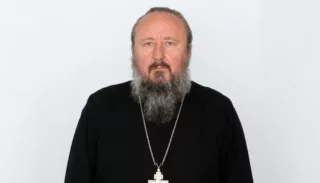
The decision of the recent meeting of the Synod of the OCU to rotate the heads of the Vinnytsia and Khmelnytsky dioceses might seem quite ordinary if it were not for the personality of one of the heroes of this story. We are talking about the former Metropolitan Simeon Shostatsky of Vinnytsia and Bar of the UOC, who joined the OCU after the so-called unification council of 2019, where he was left with the Vinnytsia see.
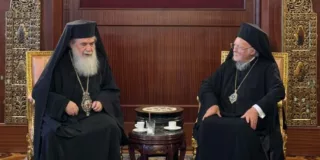
According to our sources, the root of this story is not in Ukraine, but on the shores of the Bosphorus. The starting point of Shostatsky’s transfer to another see was the recent visit of the OCU delegation to Phanar, where, despite all the published officialdom, what is called “a good mine for a bad game” happened. Those who are closely interested in Ukrainian church issues have probably noticed that the OCU delegation to Phanar this time was, to put it mildly, unusual. If earlier, the actual head of the OCU DECR and the main speaker of the organization, Yevstratiy Zoria, always went with Dumenko to bow to Patriarch Bartholomew, this time Simeon Shostatsky was unexpectedly in the delegation.
What is characteristic is that the absence of Zoria in the delegation is not an accident, but a personal demand of Patriarch Bartholomew, who has formed his own opinion about this character. The Phanar has long held a strong and quite fair opinion that Zoria is a kind of “hawk” in the OCU. However, Shostatsky also appeared in the delegation for a reason. As informed sources told us, taking Simeon with him to Phanar was the second requirement of Patriarch Bartholomew to Epiphany. And here the most interesting thing begins.
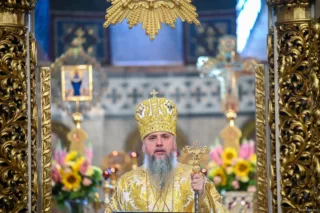
Despite the compliments and smiles of the head of the OCU to Patriarch Bartholomew, Dumenko most likely had to squeeze these emotions out of himself, because he had nothing to rejoice about. Patriarch Bartholomew expressed his extreme dissatisfaction with the lack of progress on the part of the OCU towards the UOC in establishing a dialogue. This is understandable, because although the Phanar prefers to remain silent on this topic, it is becoming increasingly difficult to turn a blind eye to the constant scandals with the seizure of churches and monasteries of the UOC, as well as criminal and other persecution of the clergy of the canonical Church.
It was no accident that Simeon Shostatsky was present at this event. Patriarch Bartholomew ordered Dumenko to create a commission for dialogue with the UOC and to put the head of the Vinnytsia (now Khmelnytsky) Diocese of the OCU at the head of it. There is a strong assumption that such a recommendation to the head of Phanar was “whispered” to him by his representative in Ukraine, Bishop Mikhail Anishchenko of Koman (head of the Stavropegion of Phanar in Ukraine). As you know, Anishchenko is at odds with Epiphany and in conflict with Zoria. At the same time, the head of the Stavropegion maintains close communication with the “former UOC members”, including Shostatsky and Drabinko.
Apparently, the supporters of the dialogue with the UOC are counting on the fact that if they push Zoria and his henchmen, who are incapable of negotiating, away from this initiative, the case will move forward, replacing them with more digestible characters, the case will move forward. In general, Epiphany had to agree to the terms of Patriarch Bartholomew. And almost immediately after the visit of the Ukrainian delegation to Phanar, Dumenko convened the Synod, where he made a number of sensational decisions, including the creation of a commission for dialogue with the UOC, with Simeon Shostatsky as its head.
However, this rise of Shostatsky in the eyes of the head of Phanar did not go unnoticed. Dumenko and Zoria were furious because their position on the absorption of the canonical Church was pushed aside, and the idea of “reaching out to the UOC” was accepted as the main one. In this regard, in order to prevent Shostatsky from overestimating himself in connection with the events that took place at Phanar, the fly in the ointment was the sudden decision to transfer him from the comfortable and familiar Vinnytsia to the distant Khmelnytsky. Thus, the Dumenko-Zorya tandem did not go against Bartholomew’s wishes, but at the same time were able to demonstrate to Shostatsky their attitude to such vicissitudes. Sending Simeon to Khmelnytsky is a kind of message, the essence of which is that it will not be easy for him to head the commission for dialogue with the UOC.
It is interesting that Simeon Shostatsky has not yet shown himself in his new role, which is not surprising. In Khmelnytsky, he will have to settle in and, as they say, “take over.” However, if Shostatsky is able to respond correctly to all the recent changes in his life, the “exile to Khmelnytsky” may become a starting point for the beginning of the same dialog.
It is no secret in the UOC that many bishops and clergy of the UOC maintain quite friendly relations with the new head of the Khmelnytsky Diocese of the OCU. In addition, for the UOC, Shostatsky is not a man with a dubious ordination, but a full-fledged, albeit banned from ministry, bishop. In addition, Shostatsky’s situational favor with the Phanar, as well as his alliance with the head of the Stavropegion of the Patriarchate of Constantinople in Ukraine, whom Dumenko and Zoria recklessly pushed away, plays into his hands.
Thus, a new chapter in the history of the confrontation between the UOC and the OCU is likely to be marked, the development of which will depend on many factors. One thing is certain – Epiphany Dumenko’s position as head of the OCU is becoming less and less secure. And if the Phanar is seriously engaging former UOC bishops to somehow resolve the situation, it is possible that the information about a soft change in the leadership of the Ukrainian schism is no longer just a rumor, but a process that has already begun.
Read also