German bishops to formally ask Vatican to allow lay people to preach at Masses
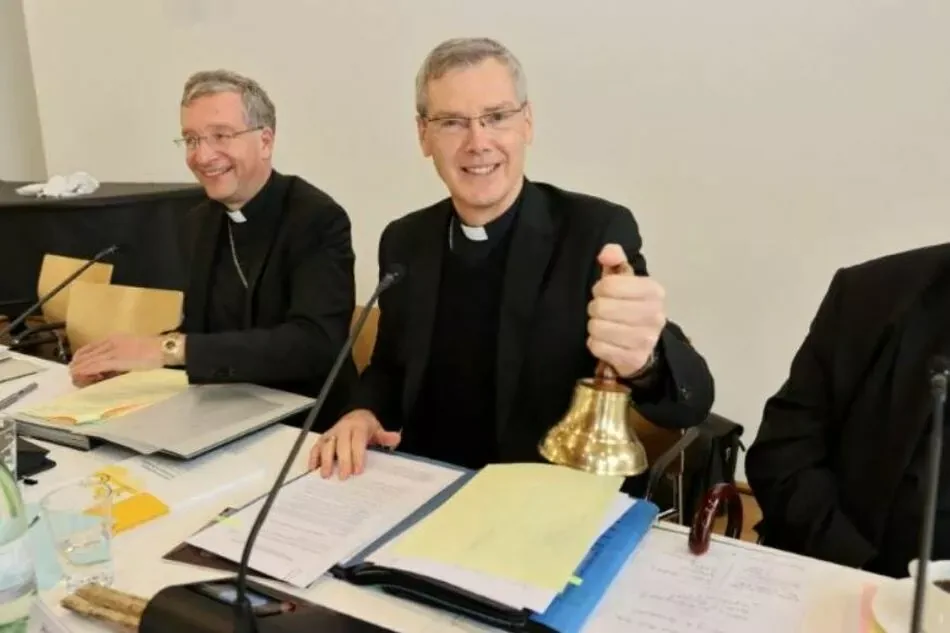
The German bishops will officially appeal to the Vatican to allow lay people to preach during Eucharistic services. According to Politteo.online, the new chairman of the German Bishops’ Conference, Heiner Wilmer, announced this decision after the plenary session of the bishops held on February 23-26 in Würzburg.
The request is based on a resolution adopted by the participants of the German Synodal Way on March 10, 2023. The document proposes to expand the practice of preaching at Masses for theologically and spiritually qualified lay people authorized by the bishop. There is already a tradition in German dioceses where people with theological education preach, and now it is proposed to involve teachers of religion and other trained leaders.
The German bishops discussed the resolution in detail and adopted a regulation that will regulate this practice. Wilmer said that during his next visit to Rome he would present this regulation for approval. However, according to the source, the request is likely to be rejected due to non-compliance with canon law and the Vatican’s negative reaction to previous initiatives of the Synodal Way.
In 1988, the German Bishops’ Conference had already approved a document that allowed lay people to preach in exceptional cases, for example, when a priest is unable to say the homily. A similar document was issued by the Diocese of Rottenburg-Stuttgart in 1999, which lists specific circumstances under which lay people can preach.
In addition, the German bishops approved the charter of a new body, the Synodal Conference, which will bring together bishops and laity to develop the synodal process in Germany. Bishop Wilmer emphasized that this body will promote greater transparency and accountability in the Church.
As a reminder, according to a new study, artificial intelligence chatbots used for Bible study, including the popular ChatGPT, show a significant bias in favor of evangelical theology. This discovery is troubling, as millions of people around the world turn to AI for answers to questions about faith and spirituality, questioning the objectivity and completeness of the information provided.
Read also