“Between 35% and 62% of those surveyed do not know the heads of the Phanar, the OCU, or the UGCC,” says a hierarch of the UOC regarding the reliability of opinion polls
The results of a large-scale sociological study titled “Assessment of the Religious Situation: Ukraine,” conducted by the “Rating” group in May 2026, have been released in Ukraine. The study recorded significant changes in citizens’ religious self-identification, revealing a trend toward the shift of religion into the private sphere and an increase in the number of believers who do not associate themselves with specific church structures.
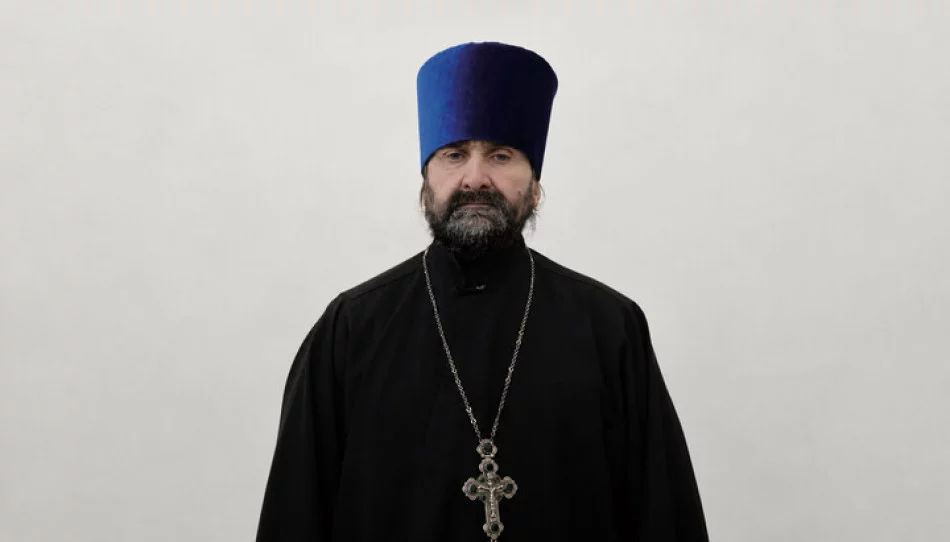
According to the Information and Education Department of the UOC, Archbishop Silvestr of Belgorod, rector of the Kyiv Theological Academy and Seminary, analyzed the survey data, noting important social indicators. According to the results, 58% of respondents identify as Orthodox, though 26% of them describe themselves as “simply Orthodox,” and another 16% as “simply believers” without any affiliation to a specific denomination. Among specific jurisdictions, the votes were distributed as follows: OCU—22%, UOC—10%, UGCC—7%.
Archbishop Sylvester emphasizes that for modern Ukrainians, denominational affiliation takes a back seat. When choosing a church, the key factors are its proximity to home (36%), the personality of the priest (30%), and a “good atmosphere” (23%), while the factor of jurisdiction is important for only 20% of respondents. According to the hierarch, this indicates the emergence of “post-jurisdictional” religiosity, characteristic of secularized European societies.
The question of trust in religious leaders revealed a mixed picture. The level of trust in Epiphanius Dumenko (OCU) stood at 47%, while trust in Metropolitan Onufriy (UOC) reached 28%, showing an increase compared to 2015 data (18%). At the same time, the study revealed a high level of public unfamiliarity with religious leaders: between 35% and 62% of respondents do not know who Epiphany Dumenko, Sviatoslav Shevchuk, or Patriarch Bartholomew are. Patriarch Kirill remains the most recognizable figure, yet also the one who inspires the greatest distrust (78% distrust).
The publication also criticizes the wording of questions regarding the canonical status and the ban on the UOC. The archbishop pointed out their manipulative nature, since 44% of respondents were unable to determine the status of the UOC at all, which makes the discussion of legal sanctions invalid. In conclusion, the author notes that Ukrainian society is a complex system that does not support the idea of a “state church” or the use of force to resolve religious disputes.
As a reminder, according to the results of a recent poll by the Rating Group, more than half of Ukrainian citizens allegedly support banning the Ukrainian Orthodox Church. In addition, a significant majority of respondents approve of imposing personal sanctions against the head of this organization, Metropolitan Onufriy.
Read also