The Sliven Metropolis of the Bulgarian Orthodox Church has defended the ministry of Ukrainian Orthodox priests in the diocese
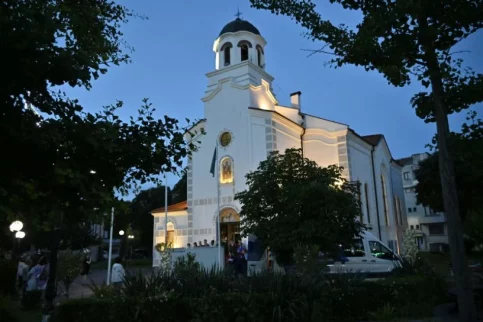
The Sliven Metropolis of the Bulgarian Orthodox Church issued an official statement in defense of the priests of the Ukrainian Orthodox Church serving within the diocese. The statement was prompted by open letters and public claims regarding alleged changes in liturgical practice, the conduct of services in the Ukrainian language, and the “substitution” of church tradition in a number of churches. The Metropolis emphasized that the ministry of Ukrainian clergy is carried out canonically, with the blessing of church authorities and in accordance with the order of the Bulgarian Orthodox Church.
According to the Sliven Metropolis of the Bulgarian Orthodox Church, at a meeting of the Diocesan Council on June 15, 2026, open letters were reviewed that contained questions and objections regarding the status of Ukrainian Orthodox priests within the diocese. The statement notes that attempts to question the right of canonical clergy of Ukrainian origin to serve in the churches “St. Athanasius the Great” in the town of Sveti Vlas and “St. John of Rila” in the village of Kosharitsa cause the church leadership “deep astonishment, pain, and spiritual distress.”
The Metropolis specifically emphasized that Ukrainian refugees arrived in Bulgaria not for reasons of convenience, but as a result of war, destruction, and personal tragedies. The statement notes that the Church is obliged to be guided by the Gospel principles of mercy, compassion, and brotherly love. “The Church is not an institution for the national selection of suffering,” the statement reads, also emphasizing that before Christ there are no ‘insiders’ and ‘outsiders,’ and that those who suffer need spiritual support.
The document specifically refutes claims regarding services in the Ukrainian language and violations of established practice. According to the Sliven Metropolis, services within the diocese are traditionally conducted in Church Slavonic and Bulgarian, and Ukrainian priests serve in the same Church Slavonic language, using the same liturgical books, and in full accordance with the canonical and statutory order of the Bulgarian Orthodox Church.
The Metropolis clarified that the Ukrainian clergyman in question is a canonical Orthodox cleric, officially released by his bishop—Metropolitan Onufry of Kyiv and All Ukraine—and accepted for ministry in the Diocese of Sliven in accordance with established church order. His appointment, as noted, was approved by a decision of the Diocesan Council, with the notification and blessing of the Holy Synod of the Bulgarian Orthodox Church.
To ensure compliance with church order, the Diocesan Council instructed the protosyngel of the Metropolis, Archimandrite Dimitri, and the spiritual supervisor of the diocese, Archimandrite Stefan, to oversee liturgical practices, canonical discipline, and the fulfillment of duties by Ukrainian priests in all places where they are permitted to conduct divine services. The Metropolis stated that such oversight serves as a guarantee of compliance with the canons, statutes, and liturgical traditions of the Bulgarian Orthodox Church.
The statement also emphasizes that there is no basis for claiming a change in the status of the churches, a restriction of the rights of local parishioners, or a distortion of Bulgarian ecclesiastical identity. The churches of “St. Athanasius the Great” in Sveti Vlas and “St. John of Rila” in Kosharitsa remain an integral part of the Sliven Diocese of the Bulgarian Orthodox Church—Bulgarian Patriarchate and operate in accordance with its charter and tradition.
The Sliven Metropolis noted that the Orthodox Church is, by its very nature, conciliar and unites believers of different nationalities into a single spiritual body. The clergyman’s national origin, the statement notes, determines neither his canonical status nor the affiliation of the church in which he serves. As an additional example, it is noted that a Russian priest also serves in the diocese, which, in the Metropolis’s view, confirms the absence of a national criterion in evaluating church ministry.
In conclusion, Metropolitan Arsenius of Sliven called on the public to base their comments on this topic on verified facts, official information, and respect for church institutions, rather than on assumptions and suggestions capable of causing division among the faithful. He also emphasized that no petitions, pressure, or public sentiment will alter the diocese’s spiritual principles, which are grounded in the Gospel, mercy, and care for one’s neighbor.